






A Boost for Your Mood
One of the biggest reasons for our monsoon cravings is chemistry. The lack of sunlight on gloomy, overcast days can cause a dip in the body's serotonin levels, the hormone responsible for feelings of happiness and well-being. This can leave you feeling sluggish
or a bit low. Your body, in its wisdom, seeks a quick fix. Carbohydrate-rich foods, like pakoras made from gram flour and potatoes, help boost the production of serotonin, providing a temporary but welcome lift to your mood. It’s your body’s natural way of finding a little bit of sunshine on a cloudy day.
The Comfort of Warmth
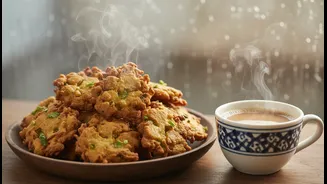
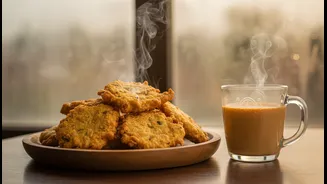
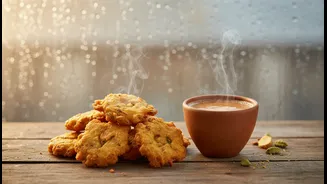
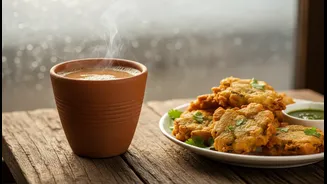
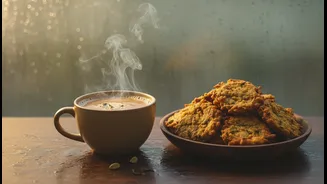
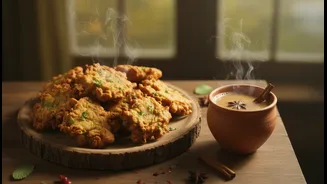
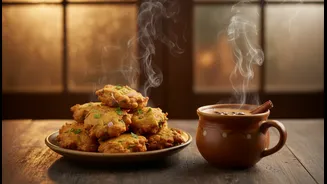
When the rain brings a welcome drop in temperature, your body instinctively seeks warmth. This is a basic survival mechanism known as thermoregulation. A steaming cup of masala chai does more than just warm your hands; the hot liquid helps raise your internal body temperature, creating a feeling of comfort that contrasts beautifully with the cool, damp weather outside. Similarly, fried foods like pakoras, which are calorie-dense, require more energy to digest. This process, called thermogenesis, generates internal heat, literally warming you from the inside out. Your body is simply asking for fuel to keep its internal furnace running.
A Symphony for the Senses
The appeal isn't just chemical; it's also a rich sensory experience. The monsoon brings a damp, humid environment. In contrast, the crispy, crunchy texture of a freshly fried pakora offers a deeply satisfying textural counterpoint. The lack of moisture on the surface of the fried snack feels comforting when everything else is damp. Then there are the aromas. The spicy fragrance of ginger and cardamom in the chai, the sizzle of batter hitting hot oil, and the earthy smell of the first rains—petrichor—all combine to create a powerful sensory package that enhances the pleasure of the food.
The Power of Nostalgia and Ritual
Beyond the biology, there is a powerful psychological component at play. For many in India, the combination of chai and pakoras is deeply woven into the fabric of monsoon memories. It evokes feelings of home, family gatherings, and taking a break from the daily hustle to watch the rain. This connection between food and memory is incredibly strong. When two experiences, like rain and comforting snacks, repeatedly happen together, the brain forms a powerful association. The craving you feel isn't just for the food itself, but for the feelings of comfort, safety, and togetherness it represents. It’s a cherished cultural ritual, passed down through generations.
An Ayurvedic Perspective
Traditional Indian wisdom from Ayurveda also offers an explanation. During the monsoon, or 'Varsha Ritu', the digestive fire, known as 'Agni', is believed to be weaker. This can lead to issues like bloating and indigestion. Ayurveda recommends eating warm, light, and freshly cooked foods to support digestion. While deep-fried foods should be eaten in moderation, the spices used in both chai and pakoras—like ginger, pepper, and ajwain—are known digestive aids that help stoke the metabolic fire. A warm cup of chai can be particularly soothing for the digestive system in humid weather.