



Looking to build serious forearm strength and a powerful grip? The wrist rolling exercise is a classic for a reason. This guide breaks down the proper hand and forearm motion to help you get the most out of every rotation and build lasting power.
Understanding the Wrist Roller
The wrist
roller is a deceptively simple yet highly effective piece of equipment designed to target the muscles of the forearms. It typically consists of a short bar or handle with a rope or cord attached to the center, with a weight plate secured at the other end. The exercise involves holding the bar with both hands and extending your arms, then rotating your wrists to wind the rope around the bar, lifting the weight toward you. The term 'African wrist rolling' often refers to traditional exercises focused on circular wrist motions to improve flexibility and strength. While some sources link the modern weighted wrist roller to ancient Shaolin practices, the fundamental goal remains the same: strengthening the hands, wrists, and forearms through controlled rotational movements.
The Core Benefits of Wrist Rolling
Incorporating this exercise into your routine delivers significant benefits. The most notable is a dramatic improvement in grip strength, which is crucial for everything from opening a jar to improving performance in lifts like deadlifts and pull-ups. It also builds impressive forearm muscle and endurance by keeping the muscles under continuous tension. By strengthening the complex group of muscles responsible for wrist flexion and extension, you enhance wrist stability and can help reduce the risk of common strain injuries, particularly for athletes involved in racquet sports, climbing, or weightlifting.
A Step-by-Step Guide to Proper Form
Executing the wrist roller correctly is vital to maximize benefits and avoid strain. Start by standing with your feet shoulder-width apart, holding the roller with both hands using an overhand grip. Extend your arms straight out in front of you, parallel to the floor, keeping a slight bend in your elbows to avoid locking the joint. Brace your core to keep your torso stable. Begin the movement by rotating your wrists one at a time, winding the rope up toward the bar. Focus on a smooth, hand-over-hand rhythm. Once the weight reaches the top, the set is only half-done. The eccentric, or lowering, phase is just as important. Slowly reverse the motion, unwinding the rope with the same deliberate control until the weight returns to its starting position.
Mastering Hand and Forearm Motion
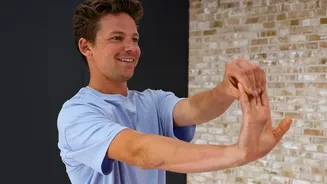
The key to this exercise lies in isolating the hand and forearm motion. Your shoulders and upper arms should remain as still as possible; they are there to hold the bar in position, not to help lift the weight. The primary movement is wrist flexion (curling the wrist up) and extension (allowing the wrist to uncurl). When you roll the weight up with an overhand grip, you are primarily targeting the wrist extensors. To target the flexors, you simply reverse the direction of your roll on the way up or use an underhand grip. For balanced development, it's crucial to train both motions. Squeeze the handle firmly throughout the entire set to maximize muscle activation in the forearms.
Common Mistakes to Avoid
Many people compromise their results by making a few common errors. The most frequent mistake is using the shoulders to assist the lift, often by shrugging or rocking the body. This takes the tension off the forearms. Another error is rushing the movement, especially during any lowering phase. Letting any weight drop negates any benefits of any eccentric contraction. Controlled, deliberate motion is key. Also, avoid starting with too much weight. The forearm muscles are relatively small and can fatigue quickly. It is better to use a lighter weight that allows you to complete full, controlled repetitions. Finally, don't forget to breathe steadily throughout any set.