


First Steps for Soaked Footwear
Before you begin the drying process, a little preparation goes a long way. As soon as you take off your wet shoes, give them a quick clean to remove any mud or debris. Then, remove the insoles and loosen the laces as much as possible. Taking out the insoles allows
them to dry separately and much faster, while opening up the shoe helps air circulate deep inside. This initial prep work is crucial because it sets the stage for a more even and efficient drying process, preventing moisture from getting trapped in hidden crevices.
The Paper Method Explained
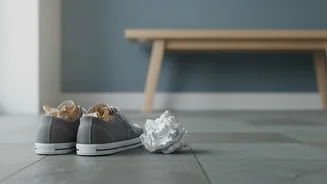
The most effective and safest way to dry wet shoes is by using absorbent paper. Newspaper is a classic choice because its cellulose fibers are excellent at wicking away moisture. If you're concerned about ink transferring to light-coloured interiors, you can use plain paper towels, packing paper, or a layer of white paper towel as a barrier. Loosely crumple the paper and stuff it all the way into the shoe, making sure to reach the toe area. This stuffing helps the shoe maintain its shape as it dries and, more importantly, starts pulling moisture out from the inside. Wrap the outside of the shoes with a towel to absorb moisture from the exterior.
The Crucial Step: Change the Paper
Here is the single most important, and most often forgotten, part of the process: you must change the paper. The first round of paper will become saturated with water relatively quickly. If you leave damp paper inside your shoes, you are creating a humid, stagnant environment. This not only slows down the drying process but also creates the perfect breeding ground for mould, mildew, and odour-causing bacteria. Check the paper after an hour or two. If it feels damp, replace it with fresh, dry paper. For very wet shoes, you may need to repeat this process three or four times. This active removal of moisture is what makes this method so much faster and more effective than passive air drying alone.
What to Avoid at All Costs
It can be tempting to speed things up with a blast of heat, but this is the fastest way to ruin a good pair of shoes. Never place footwear directly on a radiator, in front of a space heater, in a clothes dryer on high heat, or in an oven. Intense, direct heat can cause leather to crack and become brittle, adhesives to melt and fail, and synthetic materials to warp or shrink. This kind of damage is often irreversible. Even leaving shoes in direct sunlight for too long can cause colours to fade and materials to degrade. Gentle, patient drying at room temperature is always the safest bet to preserve the structure and longevity of your shoes.
Finishing Touches and Airflow
Once you've removed the bulk of the moisture with paper, let air circulation finish the job. Place the shoes in a well-ventilated area. You can speed things up significantly by placing them near a fan, which helps carry away damp air. It’s best to position them on their sides or prop them up to ensure air can move all around and underneath them. Once your shoes are completely dry, you can re-insert the insoles. If they are leather, it’s a good idea to apply a leather conditioner to restore the natural oils that were stripped away by the water. This final step will keep the leather supple and prevent cracking.