



Meet the Snake Plant: The Unkillable Classic
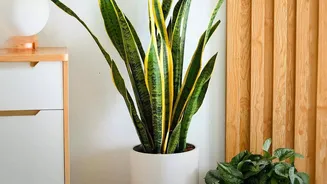
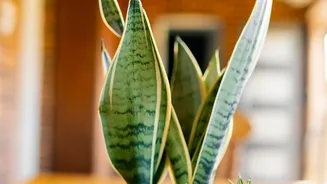
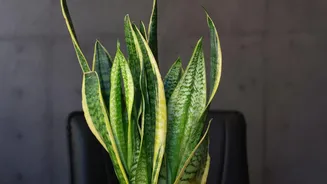
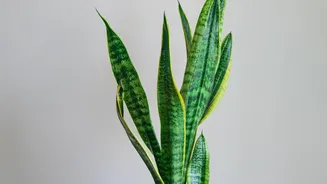
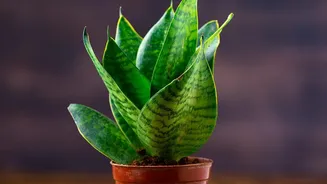
The Snake Plant, formerly known as Sansevieria and now Dracaena trifasciata, is famous for its resilience. With stiff, upright, sword-like leaves, it has a modern, architectural look that fits any decor. Its leaves often feature striking patterns of green,
silver, or yellow bands. Native to West Africa, it's adapted to dry conditions, making it incredibly forgiving for beginners or forgetful waterers. This plant is a true 'set it and forget it' type of greenery, thriving on a bit of neglect. Because it grows vertically, it has a small footprint, making it ideal for a crowded desk.
Snake Plant Care Essentials
Caring for a Snake Plant is simple. It's more likely to suffer from too much attention than too little. Light: It thrives in bright, indirect light which enhances its leaf colour, but it is highly adaptable and will tolerate low-light conditions, making it perfect for office environments. Just avoid intense, direct sun, which can scorch its leaves. Water: This is the most crucial part: do not overwater. Snake Plants are succulents that store water in their leaves. Allow the soil to dry out completely between waterings. This could mean watering every 2-6 weeks in the spring and summer, and even less—perhaps once a month—in the winter. Soil: A well-draining potting mix is essential to prevent root rot. A mix designed for cacti or succulents is a perfect choice.
Meet the Pothos: The Trailing Enthusiast
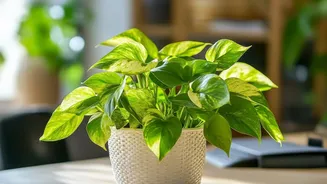
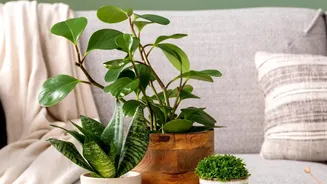
The Pothos, or Epipremnum aureum, is often called Devil's Ivy and is another go-to for new plant parents. With its heart-shaped leaves and enthusiastic trailing vines, it can be placed on a shelf above a desk to cascade down or kept pruned for a bushier look in a pot. It comes in various variegated forms, from 'Golden Pothos' with yellow splashes to 'Marble Queen' with creamy white patterns. Pothos is excellent at communicating its needs; the leaves will visibly droop when it's thirsty, bouncing back quickly after a drink.
Pothos Care Essentials
Pothos is just as low-maintenance as the Snake Plant, though its needs are slightly different. Light: It prefers bright, indirect light to maintain its vibrant variegation. However, it adapts well to lower light levels, though this might cause the patterns on the leaves to fade. Like the Snake Plant, direct sunlight can burn its leaves. Water: Let the top inch or two of soil dry out before watering again. Pothos is quite forgiving if you forget, but it doesn't like to sit in waterlogged soil. A pot with good drainage is key. Soil: A standard, well-draining potting mix works perfectly well for Pothos.
The Air-Purifying Promise: Fact vs. Fiction
Both plants are famously listed in NASA's 1989 Clean Air Study for their ability to remove airborne toxins like formaldehyde and benzene from a sealed environment. This has given them a reputation as powerful air purifiers. While it's true they can filter these compounds, it's important to have realistic expectations. The NASA study was conducted in a small, sealed chamber, which is very different from a typical room with air circulation. Recent analyses suggest you would need a huge number of plants to significantly impact a room's air quality. Think of them not as a replacement for good ventilation, but as a small, natural contributor to a healthier indoor space.
The Perfect Desk Companions
Beyond the air quality debate, having plants at your desk has proven psychological benefits. Studies have shown that greenery in the workspace can reduce stress, improve concentration, and boost productivity. The simple act of caring for something can be a welcome mental break during a long day of studying or working. Snake Plants and Pothos, with their minimal demands and high visual impact, are the perfect candidates to bring these benefits to your desk without adding another chore to your list. A quick note for pet owners: Both Snake Plants and Pothos are toxic to cats and dogs if ingested, causing gastrointestinal upset. It's best to keep them out of reach of curious pets.