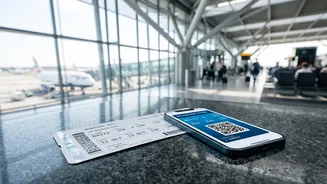







Planning your travels for 2027? India's aviation landscape is set for a major transformation. Before you book your next flight, here are the crucial updates on new airports, digital travel, and pricing rules that will shape your journey.
Your Airport Experience is Going Digital
The era of fumbling
for IDs and boarding passes is coming to a close. The DigiYatra facility, which uses facial recognition for seamless passage through airports, is set for a major expansion. After beginning trials for international travellers with e-passports at seven major airports—including Delhi, Mumbai, and Bengaluru—a wider rollout is expected in 2027. This means a faster, contactless, and paperless journey from terminal entry to the boarding gate. The service, which already has over 26.5 million users for domestic travel, is planned to be active in an additional 25 domestic airports by 2027, making it a standard feature of Indian air travel. For international flyers, the system requires creating a credential on the DigiYatra app using your e-passport, which will be stored securely on your phone.
New Rules on Ticket Prices and Transparency
Starting January 1, 2027, new aviation rules called the Bharatiya Vayuyan Niyam, 2026, will come into effect, changing how ticket prices are displayed and regulated. Airlines will be required to provide a full, transparent breakdown of your ticket cost. This includes clearly showing the base fare, taxes, fees, cancellation charges, and refund conditions upfront, so there are no last-minute surprises at checkout. While airlines will still set fares based on market demand, the government will now have the power to intervene and regulate tariffs during 'extraordinary situations' to protect public interest. However, this does not mean a permanent cap on prices, but rather a mechanism to prevent extreme fare surges during crises.
More Airports, More Direct Flights
India's aviation infrastructure is growing at a breakneck pace. The government projects the number of air travellers in India to double to 40 crores by 2027. To meet this demand, the country is rapidly expanding its airport network. Mumbai flyers, for instance, will see major changes as airlines like IndiGo and Air India Express shift a significant number of international flights, particularly to West Asia, from the existing CSMIA to the new Navi Mumbai International Airport (NMIA) through 2027. This move is designed to ease congestion and allows airlines to launch new long-haul routes to Europe, Africa, and other parts of Asia from Mumbai. With dozens of new airports under development nationwide, travellers in Tier-2 and Tier-3 cities can also expect better connectivity.
The Rise of Long_Haul and Fleet Expansion
Indian carriers are aggressively expanding their fleets, which means more direct flight options to international destinations. IndiGo is set to begin receiving its order of Airbus A350_900 widebody aircraft in 2027, signalling a major push into long_haul markets. This expansion will allow the airline to launch new non_stop services to Europe and Asia. Air India is also in the midst of a massive fleet expansion, with dozens of new widebody Boeing and Airbus jets joining its fleet. For passengers, this increased competition and capacity on international routes could lead to more choices and potentially competitive pricing for popular destinations.
A Greener Way to Fly
Sustainability is becoming a key focus for the aviation industry. From January 2027, India is expected to mandate that 1% of the fuel used for international flights be Sustainable Aviation Fuel (SAF). This percentage is slated to increase to 2% in 2028 and 5% by 2030. SAF is a renewable fuel made from sources like used cooking oil and agricultural waste. While the initial impact on ticket prices is expected to be minimal, this marks the beginning of a significant shift towards reducing the carbon footprint of air travel. As a traveller, you will be part of a global effort to make flying more environmentally friendly.
Will Tickets Get More Expensive?
Despite the positive developments, flyers should brace for potentially higher fares. A combination of factors, including rising Aviation Turbine Fuel (ATF) costs, a weaker rupee, and limited seat capacity as some airlines have scaled back operations, may keep prices elevated in 2027. Even advance bookings are not always guaranteeing the deep discounts they once did. While the new transparency rules will help you understand what you are paying for, the underlying costs faced by airlines are on the rise. Booking in advance and staying flexible with your travel dates will remain the best strategies to find reasonable fares.