


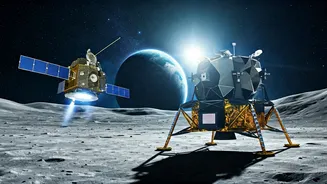


Humanity's Lunar Return: The Artemis Missions
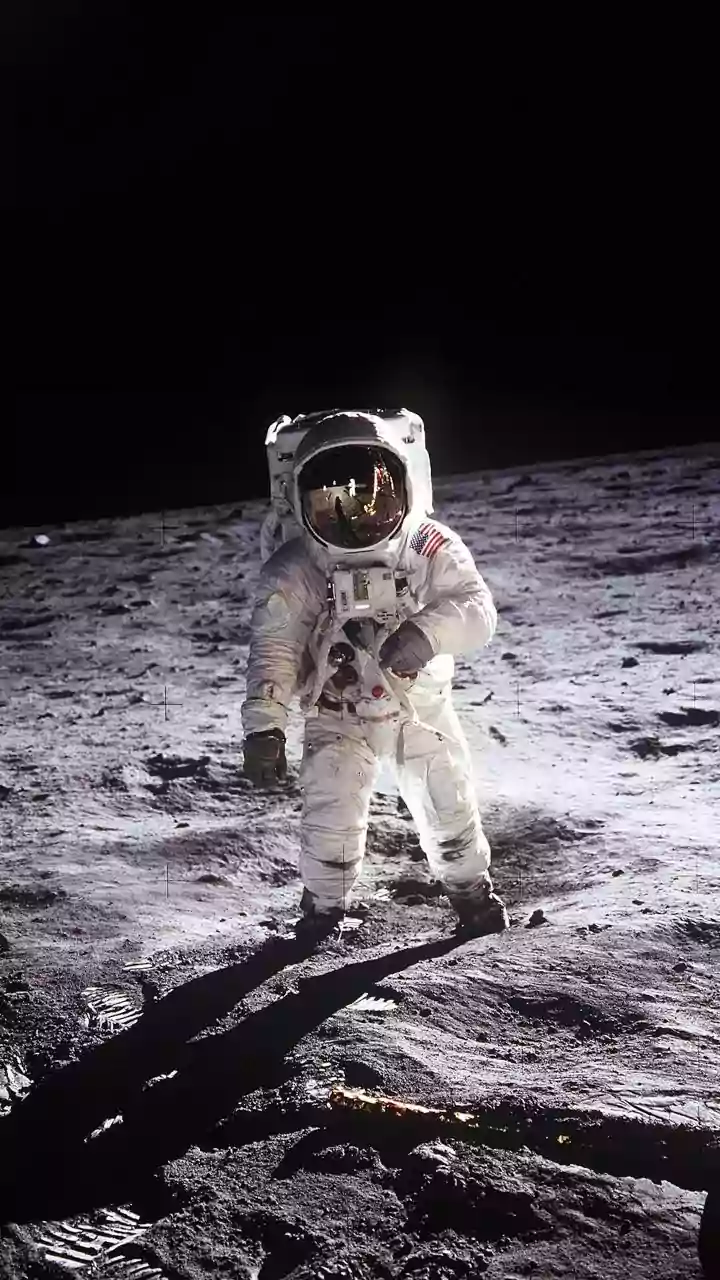
The headline event of 2026 is undoubtedly NASA's Artemis II mission, which sent four astronauts on a flyby of the Moon in April, marking the first time humans have traveled beyond low-Earth orbit since 1972. [6, 18] This 10-day flight, carrying a crew
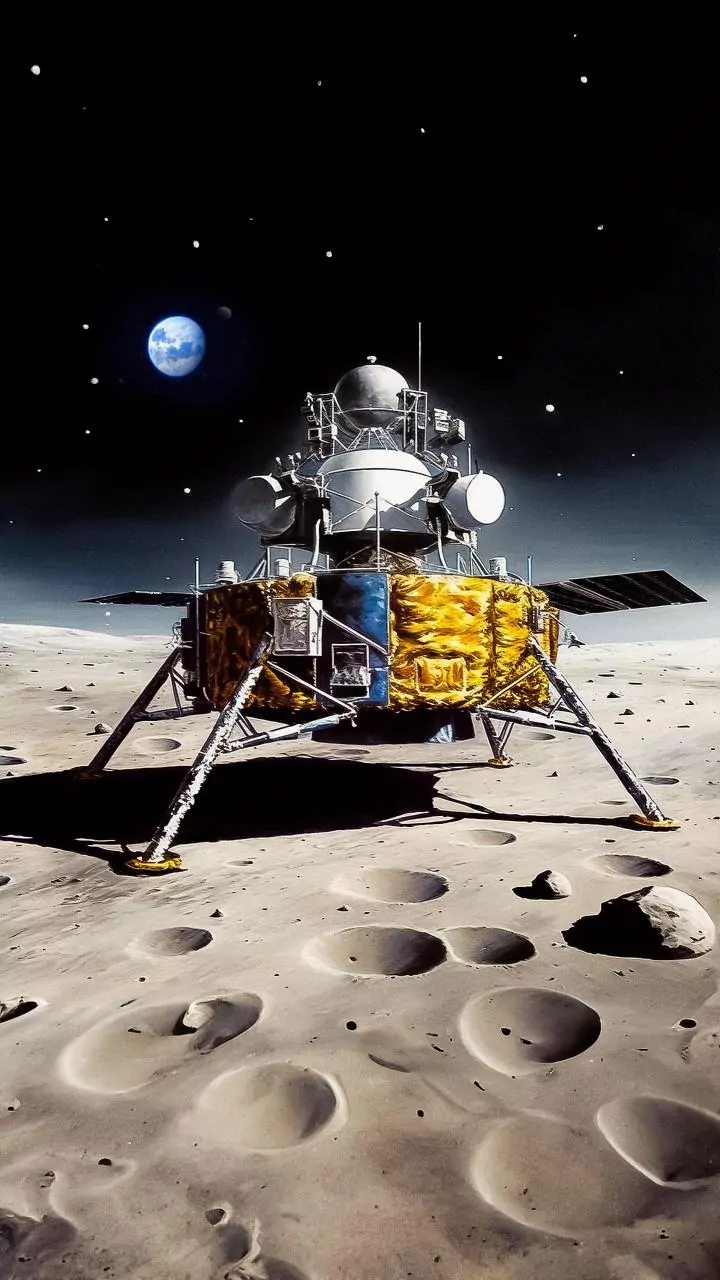
of three NASA astronauts and one from the Canadian Space Agency, tested the Orion spacecraft's life-support systems and deep-space capabilities, laying the essential groundwork for future lunar landings. [6] While Artemis II did not land, it was a crucial milestone that paves the way for increasingly complex missions. [30] Originally, its successor, Artemis III, was slated for the historic lunar landing. [14] However, plans were revised in early 2026. Now scheduled for 2027, Artemis III will be a crewed mission in Earth orbit designed to test the docking capabilities of the commercial lunar landers being built by SpaceX and Blue Origin. [14, 17, 28] This change allows for critical hardware to be tested closer to home before the actual lunar landing attempt, now planned for Artemis IV in 2028. [14, 18]
The Commercial Heavyweights: Starship and New Glenn
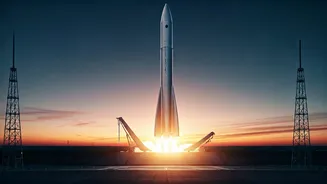
The ambitious government-led missions are enabled and matched by an equally impressive surge in the private sector. SpaceX and Blue Origin are at the forefront of this new era. SpaceX's fully reusable Starship, the most powerful rocket ever built, is making rapid progress. [23, 24] After a series of test flights with mixed success, the company is pushing hard in 2026 to demonstrate critical capabilities like orbital refueling, which is essential for deep-space missions to the Moon and Mars. [21, 25] While CEO Elon Musk has stated a Mars launch in 2026 is a "50/50" chance, the vehicle's development is paramount for NASA's Artemis plans, as a variant of Starship will serve as a human landing system. [21, 24] Meanwhile, Jeff Bezos's Blue Origin is also a key player with its New Glenn rocket. [31] Despite an anomaly during a test in May 2026, the company has expressed confidence it will fly again this year. [32] New Glenn is also contracted to launch a robotic demonstration of its Blue Moon lander in early 2026, targeting the Moon's south pole. [6, 7] The progress of both Starship and New Glenn is a defining feature of 2026, representing the industrial might that underpins the new space economy.
A Global Effort: International Missions and New Science
The new space era is not limited to the United States. China is conducting intensive space missions in 2026, with plans for crewed Shenzhou flights to its Tiangong space station and flight tests for reusable rockets. [2, 8] The nation's lunar ambitions are also clear, with the Chang'e 7 mission set to explore the Moon's south pole for water ice in late 2026. [7, 15] Furthermore, China plans to launch its Xuntian space telescope this year, an observatory with a field of view 300 times larger than Hubble's. [10] Other nations are also making significant moves. The joint European-Japanese BepiColombo mission is expected to enter orbit around Mercury in late 2026 after an eight-year journey. [6, 15] Japan's MMX mission, launched this year, will head to Mars to study its moons and return a sample from Phobos. [10, 15] These diverse international efforts, from asteroid sample-return missions to new space telescopes, highlight that 2026 is a year of global participation, competition, and scientific discovery. [2, 10]
The Dawn of Commercial Space Stations
Beyond exploration, 2026 is a foundational year for the commercialization of low-Earth orbit (LEO). With the International Space Station (ISS) scheduled for retirement around 2030, a new market for privately-owned space stations is emerging. [5, 16] NASA is transitioning from being an owner-operator to a customer, funding several companies to develop commercial LEO destinations. [5, 12, 13] California-based startup Vast aims to launch Haven-1, potentially the world's first standalone commercial space station, as early as May 2026 aboard a SpaceX Falcon 9 rocket. [6, 11] While that timeline may be ambitious, the intent signals a major shift. [13] Companies like Axiom Space, and a partnership between Voyager Space and Airbus on the Starlab project, are also developing their own orbital platforms. [5, 13] NASA plans to award more significant funding contracts in 2026 to ensure a continuous human presence in orbit after the ISS is gone, making this year a critical decision point for the future LEO economy. [12, 13, 16]