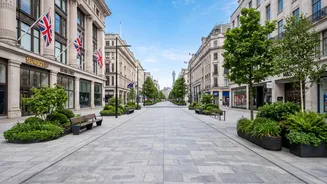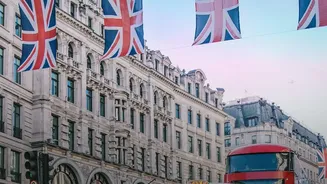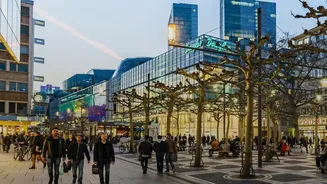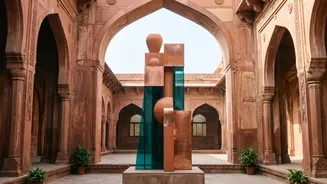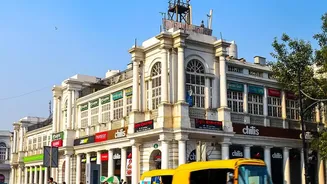






Around the world, cities are reclaiming their streets for people. This global shift towards pedestrian-friendly spaces is transforming urban life, and Delhi's iconic Chandni Chowk is India’s most prominent entry in this growing movement.
The Principles of a People-First Street
What makes a street
truly pedestrian-friendly? It’s more than just banning cars. Successful projects are built on a foundation of key principles. These include creating wide, unobstructed sidewalks, ensuring safety through traffic-calming measures, and making the space comfortable and engaging. Think ample public seating, shade from trees, good lighting, and a mix of activities like shopping, dining, and cultural events. The goal is to design a 'complete street' that serves everyone, from the hurried commuter to a family out for a stroll, prioritising human connection and experience over vehicular speed. These spaces become vibrant public realms that improve air quality, foster community, and boost local economies.
Copenhagen's Strøget: The Pioneer
One of the earliest and most famous examples is Strøget in Copenhagen, Denmark. In 1962, the city converted its main thoroughfare into a car-free zone, initially as a temporary experiment. Despite opposition from businesses who feared a loss of customers, the project was a resounding success and was made permanent two years later. Stretching over a kilometre, Strøget transformed from a traffic-congested road into a bustling hub for shopping and socialising. It proved that prioritising pedestrians could actually increase footfall and revenue, setting a precedent that inspired cities worldwide to rethink their own urban cores.
Barcelona's La Rambla: The Social Artery
Barcelona's La Rambla is a masterclass in designing a street as a social destination. Its defining feature is an inverted layout: a wide, tree-lined pedestrian promenade runs down the centre, with narrow, single-lane traffic pushed to the sides. This design makes social life visible and central to the street's function. Established in the 18th century, the 1.2-kilometre stretch connects the city centre to the port, flanked by everything from a famous market to an opera house. It's a space designed for strolling, meeting, and lingering, demonstrating how a street can be more than a simple path—it can be the emotional heart of a city.
Tokyo's Shibuya Crossing: Organised Chaos
While not a street in the traditional sense, Tokyo's Shibuya Crossing is a worldndowed example of managing immense pedestrian flow. Known as a 'scramble crossing', all vehicular traffic stops simultaneously, allowing thousands of people to cross the intersection from every direction at once—including diagonally. An estimated 2,500 people cross during each light change at peak times. Implemented in the 1970s to handle rising pedestrian density, it has become an iconic symbol of modern, highndery urban life. Shibuya Crossing showcases how prioritising pedestrian movement, even for just a few minutes, can create an efficient and iconic urban experience.
The Chandni Chowk Revamp
This brings us to Delhi's Chandni Chowk. The historic 17thndcentury market has been the subject of a massive redevelopment project aimed at decongesting the chaotic stretch and restoring its heritage character. The core of the plan involved transforming the 1.3ndkm road from Red Fort to Fatehpuri Masjid into a pedestrianpriority zone. Motorised vehicles are restricted from 9 am to 9 pm, ceding the space to pedestrians and nonmotorised transport like cyclerickshaws. The revitalised street features red sandstone pavement, benches, new trees, and underground wiring to create a visually continuous and uncluttered streetscape.
How Does It Compare?
Chandni Chowk’s redevelopment aligns closely with global principles. Like La Rambla, it focuses on reviving a historic and commercial artery. Like Strøget, it restricts traffic to boost business and create a more pleasant experience for visitors. The project's stated vision was to reinforce safe and free pedestrian movement, giving people significance over vehicles—a core tenet of modern urban design. However, the project has also faced challenges, including concerns from traders about loading/unloading goods and the displacement of street vendors, which are integral to the area's identity. The creation of India's first scramble crossing is another nod to international models like Shibuya, aiming to improve user experience. While successful in reducing vehicular chaos, its longterm success will depend on how it balances heritage preservation, commercial needs, and the livelihoods of its informal workforce.