





The Problem with Prolonged Sitting
Our bodies are designed for movement. When we spend most of our day in a chair, it can lead to a host of issues, from a stiff neck and tight hips to more serious health risks. Research has consistently linked excessive sitting to an increased risk of chronic
conditions and has shown that it can negatively impact mental processes like memory and focus. The solution isn't necessarily to quit your desk job, but to fundamentally change how you approach it. Breaking up long periods of sitting is crucial. Even short, one- or two-minute breaks every half hour for some light activity can offer significant health benefits compared to sitting without interruption.
Embrace 'Movement Snacks'
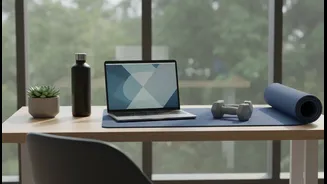
The idea of a full workout during lunch can feel daunting. Enter 'movement snacks'—short, 1-to-5-minute bursts of physical activity sprinkled throughout your day. These aren't meant to replace a gym session but to break up sedentary time, boost circulation, and keep your muscles engaged. Think of it as giving your body regular opportunities to reset. This could be as simple as doing ten calf raises while waiting for a document to print, taking a two-minute walk between meetings, or doing a few squats at your desk. The goal is to make movement feel realistic and accessible, removing the pressure of a long, structured workout.
Discreet Desk-Based Exercises
You don't need to turn your cubicle into a yoga studio to stay active. Many effective exercises are subtle enough that your colleagues might not even notice. Try shoulder shrugs to release tension in your upper back or seated spinal twists to improve mobility. Glute squeezes, where you contract your glutes for ten seconds and release, can be done anytime. For your lower body, try seated leg lifts or 'foot alphabets,' where you trace letters in the air with your toe to improve ankle circulation. Even a simple overhead stretch, interlacing your fingers and reaching for the ceiling, can alleviate tension in the back and shoulders.
Make Your Workspace Work for You
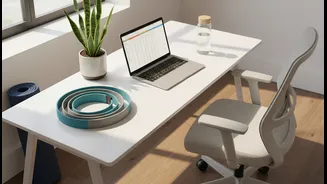
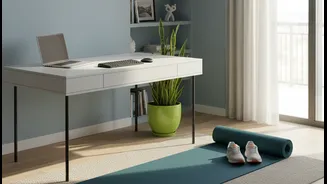
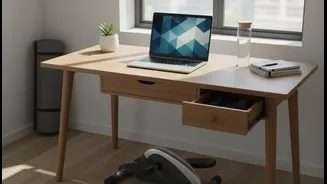
Your environment can either encourage or hinder movement. Start with good ergonomics: adjust your chair height so your feet are flat on the floor and ensure your keyboard allows your wrists to be straight. Consider a standing desk or an adjustable riser that allows you to alternate between sitting and standing, which can help burn more calories and reduce back strain. Small changes can also make a big difference. Place your printer or wastebasket further away from your desk so you have to get up to use them. If you take frequent calls, use a headset so you can stand up and pace.
Build Habits Around Your Routine
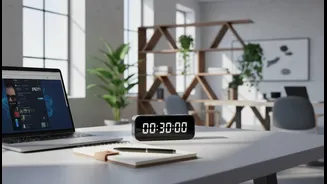
The key to consistency is linking new habits to existing ones. For example, make it a rule to stand up every time you send an email or finish a meeting. Use your hourly trip to refill your water bottle as a chance to take a longer route around the office. Walking meetings are another fantastic way to combine productivity with physical activity; you may even find you're more creative on your feet. Setting a simple timer on your phone or computer to remind you to stand and stretch every hour is a powerful prompt to break the cycle of sitting. Encouraging colleagues to join you can also help with accountability and motivation.