








The New Ghost in the Machine
Just a few years ago, AI in writing meant grammar suggestions and spell-check. Today, generative AI platforms can produce sophisticated, human-sounding text from a simple prompt. This shift has blurred the traditional definition of authorship. The question
is no longer just about editing assistance but about creation itself. When a writer uses an AI to generate ideas, draft paragraphs, or rewrite sections, the line between tool and collaborator becomes fuzzy. This has sparked an intense debate in academia, publishing, and journalism about what it means to be an author and where the human's work ends and the machine's begins.
The Argument for Full Transparency
Many institutions are advocating for clear disclosure when AI is used. The core argument rests on trust and integrity. In academia, disclosing AI use is essential for preventing a new form of plagiarism and ensuring that students are doing the intellectual work themselves. For journalists and non-fiction authors, transparency is about maintaining a pact with the reader, who has a right to know the origin of the information they are consuming. Major academic publishers like Wiley and Elsevier have established firm policies: AI cannot be listed as an author because it cannot take responsibility for the work. Instead, they require authors to disclose how and where AI was used in the manuscript, typically in the acknowledgments or methods section.
A Spectrum of Use, Not a Simple Answer
However, the case against universal, one-size-fits-all disclosure rules is also compelling. Does using AI to brainstorm ideas or improve the grammar of a non-native English speaker carry the same weight as generating an entire article? Many argue it doesn't. The use of AI exists on a spectrum, from minor editing to full generation. Requiring disclosure for minor uses could create unnecessary bureaucracy and suspicion, potentially devaluing the human author's effort. Furthermore, under current U.S. law, purely AI-generated text cannot be copyrighted, which adds another layer of complexity for creators and publishers when determining ownership and rights. This legal reality means that while a human who uses AI as a tool can be an author, the AI itself has no standing.
The Search for New Industry Standards
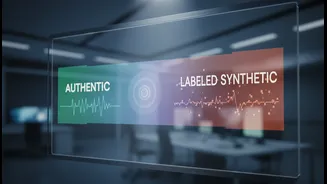
In response to this complex new reality, various fields are scrambling to establish clear and fair guidelines. The Committee on Publication Ethics (COPE) and the International Committee of Medical Journal Editors (ICMJE) have stated that AI tools cannot be authors but their use must be declared. The Authors Guild has issued best practices, advising writers to publicly disclose substantial use of AI to maintain trust with readers. Meanwhile, regulators are also stepping in. The EU AI Act, for instance, includes transparency provisions that require AI-generated content to be labeled. These emerging rules are not uniform and continue to evolve, reflecting a global effort to balance the benefits of AI with the need to protect intellectual property and ethical standards.