






What is Microgravity?
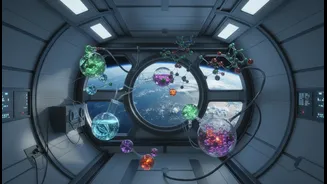
Imagine being in a state of continuous freefall. That’s the closest way to describe microgravity. It isn't 'zero gravity'—gravity is still present in low Earth orbit, about 90% as strong as on the surface. However, because a spacecraft and everything
inside it are orbiting the Earth at high speed, they are constantly 'falling' together. This creates an environment of near-weightlessness. In this setting, the fundamental forces that govern our world behave differently. Heavy and light objects float side-by-side, flames burn as spheres, and liquids don't settle. This unique laboratory in the sky allows scientists to observe physical and biological phenomena that are normally masked by gravity's constant pull on Earth.
Keeping Astronauts Safe on Gaganyaan
For India’s landmark Gaganyaan mission, which will carry Indian astronauts into space, understanding microgravity is a matter of safety and mission success. The human body is finely tuned to Earth's gravity. In its absence, significant and mostly harmful changes occur. Astronauts experience muscle atrophy, losing up to 20% of their muscle mass in under two weeks without rigorous exercise. Bones lose density at a rapid rate, about 1% to 1.5% per month. Fluids shift upwards in the body, causing a puffy face, vision problems, and affecting the cardiovascular system. By conducting microgravity experiments, ISRO can study these effects in detail and develop effective countermeasures—from specialised exercise regimens to nutritional supplements—to protect the health of its 'Gaganyatris' during their time in space and ensure they can readapt safely upon returning to Earth.
The Foundation for a Bharatiya Antariksha Station
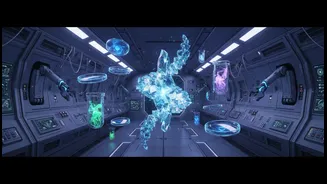
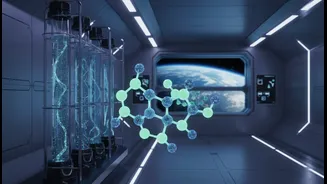
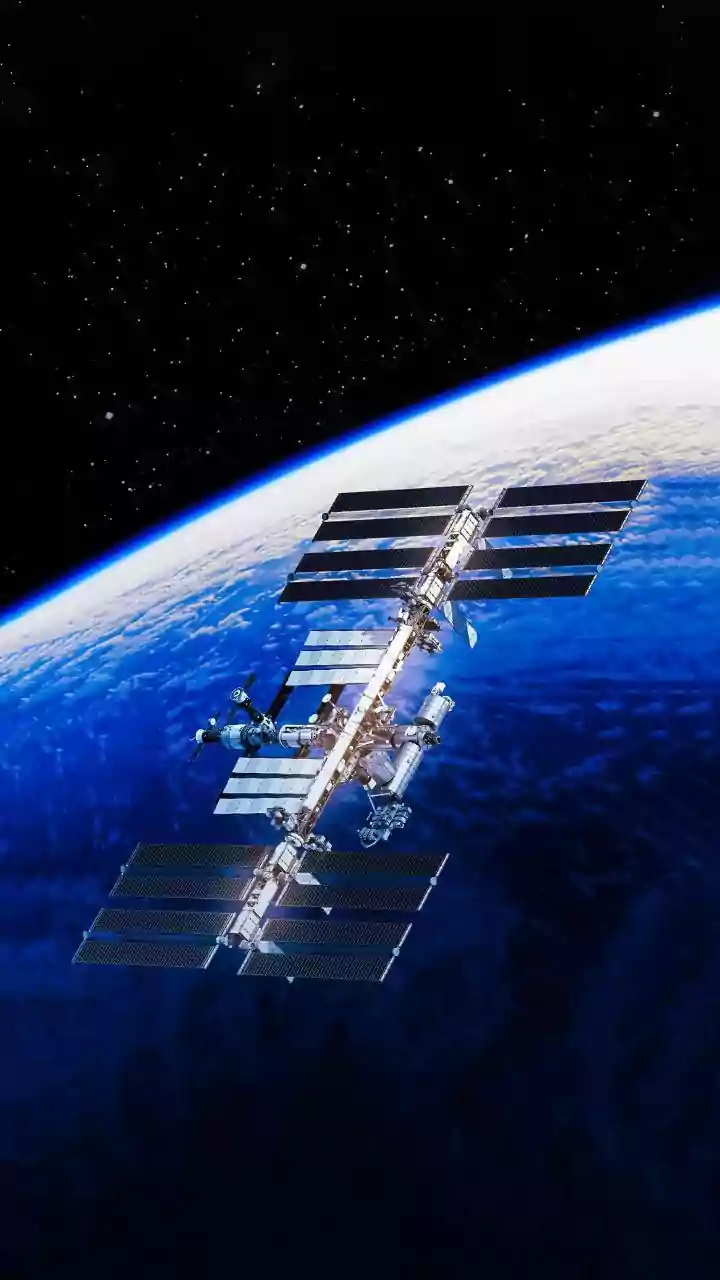
Beyond short-duration flights, India has ambitious plans to build the Bharatiya Antariksha Station (BAS) by 2035. A space station is, at its core, a permanent laboratory in orbit, and its primary purpose is microgravity research. The long-duration missions aboard the BAS will unlock groundbreaking opportunities. Scientists will be able to grow larger, more perfect protein crystals for drug development, helping to design more effective medicines. They can create new metal alloys and materials impossible to forge on Earth, where heavier elements sink during the cooling process. Research in fields like space agriculture, such as growing nutrient-rich sprouts and microalgae, will be vital for developing sustainable food and oxygen sources for future deep-space missions. The BAS is envisioned as a hub for this innovation, positioning India as a key player in scientific exploration.
Building a High-Tech Future
The benefits of mastering microgravity extend far beyond the confines of a spacecraft. The challenges of designing experiments for space spur innovation across multiple sectors. To support its goals, ISRO has actively invited the Indian research community to propose experiments in fields ranging from materials science and biotechnology to fluid physics and pharmacology. This push fosters a robust domestic ecosystem of high-tech research and development. Developing the capability to conduct these complex experiments in-house enhances India's technological self-reliance, reducing its dependence on other nations. Furthermore, the unique materials, medicines, and technologies developed through microgravity research could lead to significant economic spin-offs, driving growth in India's share of the global space economy and inspiring a new generation of scientists and engineers.