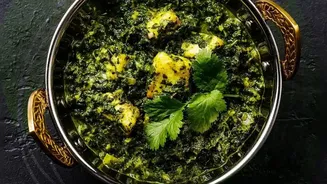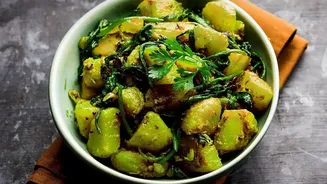




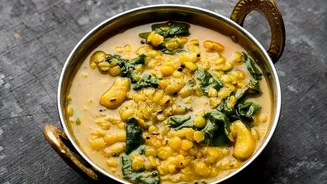
When you hear 'saag,' you might picture a familiar creamy spinach dish. But that's just one chapter of a much richer story. The word itself is a gateway to a diverse and delicious world of leafy green preparations across India.
What Exactly is Saag?
The term 'saag' comes from
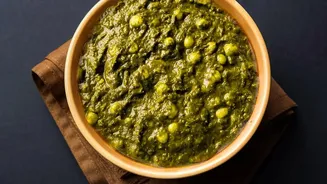
the Sanskrit word 'shaak', which simply means leafy green vegetables. It's not a single dish but a whole category of food made by slow-cooking various greens with spices until they become a thick, flavourful stew. So, while a dish made with spinach (palak) can be a type of saag, not all saag is palak. The beauty of saag lies in its versatility; it reflects the local agriculture and culinary traditions of different regions, changing its character based on the greens available.
The Symphony of Greens
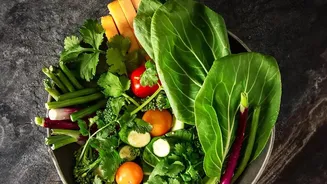
A truly traditional saag is often a blend of several types of greens, each contributing a unique flavour and texture. The most common combination involves a mix of 'spicy' and 'soft' greens. The spicy base usually comes from mustard greens (sarson), which have a peppery, slightly bitter kick. This is balanced by the milder, softer texture of greens like spinach (palak) or bathua (chenopodium), which help create a smoother consistency. Other greens like fenugreek (methi) for a slight bitterness, radish greens (mooli ke patte) for pungency, or amaranth (chaulai) are also frequently added to create a complex and layered flavour profile.
The Star of the Show: Sarson da Saag
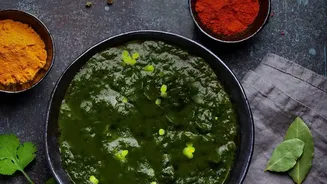
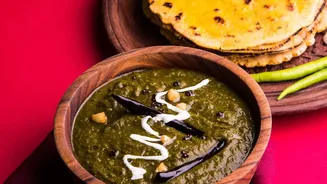
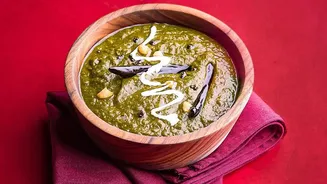
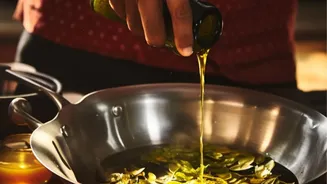
The most famous version is Sarson da Saag, a winter delicacy from Punjab. Made predominantly from mustard greens harvested in the cooler months, this dish is a cultural icon. The preparation is a labour of love, involving hours of simmering the greens until they are incredibly tender. They are then mashed or coarsely blended—never into a perfectly smooth puree—to retain some texture. Finished with a generous tempering of onions, ginger, garlic, and spices in ghee, it has a rich, earthy, and robust flavour that is deeply comforting.
Beyond Punjab: Regional Twists
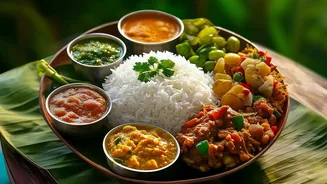
While Punjab's version is the most celebrated, saag variations are found all across India. In Bengal and Odisha, Pui Saag (Malabar spinach) and Kochu Saag (colocasia leaves) are popular, often prepared with mustard paste and a hint of coconut. Andhra Pradesh has Gongura, a dish made with sour-tasting sorrel leaves, often cooked with lentils to make a tangy dal. In Haryana, saag is commonly made with chickpea leaves (chane ka saag) during the winter. The Garhwal and Kumaon regions of Uttarakhand even make a unique saag from stinging nettle leaves (bicchu ghas), which become harmless and nutritious once cooked. These variations highlight the incredible adaptability of saag as a culinary concept.
A Nutritional Powerhouse
Beyond its incredible taste, saag is packed with nutrients. Leafy greens are a fantastic source of vitamins A, C, and K, along with essential minerals like iron, calcium, and potassium. This combination supports everything from bone health and immune function to heart health. Mustard greens, the star of Sarson da Saag, are particularly rich in antioxidants and fibre, which can aid digestion and help reduce inflammation. Being low in calories but high in nutrients makes saag a wholesome and satisfying part of any meal.
How to Enjoy Saag
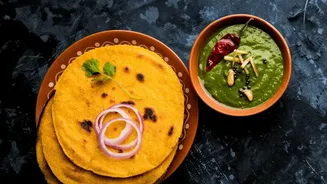
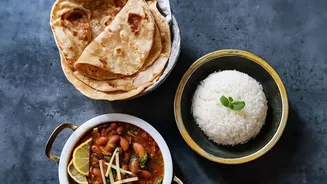
The classic and undisputed partner for Sarson da Saag is Makki di Roti, a flatbread made from maize flour. This pairing is considered a complete meal in itself, especially in Punjab. The dish is almost always served with a generous dollop of white butter (makhan) or ghee melting on top, which enriches its flavour and texture. Often, a side of raw onions, green chillies, and a piece of jaggery (gud) is offered to balance the spicy and earthy notes of the saag, creating a perfect symphony of tastes.