




Nature's Monsoon Gift
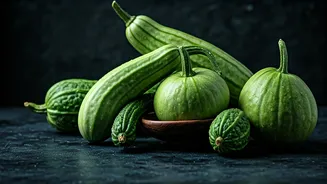
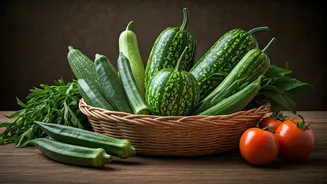
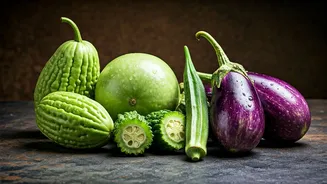
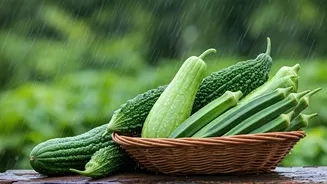
There's a reason why lauki (bottle gourd) and karela (bitter gourd) become so abundant as the rains arrive. Both are hardy gourds that thrive in the humid, wet conditions of the Indian monsoon. Their vines grow vigorously, producing a plentiful harvest
when many other vegetables struggle with waterlogging and pests. This natural cycle is a gift from nature, providing us with exactly what our bodies need during this season. For generations, Indian households have instinctively turned to these gourds, not just for their availability, but for their inherent properties that align perfectly with the health challenges of the monsoon.
Lauki: The Cooling Hydrator
Often overlooked for its mild flavour, lauki is a nutritional powerhouse perfectly suited for monsoon wellness. It is composed of over 90% water, making it an excellent vegetable for staying hydrated, which is crucial even when the weather feels less hot. Its high fibre content aids digestion, helping prevent common monsoon woes like indigestion and constipation. Ayurveda values lauki for its cooling properties, which help balance the body's heat and acidity. Rich in vitamins C and B, as well as essential minerals like sodium, iron, and potassium, it's a low-calorie addition to any meal that supports heart health and reduces fatigue.
Karela: The Bitter Protector
Karela's bitterness might be an acquired taste, but its health benefits are undeniable, especially during the monsoon when our immunity is often compromised. It is packed with Vitamin C, a powerful antioxidant that helps fend off infections. Traditional medicine has long celebrated karela for its blood-purifying and detoxifying properties. It contains an insulin-like compound called Polypeptide-p (or p-insulin) which has been shown to help manage blood sugar levels naturally. Its antimicrobial and antiviral properties can help protect against skin problems and illnesses that are more frequent in the damp weather, making it a true protective shield on your plate.
How to Pick the Best
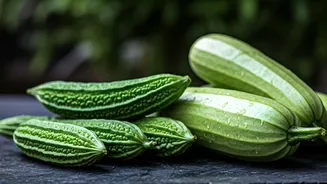
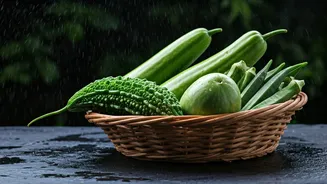
When you're at the market, choosing the best produce makes all the difference. For lauki, look for one that is firm, pale green, and has smooth, unblemished skin. Avoid any with soft spots or a withered look. A fresh lauki should feel heavy for its size. For karela, opt for those that are dark green, firm, and have crisp, jagged ridges. Smaller, younger karelas are generally less bitter than larger, more mature ones. Avoid any that are turning yellow or feel soft and spongy, as they are likely overripe and will be excessively bitter.
Simple, Delicious Kitchen Ideas
Tired of the usual sabzi? Let's rethink how we cook these gourds. Try grating lauki and adding it to your dosa or cheela batter for a nutrient boost. You can also make a refreshing lauki raita with yoghurt, mint, and roasted cumin. For karela, you can reduce its bitterness by scraping the skin, removing the seeds, and salting it for about 30 minutes before cooking. Then, slice it thin, toss with chickpea flour (besan) and spices, and air-fry or shallow-fry for a delicious, crispy snack. Another great option is a stuffed karela, filled with a mixture of onions, garlic, and spices like amchur (dry mango powder) to balance the bitterness.