


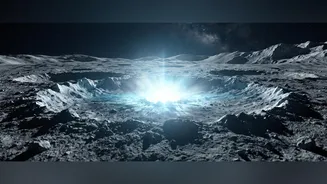

What Are Impact Flashes?
Imagine a tiny rock, maybe only a few inches wide, hurtling through space at thousands of miles per hour. On Earth, our atmosphere would act like a shield, causing the rock to burn up as a 'shooting star'. The Moon, however, has virtually no atmosphere to protect
it. When these meteoroids strike the lunar surface, they do so at full speed. The immense energy of the collision doesn't just dig a crater; it instantly vaporizes rock and soil, creating a superheated plume that glows for a fraction of a second. This brief, brilliant burst of light is what scientists call an impact flash. These events are surprisingly common, with telescopes on Earth having logged hundreds over the years, but they are incredibly difficult to study because they last for mere moments.
A Front-Row Seat for Science
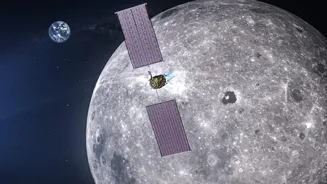
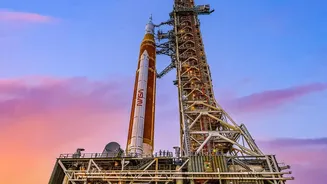
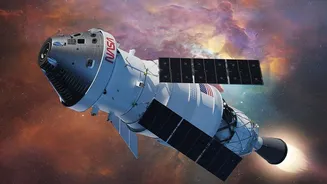
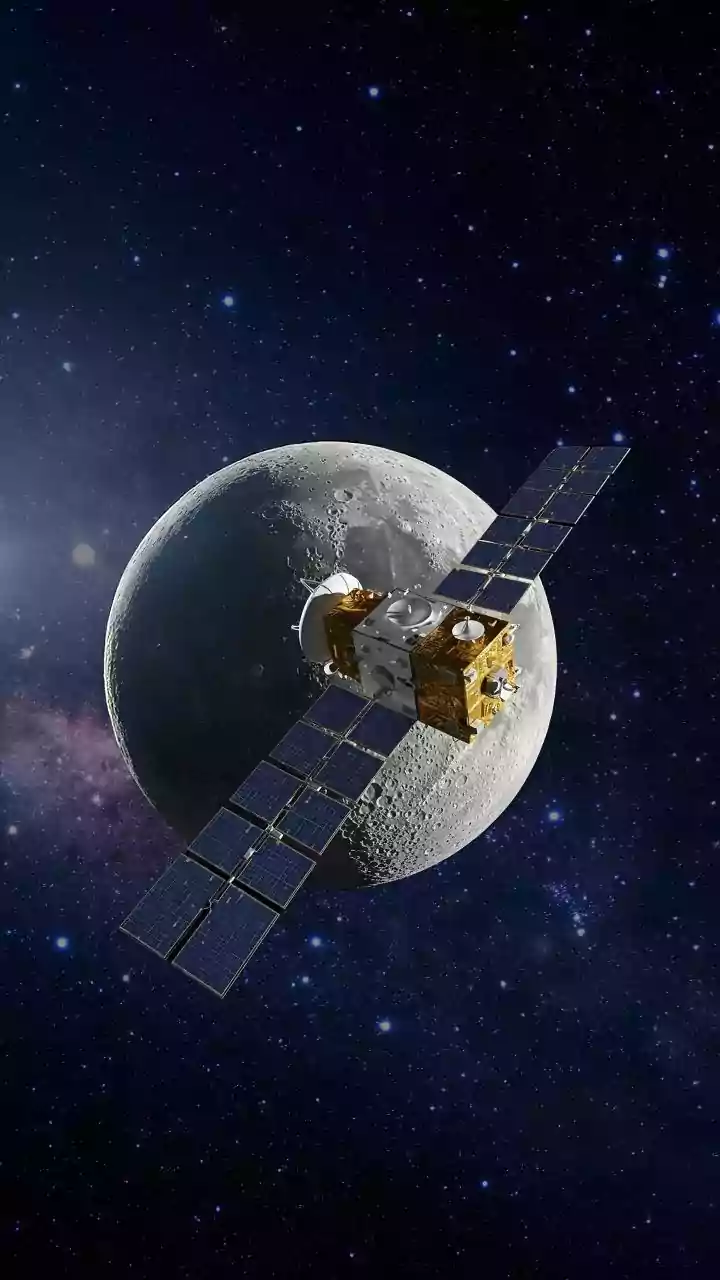
Lunar scientists had specifically asked the Artemis II crew to be on the lookout for these flashes during their mission. The perfect opportunity came as the Orion spacecraft flew around the far side of the Moon, resulting in a planned communications blackout with Earth. During this time, the Moon completely blocked the Sun, plunging the crew into a 54-minute total solar eclipse. These exceptionally dark conditions were ideal for spotting the faint flickers of light. The astronauts reported seeing five distinct 'pinprick' flashes on the darkened lunar surface from a distance of nearly 74,000 kilometers. Crew members Reid Wiseman, Victor Glover, and Jeremy Hansen quickly marked the locations on a tablet to preserve the data for scientists back on Earth.
Why These Observations Are a Big Deal
While Apollo-era astronauts had also reported seeing flashes, the ones witnessed by the Artemis II crew are believed to be the faintest ever seen by the human eye. Scientists were thrilled by the reports, as it provides a rare, direct confirmation of a phenomenon mostly studied from afar. To ensure the sightings were genuine impacts, the science team had to rule out other possibilities, such as cosmic rays striking the astronauts' eyes or sunlight glinting off the spacecraft. Because some flashes were seen by multiple crew members simultaneously, NASA is confident they were real impacts. The observations are especially valuable because they occurred on the far side of the Moon, which is more difficult to monitor from Earth. This human-gathered data adds a crucial piece to the puzzle of lunar impacts.
The Need for Deeper Analysis
These five flashes, observed during a single pass, cannot establish a definitive impact rate on their own, but they underscore the need for more study. Each observation is a vital data point that helps scientists understand how frequently the Moon is bombarded by debris of different sizes. This information is not just academic; it has critical safety implications for the future of space exploration. As NASA and its international partners plan to build a long-term human presence on the Moon, they need to know the risks posed by this constant barrage of micrometeoroids. Understanding the frequency and energy of these impacts is essential for designing habitats, rovers, and spacesuits that can withstand the harsh lunar environment over long periods. The data helps engineers calculate how much shielding is necessary to protect both astronauts and infrastructure.
What Happens Next?
Following the mission, NASA released over 800 gigabytes of data, including the crew's observations and imagery, to the global scientific community. Researchers will now pore over this information, cross-referencing the astronaut sightings with data from ground-based telescopes, some of which are operated by citizen scientists. By combining these different datasets, they hope to refine their models of the meteoroid environment around the Earth and Moon. This will help them better predict impact risks and understand the ongoing evolution of the lunar surface. The Artemis II observations have provided a unique and personal perspective on a dynamic cosmic process, reinforcing that the Moon is not a static, unchanging world but an active body constantly interacting with its environment.