






Declutter and Deep Clean First
Before the first rains arrive, give your wardrobe a thorough reset. Take everything out, and decide what you’ll actually wear during the season. Heavy, occasion-specific garments like silks or velvets are less likely to be used and are vulnerable to moisture
damage. Pack these away separately. Once empty, clean the inside of your cupboards to remove any dust or nascent spores. This ensures you aren’t trapping existing mould-starters with your clean clothes. A completely clean and organised wardrobe is your first line of defence.
Ensure Everything is Bone Dry
This might seem obvious, but it's the most critical step. Never store clothes that are even slightly damp. During the monsoon, when sunlight is scarce, this can be a challenge. Make sure every item is completely dry before it goes into the closet. If you have to dry clothes indoors, ensure good ventilation by running a fan and keeping a window open. For thicker items, a final press with a hot iron can eliminate any lingering moisture and kill odour-causing bacteria.
Create Space for Air to Circulate
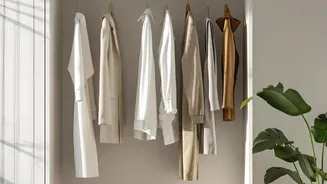
A tightly packed wardrobe is a breeding ground for mildew because air cannot circulate. Avoid overstuffing your cupboards and drawers. Leave a little space between hanging garments to allow them to breathe. This simple step helps prevent moisture from getting trapped between fabrics. If your wardrobe is placed against an exterior wall, try to leave a small gap between the wall and the furniture to minimise moisture transfer and improve ventilation.
Harness Natural Moisture Absorbers
You don't always need to buy expensive gadgets to fight humidity. Several items from your kitchen and home can act as effective, natural dehumidifiers. Dried neem leaves are an age-old Indian remedy known for their antifungal and antibacterial properties; placing them in the corners of your wardrobe can keep microbes at bay. Small bowls of rock salt or charcoal are also excellent at absorbing ambient moisture. You can even bundle sticks of chalk and hang them in your closet, as they also absorb excess dampness.
Use Silica Gel and Camphor
Those little white packets of silica gel you find in new shoes and bags are powerful moisture absorbers. Don't throw them away; instead, collect them and place them in your wardrobes, drawers, and shoe racks. They are highly effective at keeping enclosed spaces dry. For a more traditional approach, camphor balls or naphthalene balls can be placed between layers of clothing. They not only absorb moisture but also act as a repellent for insects, though it's wise to ensure some ventilation as they have a strong odour.
Protect Expensive Garments with Smart Storage
For expensive or rarely-used items like heavy saris, lehengas, or woollens, extra protection is necessary. Storing them in breathable cotton bags is a good practice, as plastic covers can trap moisture and cause damage. For long-term storage of items you won't touch until after the monsoon, consider using vacuum-sealed bags. This method removes all the air, preventing any contact with humid air and protecting the fabric from potential mildew growth. However, this is not recommended for delicate natural fibres that can get permanent creases.
Consider a Dehumidifier for Problem Areas
If you live in a particularly humid area or have a persistent dampness problem, investing in a dehumidifier can be a game-changer. Electric dehumidifiers can actively pull moisture from the air in a room, drastically reducing indoor humidity levels. For a more targeted and budget-friendly option, you can purchase disposable moisture-absorbing bags, which often use calcium chloride crystals to trap water. These can be hung directly inside wardrobes and are replaced once they are full.