







The Problem with Evening Light
In our modern, 24/7 world, we rarely think about the type of light we use. Light is just... light. But our bodies disagree. For millennia, humanity’s only light after sunset came from fire—a warm, dim, orange-red glow. Today, we have the brilliance of artificial
midday sun available at the flick of a switch. This is especially true of the crisp, white light from LED bulbs and the glow of our smartphones, tablets, and televisions. While this light is fantastic for daytime productivity, it sends all the wrong signals to our brains at night. Exposure to bright, white light in the evening can interfere with our natural sleep process, leading to trouble falling asleep, poor quality rest, and a feeling of grogginess the next day. The headline's advice isn't just poetic; it's a practical guideline for managing your internal body clock.
Your Brain on Blue Light
The science behind this is fascinating and revolves around something called the circadian rhythm—your body's internal 24-hour clock that governs sleep-wake cycles. This clock is heavily influenced by light. When light hits special receptors in our eyes, it sends a signal to the brain. During the day, bright light tells the brain to be alert. In the evening, the absence of bright light signals that it's time to produce melatonin, the hormone that makes us feel sleepy. The problem is that not all light is created equal. White light is a mix of all colours, but modern LEDs and screens are particularly rich in blue light. Research has shown that blue light is the most powerful colour at suppressing melatonin production. An evening spent under bright white lights or scrolling through your phone is essentially telling your brain, 'It's still midday! Don't get tired yet!', making it harder to wind down and fall asleep naturally.
The Sunset Solution: Red and Amber
So, if blue and white lights are the problem, what is the solution? The answer is to mimic the sunset indoors. Light on the warmer end of the spectrum—specifically red, amber, and orange—has very little effect on melatonin production. According to the CDC, red light has no effect on the circadian clock, while dim yellow and orange light have minimal impact. This makes them ideal for evening use. By switching from cool, white lights to warm-toned ones in the hours before bed, you allow your body to naturally prepare for rest. Studies suggest that using red light at night can not only protect melatonin but may even improve sleep quality. It provides enough illumination to move around safely without sending the powerful 'wake up' signal that blue light does.
Create Your Evening Light Sanctuary
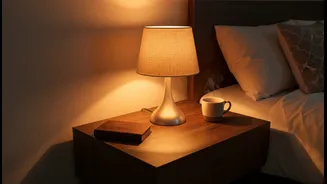
Putting this into practice doesn't require a complete home renovation. It’s about making small, strategic changes to your environment and habits. Start by dimming the lights two to three hours before your intended bedtime. If possible, switch your main overhead lights to smart bulbs that can change colour temperature, allowing you to transition from cool white during the day to a warm amber or red in the evening. Use low-wattage table lamps with warm-toned bulbs instead of bright ceiling lights. For your devices, enable 'Night Mode' or 'Blue Light Filter' settings, which give the screen a warmer, orange tint. The goal is to create a calming ambiance that signals to your body that the day is ending and it’s time to wind down.
It’s Not Just About Sleep
While better sleep is the primary benefit, managing your evening light exposure has other advantages. Reducing screen time and harsh light at night can help alleviate digital eye strain, also known as computer vision syndrome. Symptoms include eye fatigue, headaches, dry eyes, and blurred vision. While blue light is a factor, the strain also comes from screen glare and simply blinking less often when we stare at our devices. A great rule of thumb to combat this is the 20-20-20 rule: every 20 minutes, take a 20-second break to look at something at least 20 feet away. This gives your eye muscles a much-needed break from close-up focus.