




America's Next Giant Leap: The Artemis Base Camp
More than half a century after the last Apollo astronaut kicked up lunar dust, NASA is leading an international charge back to the Moon. But this time, the goal is to stay. The Artemis program aims to establish a sustained human presence on the lunar surface,
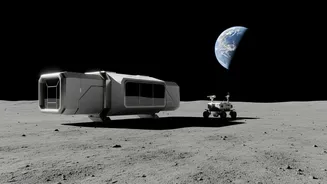
specifically near the resource-rich South Pole. This ambitious project, often referred to as the Moon Base or Artemis Base Camp, is envisioned as a hub for science and exploration, where astronauts will live and work for extended periods. The plan involves a series of complex crewed and robotic missions to construct the necessary infrastructure. This lunar outpost isn't just about studying the Moon; it's a critical stepping stone, a dress rehearsal for the even greater ambition of sending humans to Mars. Realizing such a monumental and costly vision is too much for one nation alone, which is why NASA is building a global coalition.
Enter India: A Frugal and Formidable Space Power
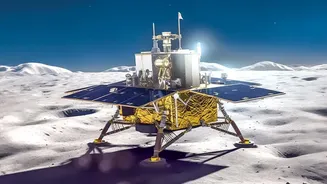
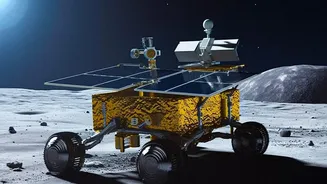
In early August 2026, during a high-level meeting in Bengaluru, NASA formally invited the Indian Space Research Organisation (ISRO) to join the Moon Base initiative. This invitation builds on India signing the Artemis Accords in 2023, a set of principles for peaceful and transparent space exploration. So, why India? The answer lies in ISRO's impressive track record of executing complex missions with remarkable cost-effectiveness. The world took notice in 2023 when India's Chandrayaan-3 mission successfully soft-landed near the lunar South Pole—a historic first—for a reported cost of just $75 million. This demonstrated a unique formula for success: frugal engineering, rapid execution, and an ability to achieve world-class results on a tight budget. For NASA, which is managing a multi-billion dollar program, a partner that has mastered the art of 'more for less' is an invaluable asset.
What India Brings to the Lunar Table
India's potential contributions go far beyond its reputation for cost-efficiency. ISRO has developed significant capabilities directly relevant to building and sustaining a lunar presence. Its Chandrayaan missions have provided crucial experience in lunar science, particularly in the South Pole region where the base is planned. India is already developing technologies for its own future missions, including Chandrayaan-4, which will be an ambitious sample-return effort, and is working on docking technologies essential for assembling structures in space. This expertise in robotics, navigation, and surface exploration could be directly applied to the Artemis Base Camp. Furthermore, with plans for its own space station and a crewed lunar mission by 2040, collaborating with NASA offers India a chance to accelerate its human spaceflight program and gain experience in deep-space operations.
A Partnership with Earthly Benefits
This collaboration isn't just happening in a vacuum. It carries significant geopolitical weight. The modern space race has a new competitive dynamic, with a U.S.-led coalition of Artemis signatories on one side and a proposed China-Russia lunar station on the other. By bringing India, the world's largest democracy and a proven space power, into its fold, the U.S. strengthens its international alliance for space exploration. This partnership serves as a strategic counterbalance to China's growing ambitions in space. For India, it provides a seat at the table in defining the 'rules of the road' for the future of the lunar economy, from resource extraction to scientific research. The cooperation deepens an already growing strategic alignment between Washington and New Delhi, extending their partnership from Earth into the cosmos.