

A New Window on Stellar Nurseries
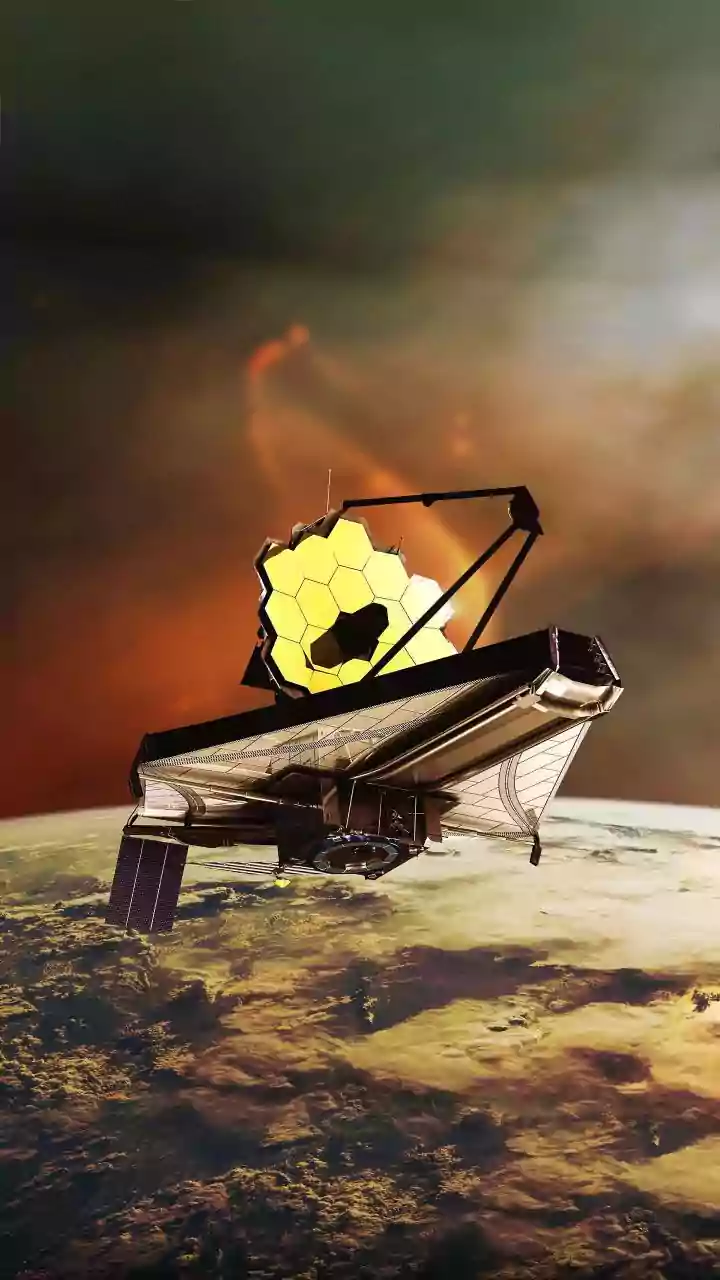
Recent images from the James Webb Space Telescope (JWST) are offering a breathtaking look into star-forming regions. One such area is NGC 604, located 2.73 million light-years away in the Triangulum galaxy. Unlike images from older telescopes like Hubble,
which were often obscured by thick dust, Webb’s powerful infrared instruments can cut through the haze. What they reveal is a dynamic landscape of glowing gas and intricate dust filaments, a detailed tapestry of stellar birth. In regions like NGC 604, astronomers have identified over 200 of the most massive and hot types of young stars, a concentration rarely seen so close to our own Milky Way galaxy. These images aren't just pretty pictures; they are crucial maps guiding our understanding of how stars begin their lives.
The Dual Role of Cosmic Dust
Cosmic dust plays a fascinating and contradictory role in the universe. On one hand, it acts like a cosmic curtain, blocking visible light and hiding the processes behind it. On the other, it is the essential raw material from which stars and planets are made. These tiny particles, often rich in carbon and other elements, clump together in the vast, cold spaces between stars. Think of it as the fertile soil of the galaxy. Within these dense, cool clouds, gravity begins to pull the dust and surrounding gas into even denser pockets. The latest Webb images show this process with stunning clarity, illustrating how different types of dust behave and organize themselves into complex patterns.
From Galactic Clumps to Stellar Cores
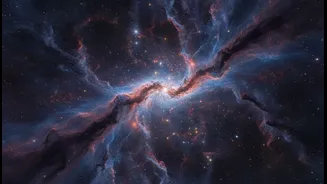
The journey from a diffuse cloud of dust to a shining star is a long and chaotic one. As gravity pulls material inward, the clouds fragment into smaller, denser clumps that form filamentary structures. These filaments, clearly visible as bright orange and deep red streaks in recent Webb images, are the prime environment for star formation. The reddish areas often signify molecular hydrogen, the coolest and densest gas that provides the fuel for new stars. As these clumps contract further, they heat up, forming what is known as a protostar. These 'baby stars' are not yet hot enough to ignite nuclear fusion in their cores but are already shaping their environment, blasting out powerful stellar winds that carve out cavities in the surrounding nebula. The new images capture these dramatic outflows, showing exactly how young stars regulate their own growth by ejecting material back into space.
Connecting to Our Own Cosmic Origins
Studying these distant stellar nurseries isn’t just an academic exercise; it’s a form of cosmic archaeology that tells us about our own origins. Our Sun, our planets, and even our bodies are made from elements forged in previous generations of stars and recycled through these very same dusty clouds. By observing regions like NGC 604 or the FS Tau system, which are only a few million years old, astronomers are getting a glimpse into a process similar to the one that formed our own 4.6-billion-year-old solar system. Each detail, from the composition of the dust to the way protostars interact with their environment, provides clues about how planets form in the disks of gas and dust that surround young stars. These new, incredibly detailed maps are essentially a family album, allowing us to see what our own cosmic neighborhood might have looked like in its infancy.