






The Age-Old Problem of Note-Taking
For generations, the challenge for students and professionals has been the same. In any fast-paced lecture, meeting, or interview, it’s nearly impossible to capture every detail verbatim while also actively listening and processing the information. Traditional
note-taking forces a compromise. Either you focus on the speaker and risk forgetting crucial details, or you focus on writing and miss the nuance and context of the conversation. This can lead to incomplete notes, missed concepts, and hours spent trying to decipher your own hurried handwriting. Studies on learning have shown that simply transcribing what you hear isn't effective for retention. The goal is to create structured, understandable notes that you can actually use for study or follow-up. That’s where a new class of devices is changing the game.
A New Generation of Smart Recorders
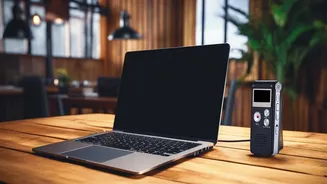
Enter the AI-powered voice recorder. These are not the simple dictaphones of the past. Modern AI recorders are sophisticated gadgets designed to be your personal note-taker. They capture high-quality audio and then use artificial intelligence to transcribe the speech into text. But their real power lies in what they do next. Instead of just a wall of text, these devices can automatically create structured summaries, identify key points, generate headings, and even create action item lists. For students, this transforms a one-hour lecture into a concise set of study notes without them having to type a single word during class. This frees them up to engage with the material, ask questions, and think critically in the moment.
How Does 'No Data' AI Work?
The most significant innovation highlighted in the headline is the ability to do all of this "without data." This refers to performing transcription and analysis locally on the device itself, without needing to send your audio to the cloud for processing. This is often called "on-device" or "offline" AI. Traditional AI services rely on powerful servers to handle complex tasks. In contrast, these new recorders use specialized chips (like Neural Processing Units, or NPUs) and highly efficient software models to run the AI directly on the hardware. The benefits are huge. Firstly, it guarantees privacy; your sensitive lectures or confidential business meetings never leave your device. Secondly, it means you're never dependent on a Wi-Fi or mobile signal. You can be in a basement lecture hall or a remote field site and the recorder will work perfectly.
From Audio to Actionable Notes
The output from these devices is what truly sets them apart. After a lecture, the AI doesn't just provide a raw transcript. It processes that text into a more useful format. For instance, it can identify different speakers, a feature known as diarization. It can pull out key themes and present them as bullet points or a short summary. Some can even generate flashcards or quizzes based on the content, creating instant study materials. This move from simple transcription to intelligent structuring is the core value. It saves hours of manual work and turns a passive recording into an active, searchable, and revisable knowledge base. The AI essentially does the first pass of organizing your thoughts, letting you focus on the higher-level task of learning.
What to Look For in a Device
If you're considering an AI voice recorder, there are several features to weigh. First and foremost, check its offline capabilities, as some devices still require cloud syncing for full functionality. Look for hardware specifically designed for this purpose, with multiple microphones to ensure clear audio capture even in noisy rooms. Battery life and storage capacity are also critical for long lectures or back-to-back meetings. Finally, consider the AI features themselves. Does the device simply transcribe, or does it offer the structured summaries, keyword extraction, and export options that make the notes truly useful? Some models stand out for their robust offline transcription, making them a top choice for users who prioritize data privacy.