



Master Bodyweight Fundamentals
The foundation of any great no-gear workout is a solid set of bodyweight exercises. These movements are effective because they engage multiple muscle groups at once, building functional strength that translates to everyday life. The key is to focus on perfect
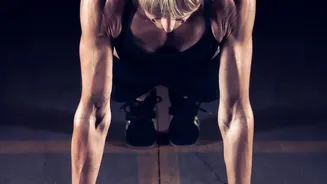
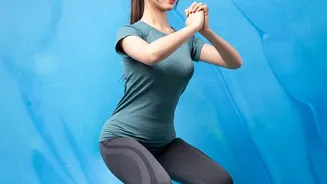
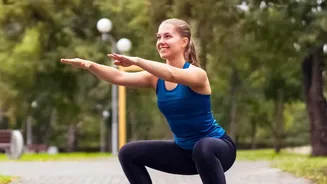
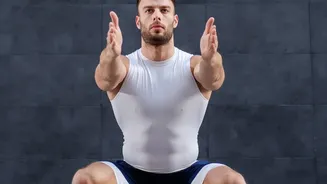
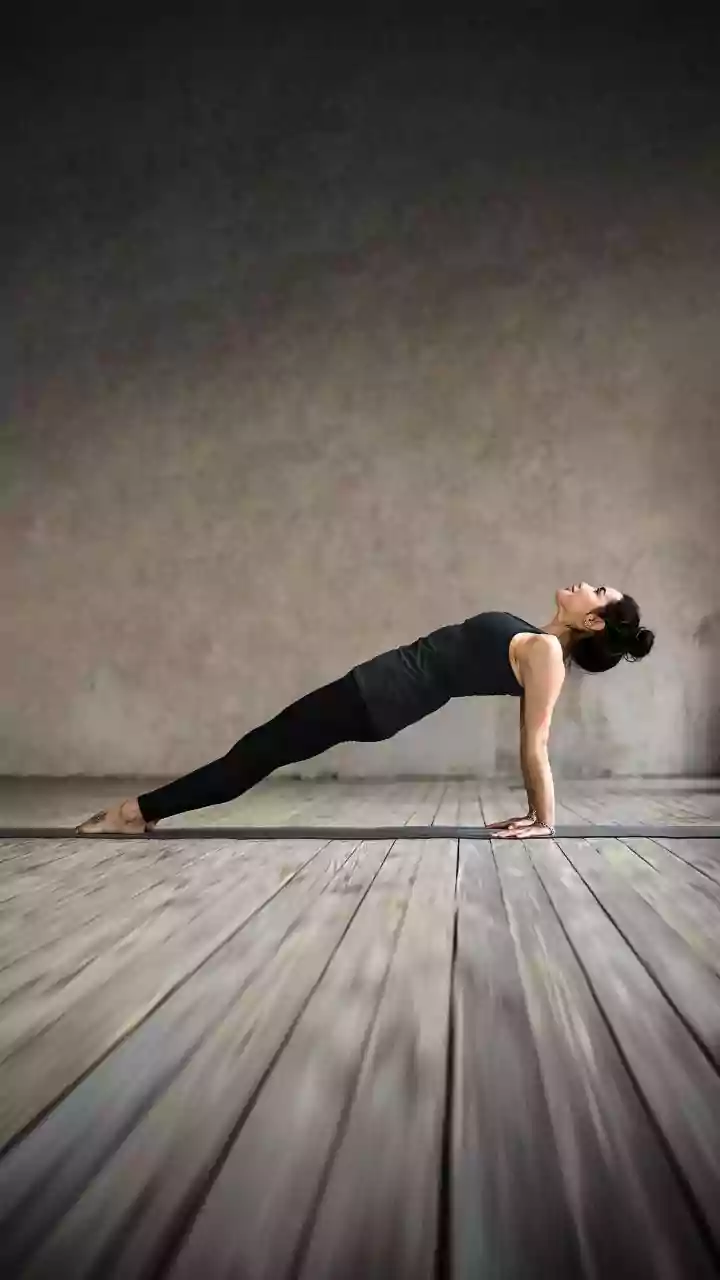
form. The four pillars to build your routine around are push-ups, squats, lunges, and planks. Push-ups target your chest, shoulders, and triceps. Squats build powerful legs and glutes, mimicking the essential motion of sitting and standing. Lunges challenge your balance and work each leg independently, which is great for small spaces. Planks are a powerhouse for core stability, which is crucial for protecting your back and improving posture. Start by mastering these basic movements before adding intensity.
Turn Your Wall Into a Workout Partner
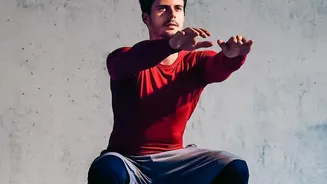
One of the most underutilised fitness tools in any home is the wall. It provides stability and resistance, allowing you to perform a variety of exercises safely and effectively. Wall sits are a classic isometric exercise that builds incredible endurance in your quads, glutes, and core. To perform one, slide your back down a wall until your thighs are parallel to the floor, as if sitting in an invisible chair, and hold. You can also do wall push-ups, which are a great way to build upper body strength if you're not yet ready for floor push-ups. For a core and glute challenge, try a wall bridge: lie on your back with your feet flat against the wall and lift your hips off the floor.
Manipulate Your Tempo
To make any bodyweight exercise significantly harder, simply slow it down. This is called tempo training, and it increases the 'time under tension' for your muscles, forcing them to work harder through every phase of the movement. For example, when doing a squat, try a '3-3-3' tempo: take three full seconds to lower yourself down, hold for three seconds at the bottom of the squat, and take three full seconds to push back up to the starting position. Applying this principle to push-ups, lunges, and other exercises will completely change the level of difficulty, stimulating muscle growth without needing to add a single kilogram of weight. This technique is perfect for maximizing results when you only have your own bodyweight to work with.
Embrace Isometric Holds
Isometric exercises involve contracting your muscles without any movement at the joints. Think of holding a plank, a wall sit, or the bottom position of a squat. These static holds are fantastic for building muscular strength and endurance. They are also incredibly low-impact, making them a safe way to build strength, especially if you are recovering from an injury. Incorporating isometric holds into your routine can improve your mind-muscle connection, as it forces you to focus intently on the muscle you're working. Try holding a plank for 30 seconds, a wall sit for 45 seconds, or a glute bridge hold for a minute. These holds engage stabilizing muscles and can significantly boost the intensity of your workout.
Combine Movements for Full-Body Burn
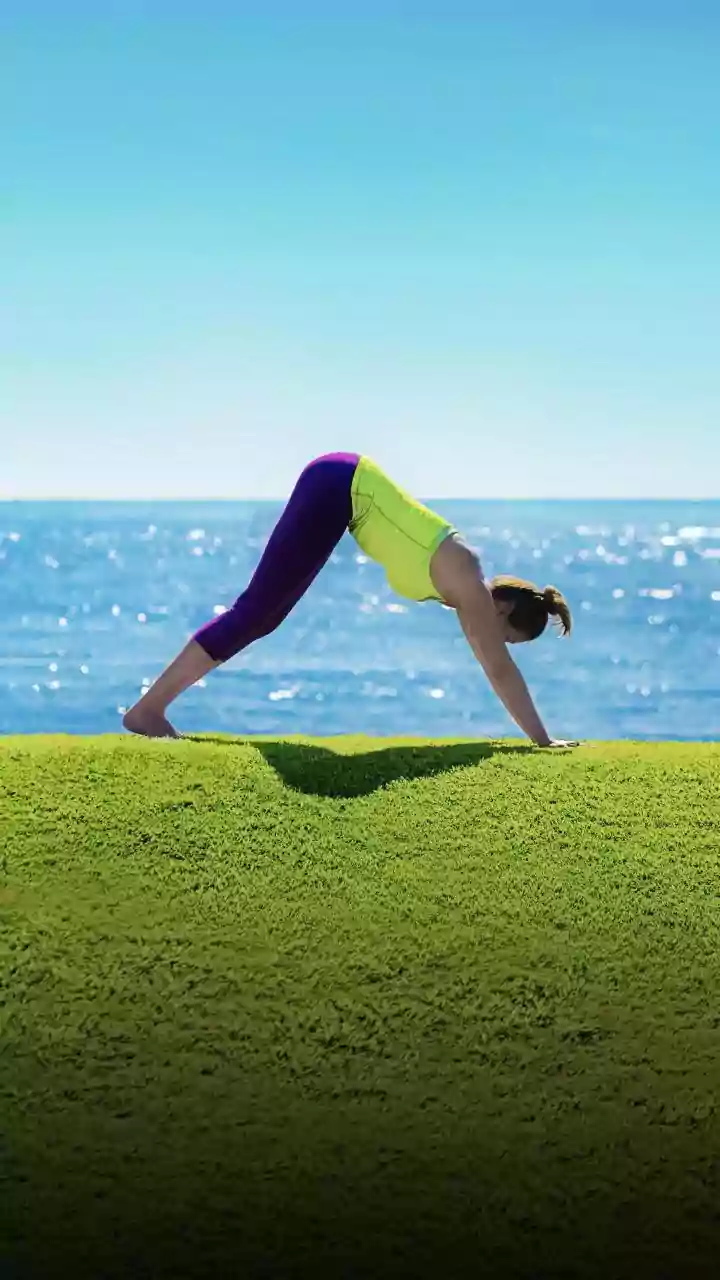
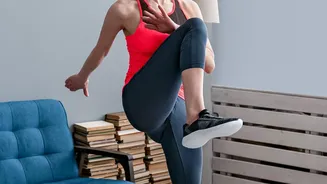
Compound exercises, which work multiple muscle groups simultaneously, are the most efficient way to train in a small space. You can take this a step further by linking different movements together into a fluid combination. For example, perform a lunge and then immediately transition into a knee drive on the same leg. Or try a 'quiet burpee' where you walk your feet back into a plank position instead of jumping, perform a push-up, walk your feet back in, and stand up. These combinations not only save time but also keep your heart rate elevated, providing both cardiovascular and strength benefits. A walkout to a plank and back up is another excellent example that engages your hamstrings, core, and shoulders all in one move.
Create a High-Intensity Circuit
Once you're comfortable with the exercises, structure them into a circuit to maximize your workout's effectiveness. Circuit training involves performing a series of exercises back-to-back with minimal rest in between. For example, you could create a circuit of 10 air squats, 10 push-ups, a 30-second plank, and 10 alternating lunges on each leg. Complete the entire circuit, rest for 60-90 seconds, and then repeat it three to four times. This approach keeps your heart rate up, burns more calories in less time, and provides a comprehensive full-body workout. You can easily adjust the exercises, repetitions, and rest times to match your fitness level and keep things challenging.