





The Heart of the Dilemma
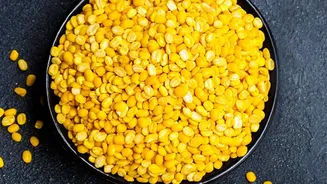
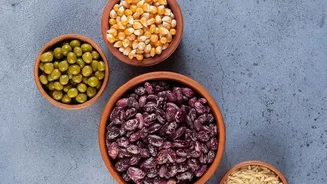
In India, the price of dal is more than just a market figure; it's a matter of national importance, affecting household budgets and political stability. The core conflict is simple: when domestic production of pulses like tur (pigeon pea), chana (chickpea),
and masoor (lentil) is insufficient to meet demand, prices rise. To combat this food inflation, the government can lower or remove import duties, allowing cheaper foreign pulses into the market. This brings relief to consumers but can cause prices to crash for Indian farmers, who then struggle to cover their costs. Conversely, protecting farmers with high import tariffs and robust support prices can lead to higher prices in the kitchen, squeezing family budgets.
A Look at the Government's Toolkit
The government uses several tools to navigate this challenge. As of late 2026, it is considering lowering import duties on lentils and yellow peas to manage rising prices, a move prompted by concerns of a poor harvest due to an erratic monsoon. This is a reactive measure to control inflation. At the same time, duty-free imports of tur and urad (black gram) are already permitted until March 2027 to bolster supply. For other pulses like chana, import duties have been kept in place to encourage farmers to plant more. The second major tool is the Minimum Support Price (MSP). For the 2026-27 Kharif marketing season, the government increased the MSP for several pulses, including tur (to ₹8,450 per quintal) and moong (to ₹8,780 per quintal), to provide a safety net and encourage production.
The View from the Kitchen
For the average Indian family, rising pulse prices are a significant concern. Pulses are a primary source of protein, and any price spike is felt immediately. In recent months, prices for key pulses have remained elevated. For example, year-on-year inflation for pigeon peas was recorded at 5.6% and black gram at 7.4%. With overall food inflation a persistent worry, the government is under immense pressure to use imports as a tool to tame prices and provide relief to consumers, especially during the festive season when demand typically surges. Economists project that food inflation could remain high in the coming months, keeping household budgets under pressure.
The View from the Farm
Farmers, on the other hand, face a different set of challenges. While MSP hikes are announced, their effectiveness depends on government procurement. Often, farmers sell their produce to village traders at prices below the MSP due to a lack of access to regulated markets. A sudden influx of cheap imports can further depress the prices they receive, making it difficult to justify planting pulses over other crops like rice and wheat, which have more robust procurement systems. Farmer unions have expressed dissatisfaction, arguing that MSP increases sometimes don't keep pace with the rising costs of inputs like fuel and fertilisers, and they demand a legally guaranteed MSP.
Searching for a Long-Term Solution
Solving the pulse puzzle requires more than just short-term fixes like adjusting import duties. Long-term solutions focus on making India self-sufficient ('Aatmanirbhar'). This involves significant investment in agricultural infrastructure, including better irrigation, as nearly 80% of pulse cultivation is rain-fed and vulnerable to erratic monsoons. Developing high-yielding, disease-resistant seed varieties is another critical area. Furthermore, strengthening the procurement network to ensure farmers actually receive the MSP is vital. Creating more stable and predictable trade policies, rather than making sudden changes, would also help farmers plan better and reduce market uncertainty. By focusing on increasing domestic productivity and ensuring guaranteed returns, India can hope to one day resolve the conflict between affordable prices and prosperous farmers.