







The Nutritional Showdown: Per Cup
When you compare a standard cooked cup of each, the numbers are surprisingly close in some areas and vastly different in others. A cup of cooked quinoa (about 185 grams) has around 222 calories, while a cup of cooked lentils (about 198 grams) has about 230
calories. They also have similar carbohydrate counts, with both hovering around 39-40 grams per cup. The major differences, however, lie in protein and fiber. These two factors are often the reason people choose one over the other for specific health goals, and understanding them is key to making the right choice for your plate.
The Protein Power Play
This is where the comparison gets interesting. Per cooked cup, lentils are the clear winner on quantity, packing a powerful 18 grams of protein compared to quinoa's 8 grams. However, quinoa has a special distinction: it is a 'complete protein'. This means it contains all nine essential amino acids that our bodies cannot produce on their own, a rare feat in the plant kingdom. Lentils are not a complete protein, but this is easily solved by pairing them with a grain like rice or bread throughout the day. For a quick, standalone complete protein source, quinoa has the edge in quality. For sheer protein volume in a single serving, lentils dominate.
Fiber, Fullness, and Gut Health
If fiber is your focus, lentils are the undisputed champion. A single cup of cooked lentils provides a massive 16 grams of dietary fiber, more than half the daily recommended intake for many adults. In contrast, a cup of cooked quinoa offers about 5 grams of fiber. This makes lentils an excellent choice for promoting digestive health, helping you feel fuller for longer, and managing blood sugar levels. The high fiber content in lentils can have a lasting effect, even helping to stabilize blood sugar at your next meal.
A Look at Vitamins and Minerals
Beyond the macronutrients, both foods are rich in essential micronutrients, but they excel in different areas. Lentils are an exceptional source of folate and iron, containing significantly more than quinoa. Quinoa, on the other hand, is richer in magnesium and manganese. Lentils also tend to have a lower glycemic index than quinoa, meaning they cause a slower, more gradual rise in blood sugar, which is beneficial for everyone, especially those managing diabetes.
In the Kitchen: Taste and Texture
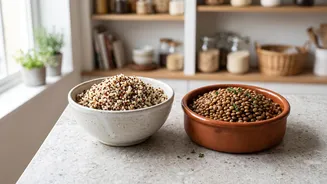
Your final choice may simply come down to what you're cooking. Quinoa cooks up to have a light, fluffy texture and a subtle, slightly nutty flavour, making it a fantastic substitute for rice or a base for salads. Lentils, depending on the variety, can either hold their shape (like green or brown lentils) or become soft and creamy (like red lentils), making them perfect for hearty soups, stews, and curries. It's also important to rinse quinoa before cooking to remove its natural coating, called saponins, which can impart a bitter taste.
Cost and Availability in India
For many Indian households, the decision often comes down to price. Here, lentils have a massive advantage. As a longstading staple in Indian cuisine, lentils (dal) are inexpensive and available everywhere. Quinoa, while increasingly cultivated in India, is still largely perceived as a premium or imported 'superfood' and can cost five to eight times more than lentils per kilogram. While a great nutritional option, quinoa's price can be a significant barrier to making it a daily staple, unlike the humble and budgetfriendly lentil.