





From finding a route to timing financial transactions, we rely on satellite navigation daily. The recent launch of NVS-03 marks a major leap for India's own system, NavIC, promising greater accuracy and self-reliance.
What is the NVS-03 Satellite?
NVS-03 is the third satellite in India's
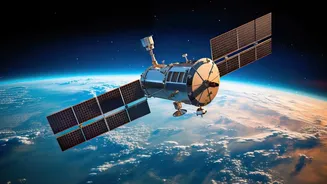
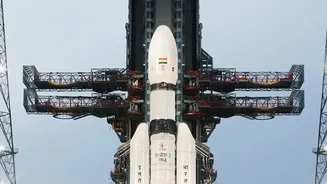
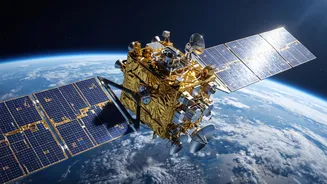
next-generation Navigation with Indian Constellation (NavIC) series. Launched aboard a GSLV-F18 rocket, its mission is to augment and ensure the continuity of India's indigenous navigation services. Think of it as a significant upgrade to the country's homegrown alternative to the American GPS. Weighing about 2,250 kg, the satellite is designed for a mission life of at least 12 years and is part of a planned five-satellite series (NVS-01 to NVS-05) meant to replace older satellites and modernise the entire constellation. Its successful placement in orbit helps restore the NavIC system to its minimum operational strength.
The Strategic Need for NavIC
Why does India need its own navigation system? The answer lies in strategic autonomy. The 1999 Kargil War, during which India was reportedly denied access to US-owned GPS data, highlighted the critical vulnerability of relying on foreign systems for military operations. An independent system like NavIC ensures that India's defence forces have secure, encrypted, and uninterrupted access to positioning, navigation, and timing (PNT) services for guiding missiles, coordinating troop movements, and navigating warships and aircraft. Beyond defence, it provides a reliable backbone for national infrastructure, including disaster management, transportation, power grids, and financial transactions, ensuring these critical services are not susceptible to foreign control.
A Game-Changer: The L1 Frequency Band
One of the most significant upgrades in the NVS series, including NVS-03, is the addition of the L1 frequency band. This is the most common civilian-use signal frequency, widely used by global navigation systems and the receivers in everyday devices like smartphones and smartwatches. Previously, NavIC operated on L5 and S bands, which required specialised chips, limiting mass-market adoption. By transmitting on the L1 band, NVS satellites make it much easier for device manufacturers to integrate NavIC compatibility into their products. This move is expected to dramatically increase the public use of NavIC, allowing more Indians to use a 'Made in India' navigation system.
The Heartbeat of Accuracy: Indigenous Atomic Clock
At the core of any navigation satellite is an atomic clock, providing the hyperprecise timekeeping necessary to calculate a location. Even a nanosecond of error can throw off a position by several feet. The first generation of NavIC satellites relied on imported atomic clocks, some of which failed, degrading the constellation's performance. To solve this, ISRO's Space Applications Centre developed its own Rubidium atomic clock. NVS_03 carries the third such indigenous clock into space, following its predecessors NVS_01 and NVS_02. This achievement is a monumental step in self reliance, ensuring a critical component for India's strategic infrastructure is built at home and not dependent on foreign suppliers.
NavIC vs. GPS: What’s the Difference?
While often called the 'Indian GPS', NavIC serves a different purpose. GPS (Global Positioning System) is a US owned system with a massive constellation providing worldwide coverage. NavIC, by contrast, is a regional system. It is designed to provide highly accurate service over India and a region extending about $~$, $~$, $~$, $~$, $~$, $~$, $~$, $~$, $~$, $~$, $~$, $~$, $~$, $~$, $~$, $~$, $~$, $~$, $~$, $~$, $~$, $~$, $~$, $~$, $~$, $~$, $~$, $~$, $~$, $~$, $~$, $~$, $~$, $~$, $~$. Within this focused service area, NavIC can offer superior accuracy compared to global systems. The two systems are not mutually exclusive ; modern receivers in smartphones can use signals from multiple constellations (like GPS , GLONASS , and NavIC) simultaneously to improve positioning accuracy and reliability. The goal of NavIC isn't to replace GPS globally but to provide a secure and superior regional alternative.