
An Explosion of Complex Flavour
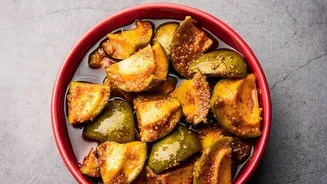
The most straightforward reason for the rise of 'achar' in global kitchens is its sheer intensity. Unlike Western pickles, which are often primarily sour due to a vinegar base, Indian pickles offer a multi-layered taste experience. They can be simultaneously
spicy, tangy, salty, sweet, and pungent, a combination South Asian cuisine calls 'chatpata'. This complexity comes from a masterful blend of spices and the use of oil—often mustard or sesame—as a base, which carries flavour in a way vinegar cannot. For a chef looking to add a powerful, concentrated kick to a dish without making it heavy, a small amount of Indian pickle provides a shortcut to a deep and nuanced flavour profile that would otherwise take hours to build.
The Magic of Fermentation
Many traditional Indian pickles are not just preserved; they are fermented. Left to cure in the sun, these pickles develop beneficial bacteria like lactobacillus, creating a 'wild ferment'. This process does more than just preserve the vegetables or fruit; it creates profound, savoury notes often described as umami. Fermentation breaks down complex compounds, making the pickles more digestible and boosting their nutritional value with vitamins and probiotics. In an era where gut health and fermented foods like kimchi and kombucha are celebrated globally, Indian pickles offer a new and exciting frontier for chefs to explore, delivering both health benefits and a signature tangy depth.
A Story in Every Jar
In today's culinary world, the story behind an ingredient is as important as its taste. Indian pickles are not just a condiment; they are a cultural artifact. Each jar carries the history of a region, a family's secret recipe, and a tradition of preserving seasonal abundance that dates back millennia. Chefs are increasingly acting as 'culinary curators', moving beyond generic fusion to explore the specific origins of their ingredients. Using a specific pickle, like a 'chibbar' chutney from Punjab or a fiery mango pickle from Andhra, allows a chef to tell a story of provenance and tradition on the plate. It’s a mark of authenticity and a nod to culinary wisdom passed down through generations.
Surprising Versatility on the Plate
While traditionally served as a side, modern chefs are deconstructing Indian pickles and using them in innovative ways. It's not just about placing a spoonful next to a steak. The flavourful oil from a pickle jar can be used to create a vibrant vinaigrette for a salad. A pickle paste can be blended with yogurt or mayonnaise to create a dynamic spread for a sandwich or a dip for crudités. Some chefs incorporate the pickle masala directly into doughs for bread or stuff it into parathas. Others might use the sharp acidity of a lime pickle to cut through the richness of grilled meats or seafood, much like a classic tartar sauce or a mignonette for oysters. This versatility makes it an invaluable tool in a creative kitchen.