


The Magic of Heatless Styling
In the quest for beautiful hair, we often find ourselves in a damaging cycle of applying heat to achieve the perfect look, only to spend time and money trying to repair the resulting dryness and breakage. Heatless styling offers a gentle alternative,
allowing you to create stunning waves and curls while your hair remains healthy and strong. The principle is simple: by setting your hair in a specific pattern while it's slightly damp, you allow it to dry into that shape. Braids are one of the most effective methods for this, and the halo braid, in particular, is an elegant style that doubles as an overnight wave-setter. The next morning, you simply undo the braid to reveal soft, natural-looking waves with zero heat and minimal effort. To get the best results, start with hair that is about 80-90% dry—damp, but not wet. Applying a light mousse or leave-in conditioner can help the waves hold their shape and reduce frizz.
1. The Classic Halo Braid for Soft, Uniform Waves
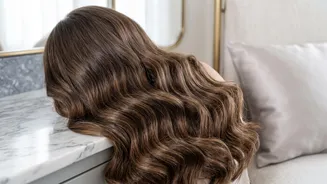
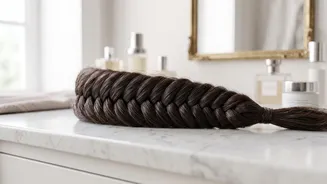
The traditional halo braid is a single continuous braid that wraps around the head like a crown. It’s perfect for creating soft, consistent waves from root to tip. Start with a Dutch braid (where you cross the strands under instead of over) at one temple. Work your way around the hairline, incorporating small sections of hair as you go, moving towards the opposite ear and around the nape of your neck. Once all the hair is gathered into the braid, continue with a standard three-strand braid to the end. Wrap the remaining tail of the braid around your head and tuck the end securely with bobby pins. This style keeps all hair neatly contained, making it comfortable for sleeping. In the morning, gently unravel the braid and use your fingers to separate the soft, romantic waves.
2. The Dutch Pigtail Braid for Defined Beach Waves
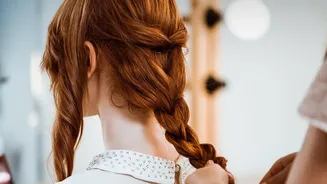
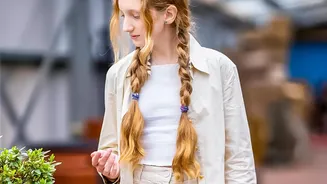
For those who find a single continuous braid tricky, or for those with shorter hair, the two-braid 'milkmaid' style is an excellent alternative. This method provides more defined, beachy waves. Part your hair down the middle and create two Dutch braids, one on each side. Start braiding near your face, keeping the tension even as you work your way down. Once both braids are complete, gently pancake them by pulling on the edges to create more volume. Then, lift each braid and cross it over the top of your head, securing the ends on the opposite side with bobby pins. This technique often creates more volume at the crown and a more defined wave pattern compared to a single halo braid. It's a comfortable and secure style that ensures evenly distributed waves when you wake up.
3. The Twisted Rope Halo for Spiralled Waves
If you're looking for a slightly different texture, the twisted halo braid is a fantastic option that produces looser, more spiralled waves. Instead of a three-strand braid, this style uses two-strand rope twists. Part your hair and create two pigtail sections. Take one section and divide it into two strands. Twist each strand individually in the same direction, then wrap them around each other in the opposite direction to form a rope braid. This twisting motion creates a unique wave pattern. Secure the ends, then wrap the two rope braids over your head and pin them in place, just like with the Dutch pigtail method. The resulting waves are less crimped and more like a soft, elongated curl, offering a relaxed and modern look.
4. The Bohemian or Messy Halo for Effortless Texture
For a truly undone, 'boho' vibe, the messy or deconstructed halo braid is your go-to. This style is all about embracing natural texture and creating a less perfect, more lived-in wave. The key to this look is to braid more loosely and to pull out small strands around your face to frame it. You can use either the single or double braid method. As you braid, don't worry about keeping every strand perfectly in place. Once the braid is secured, gently pull on the sections to create volume and a slightly messy finish. The looseness of the braid will result in softer, less defined waves that look effortlessly chic. In the morning, a spritz of texturizing or sea salt spray can enhance the beachy, relaxed feel of the waves.
5. The Five-Strand Braid for Complex, Textured Waves
For those who are more advanced in their braiding skills, the five-strand braid creates a beautifully intricate and multi-dimensional wave pattern. While it takes more practice, the result is a complex texture that can't be achieved with a simple three-strand braid. The technique involves weaving five equal sections of hair, typically by taking an outer strand and weaving it over and under the adjacent strands towards the center. You can create two five-strand pigtail braids and pin them up into a halo. Because the braid is wider and more detailed, the waves it produces are more varied, with smaller and larger bends creating a rich texture. It's the perfect choice when you want a 'wow' effect from your heatless styling.