

Why Your Hips Are So Tight
Our hip flexors, the group of muscles at the front of our hips, are central to almost every move we make. They allow us to walk, bend, run, and climb stairs. However, a modern lifestyle, dominated by prolonged sitting at desks or in cars, keeps these
muscles in a constantly shortened and inactive state. Over time, this can lead to them becoming progressively weaker and tighter, a condition sometimes called adaptive shortening. This tightness doesn't just stay in the hips; it can cause your pelvis to tilt, putting extra strain on your lower back and increasing the risk of pain and injury. Weak glute and core muscles can also contribute, forcing the hip flexors to overcompensate and tighten up.
The Benefits of Daily Mobility
Committing to a few minutes of daily hip mobility work can offer significant rewards. It's not just about feeling less stiff; it's about improving your body's overall function. Better hip mobility can lead to reduced lower back pain, improved posture, and enhanced athletic performance. It makes everyday activities like squatting down to pick something up or climbing stairs feel easier and more comfortable. By strengthening the muscles that support the hip and increasing their flexibility, you create better stability and balance, which is crucial for preventing falls and injuries, especially as we age. This small daily investment helps maintain long-term joint health and functional independence.
The Gentle Routine: 90/90 Stretch
This is a fantastic exercise for targeting both internal and external rotation of the hips. Start by sitting on the floor. Position one leg in front of you, bent at a 90-degree angle, with your outer shin and knee resting on the ground. Position your other leg to the side, also bent at 90 degrees, with your inner knee and shin on the ground. Try to keep your torso upright and your back straight. You should feel a stretch in the glute of your front leg and the inner thigh of your back leg. If it's too intense, you can place a yoga block or pillow under the knee of your front leg for support. Hold the position for 30 to 60 seconds while breathing deeply, then gently switch sides.
The Gentle Routine: Kneeling Hip Flexor Stretch
This classic stretch directly targets the hip flexors that get so tight from sitting. Kneel on one knee, as if you were about to propose. You may want a mat or towel underneath for comfort. Place your other foot flat on the floor in front of you with your knee bent at a 90-degree angle. Keeping your back straight, gently push your hips forward until you feel a comfortable stretch in the front of the hip of the kneeling leg. Be careful not to arch your back; focus on tucking your pelvis slightly to deepen the stretch. For an added benefit, you can raise the arm on the same side as your back leg straight up. Hold for 20-30 seconds and then switch to the other side.
The Gentle Routine: Glute Bridge
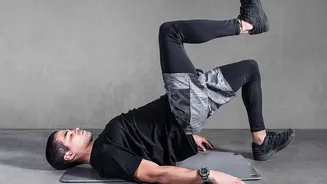
While stretching is important, strengthening is also key. Weak glutes often contribute to tight hips. The glute bridge activates and strengthens these essential muscles. Lie on your back with your knees bent, feet flat on the floor about hip-width apart, and your arms by your sides. Squeeze your glute and core muscles and lift your hips off the floor until your body forms a straight line from your shoulders to your knees. Avoid lifting too high and arching your back. Hold the position for a few seconds at the top, focusing on the contraction in your glutes, then slowly lower your hips back down. Aim for 10 to 15 repetitions.
The Gentle Routine: Frog Stretch
The frog stretch is an intense but effective opener for the inner thighs and hips. Start on your hands and knees. Slowly widen your knees as far apart as you can comfortably manage, keeping the inside of your feet and your shins on the floor. Your ankles should be in line with your knees. Gently lower yourself onto your forearms and shift your hips backward slightly to increase the stretch. You should feel this deeply in your groin and inner hips. Breathe into the stretch and hold for 30-60 seconds. This move can be very strong, so listen to your body and only go as far as feels right for you. Ease out of the position slowly.