






First Steps: Aviate, Navigate, Communicate
In any emergency, pilots are trained to follow a simple but critical mantra: aviate, navigate, communicate. The first priority is to aviate—maintain control of the aircraft. The remaining pilot will immediately take full command, often announcing “I have
control” to formalise their authority. They ensure the plane is stable, which may involve engaging the autopilot to reduce workload. With the aircraft secure, the next step is to navigate. This means assessing the flight path and deciding on the best course of action, which almost always involves diverting to the nearest suitable airport. Only once the aircraft is under control and on a safe heading does the pilot’s full focus shift to communication.
Declaring an Emergency
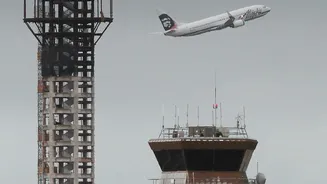
The remaining pilot will contact Air Traffic Control (ATC) to declare an emergency. Depending on the severity, this will be either a “Pan-Pan” call for an urgent situation or a “Mayday” call for a life-threatening distress situation. This declaration immediately gives the flight priority over all other air traffic. The pilot will inform ATC about the pilot incapacitation, their intentions to divert, and any assistance they require. This allows controllers on the ground to clear airspace, provide vectors for the most direct route, and prepare emergency services at the destination airport for the plane's arrival.
The Co-Pilot Is a Fully Qualified Pilot
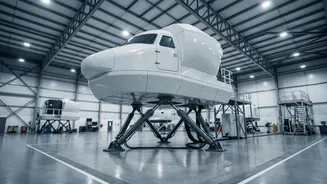
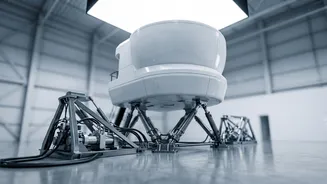
A common misconception is that the co-pilot, or First Officer, is an apprentice. This is incorrect. Every commercial airliner has two fully qualified pilots in the cockpit. While the Captain has ultimate command, the First Officer is certified to fly the aircraft and has undergone the same rigorous training, including countless hours in simulators practicing for this exact scenario. In fact, on most routine flights, the Captain and First Officer take turns flying the plane from one leg to the next. In the event of an incapacitation, the remaining pilot is not learning on the job; they are executing procedures they have practiced repeatedly.
The Role of the Cabin Crew
The cabin crew plays a crucial role as well. The pilot will alert them to the situation, and they will assist in several ways. Their first priority is to provide medical attention to the incapacitated pilot, which may involve moving them from their seat if possible to prevent interference with the controls. Flight attendants will also make an announcement asking if there are any medical professionals on board who can assist. They may also be asked to have one crew member sit in the cockpit to help with non-flying duties, such as reading checklists aloud, which helps the pilot maintain situational awareness while managing a high workload.
Using Technology to Reduce Workload
Modern aircraft are equipped with sophisticated technology that significantly reduces the pilot's workload in an emergency. The autopilot can handle the majority of the flying, from maintaining altitude and heading to following the flight path provided by ATC. Some advanced aircraft even feature autoland capabilities that can perform the entire landing sequence with minimal pilot input, which is invaluable in a single-pilot situation. In some newer, smaller aircraft, systems like Garmin's Autoland can even detect an unresponsive pilot, automatically find the nearest suitable airport, communicate with ATC, and land the plane entirely on its own.