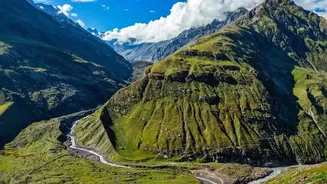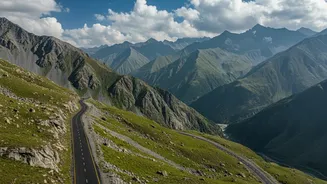




The Late Monsoon Challenge
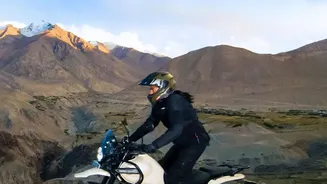
The late monsoon season transforms the Manali-Leh highway into a uniquely challenging environment. While the Ladakh side often sits in a dry rain shadow, the stretch from Manali through the Lahaul valley is a different story. You are not just dealing
with rain; you are contending with its consequences. Expect sudden landslides that can block roads for hours, flash floods that swell glacial streams (nalas), and long stretches of deep, slippery slush. Water crossings, which might be a trickle in the morning, can become raging torrents by the afternoon as the sun melts high-altitude ice and snow. These conditions make the grip of your tyres and the reliability of your brakes the two most critical safety systems you have.
Brakes: The Unseen Strain of Gravity
Descending from a high pass like Tanglang La or the Gata Loops involves kilometres of continuous downhill driving. This puts an incredible, sustained strain on your vehicle's braking system. Relying solely on the brake pedal causes the pads and rotors to generate immense heat. When they get too hot, they can suffer from 'brake fade'—a terrifying situation where the brakes become less effective, and your stopping distance increases dramatically. Add wet, muddy conditions, and the risk multiplies. To combat this, experienced drivers use engine braking by shifting to a lower gear, letting the engine control the descent and using the brakes only in short, firm bursts. This technique gives the brakes a chance to cool down and function when you truly need them.
Your Essential Pre-Trip Brake Checklist
Before you even think about loading your luggage, a thorough brake inspection is mandatory. Do not attempt this trip without it. First, have a qualified mechanic inspect the thickness of your brake pads and shoes. On a route this demanding, starting with worn pads is asking for trouble. Second, check your brake fluid. It should be at the correct level, and the fluid itself should be clean. Old, contaminated fluid can boil under high temperatures, leading to a complete loss of braking pressure. Finally, inspect the brake discs (rotors) for any signs of warping or deep scoring and ensure your handbrake is in perfect working order for parking on inclines. A professional check provides peace of mind that can’t be overstated.
Tyres: The Only Thing Connecting You to the Road
Your tyres are your single point of contact with some of the most unpredictable road surfaces in the world. In the late monsoon, you will encounter smooth tarmac, broken tarmac, sharp gravel, deep mud, and water crossings. Worn tyres with shallow tread cannot effectively channel water and slush away, drastically increasing the risk of skidding and losing control. Furthermore, the route is notorious for sharp, flinty stones that can easily puncture a standard highway tyre or, worse, slice open a sidewall. An SUV with high ground clearance is preferable, but regardless of the vehicle, the quality and condition of your tyres are paramount.
Tyre Care: What You Must Do
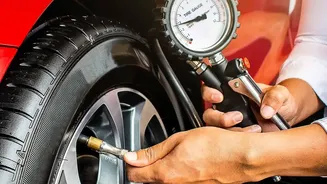
Your tyre preparation involves more than just a visual glance. First, check the tread depth on all five tyres, including the spare. Ensure they are well above the minimum tread wear indicator. Next, meticulously inspect the sidewalls for any cuts, cracks, or bulges, as these are signs of weakness that can lead to a blowout under stress. Tyre pressure is also vital; check it before starting. Finally, your toolkit is your lifeline. Ensure you have a reliable, heavy-duty tubeless puncture repair kit, a portable air compressor (not a plastic toy), and the tools to change a wheel. Knowing how to use them is just as important as carrying them.