





The Old 'Launch and Lament' Model
For decades, space has operated on a simple, expensive, and wasteful model. Satellites, some costing hundreds of millions of dollars, were launched into orbit with a finite amount of fuel and no way to be repaired. When fuel ran low or a component failed—even
a minor one—the entire multi-million dollar asset was often written off. It would either be moved to a remote 'graveyard orbit' or become another piece of hazardous space junk. This 'launch and lament' approach has left Earth's orbit increasingly cluttered and has made space operations inherently unsustainable. Each year, between 10 and 20 high-value satellites in geosynchronous orbit (GEO) are retired simply because they run out of propellant, even if their electronics are perfectly healthy.
Enter the Orbiting Mechanic
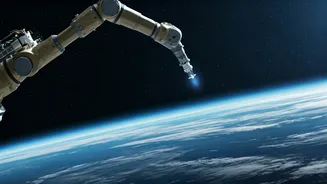
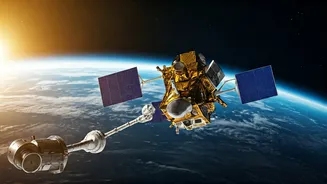
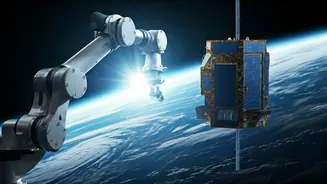
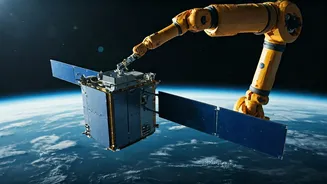
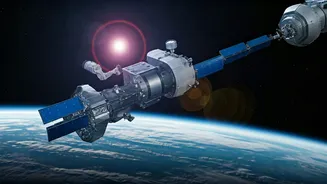
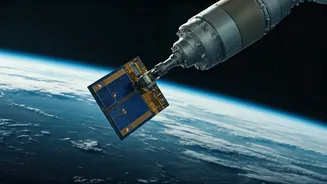
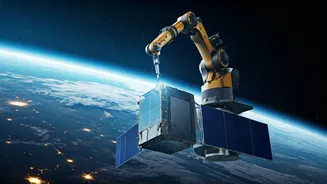
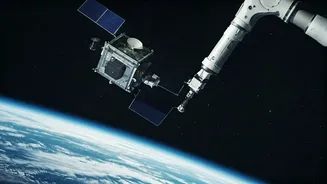
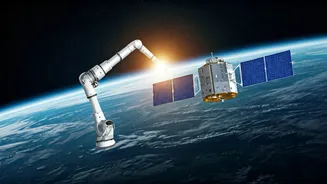
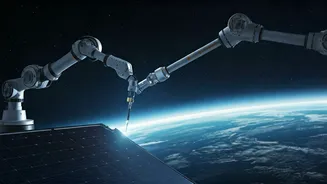
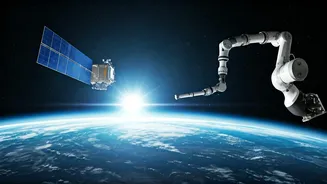
Orbital servicing is changing that paradigm entirely. It refers to a suite of capabilities performed by robotic spacecraft, including inspecting, repairing, refueling, and relocating other satellites directly in orbit. Northrop Grumman’s SpaceLogistics subsidiary has been a commercial pioneer with its Mission Extension Vehicles (MEVs). MEV-1 and MEV-2 successfully docked with Intelsat satellites in 2020 and 2021, respectively, taking over their propulsion to add years of operational life. The first of these missions recently concluded in 2025, with the MEV-1 moving the client satellite to a final orbit before detaching to await its next customer, proving the business model's viability. This marked the first time two commercial spacecraft docked in orbit, turning a theoretical capability into a flight-proven service.
A Crowded and Competitive Field
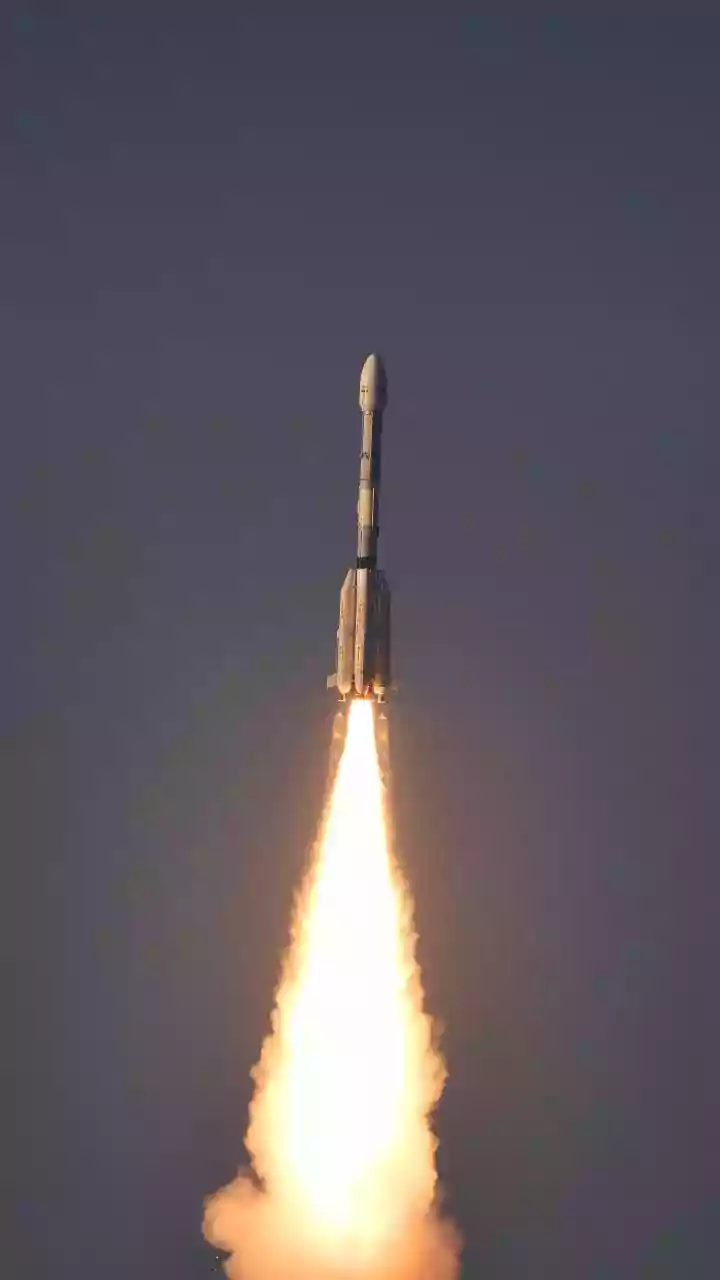
It's not just Northrop Grumman. A host of companies and government agencies are developing competing and complementary technologies. The U.S. Defense Advanced Research Projects Agency (DARPA) is partnering with the private sector on its Robotic Servicing of Geosynchronous Satellites (RSGS) program, with a launch scheduled for 2026. This Mission Robotic Vehicle (MRV) is designed for more complex tasks like on-orbit upgrades and anomaly resolution. In total, several U.S. government-backed missions are planned for 2026 to demonstrate refueling and repair, spurred in part by strategic competition. Other key players include the Japanese company Astroscale, which is focused on active debris removal. Its ADRAS-J mission recently completed a successful inspection of a large piece of space junk, a critical first step toward cleaning up orbital highways. In June 2026, NASA is also launching a mission with Katalyst Space Technologies to save the aging Neil Gehrels Swift Observatory from orbital decay by giving it a boost to a higher orbit.
More Than Just a Refuel
The implications of a robust servicing market are profound. The global market for these services is projected to grow from around $4.8 billion in 2025 to over $17 billion by 2034. Beyond life extension, this technology is a critical enabler for space sustainability. Active debris removal can mitigate the growing threat of orbital collisions, which could endanger everything from GPS navigation to space stations. It also has significant national security implications, allowing for the inspection and potential repair of critical military assets in orbit. For commercial operators, it de-risks investment in large satellite constellations and could eventually lower insurance premiums by providing a way to fix problems post-launch.
The Future is Assembly and Manufacturing
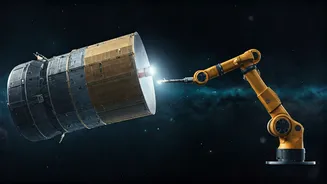
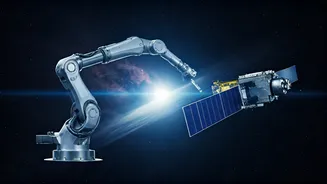
The long-term vision for this technology goes far beyond simple repairs. The same robotic capabilities being proven today are the foundation for On-Orbit Servicing, Assembly, and Manufacturing (OSAM). Instead of being limited by the size of a rocket's fairing, future missions could launch components to be assembled into massive structures in space, like large telescopes or deep-space habitats. Companies are already exploring in-space manufacturing, which could one day use raw materials sourced from asteroids or the Moon. This shift from launching finished products to launching raw materials and robotic builders represents a fundamental change in how we operate in space, creating a true circular economy hundreds of miles above the Earth.