



Jaipur's majestic palaces are legendary, but the city's true soul reveals itself when you step off the beaten path. The cooler season, from October to March, offers the perfect weather to explore the other side of the Pink City.
For the Urban Explorer: Panna Meena Ka Kund
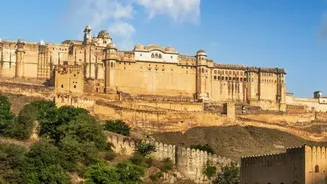
Tucked away near Amer Fort
lies an architectural marvel that often escapes the main tourist trail: Panna Meena Ka Kund. This 16th-century stepwell, or 'baori', is a mesmerising spectacle of symmetrical, crisscrossing staircases descending eight stories to the water below. Built as a reliable water source and a community gathering spot, it remains a testament to ancient India's ingenious water harvesting techniques. In the pleasant winter sun, the geometric patterns of the steps create a stunning visual, offering a peaceful and photogenic alternative to the bustling forts. It’s a place where you can spend a quiet 30 minutes absorbing centuries of history, imagining it as the social hub it once was for villagers and travellers.
For the Wildlife Enthusiast: Jhalana Leopard Safari Park
You don't need to venture far from the city to find the wild. Jhalana Leopard Safari Park, India's first leopard reserve, is located right within Jaipur's city limits, nestled in the Aravalli hills. Once a royal hunting ground, this 20-square-kilometre park is now a sanctuary for over 40 leopards. Unlike their typically nocturnal behaviour elsewhere, the leopards of Jhalana are often active during the day, making sightings remarkably common. A jeep safari during the cool, crisp mornings of winter offers a thrilling chance to see these elusive big cats in their natural habitat, along with other wildlife like striped hyenas, desert foxes, and spotted deer. It’s an unexpected urban wildlife adventure that showcases Jaipur's surprising biodiversity.
For the Art and Craft Lover: Anokhi Museum of Hand Printing
Jaipur is synonymous with vibrant textiles, and the Anokhi Museum of Hand Printing provides a deep dive into the region's most famous craft. Housed in a beautifully restored 16th-century haveli, this museum is dedicated to the art of hand-block printing. The building itself won a UNESCO award for its heritage conservation. Inside, you can explore galleries showcasing everything from antique wooden blocks and traditional textiles to contemporary designs. The museum hosts live demonstrations where you can watch master artisans meticulously carve intricate blocks and print fabric by hand. It’s an engaging and educational experience that offers a new appreciation for the skill behind the beautiful textiles found in Jaipur's markets. You can even try your hand at printing your own souvenir.
For the Spiritual Seeker: Galtaji Temple (Monkey Temple)
Situated in a narrow gorge in the Aravalli Hills, about 10 km from Jaipur, Galtaji Temple is an ancient Hindu pilgrimage site that feels a world away from the city's hustle. This complex of temples, pavilions, and seven sacred 'kunds' (water tanks) is fed by a natural spring. It is famously known as the Monkey Temple due to the large community of rhesus macaques that live here and are considered holy. The cooler winter months are the best time to visit, making the walk through the complex comfortable. Visiting in January allows you to witness the vibrant Makar Sankranti festival, when thousands of pilgrims come to bathe in the holy waters. The blend of stunning architecture, spiritual energy, and playful monkeys makes for an unforgettable excursion.
For the Quiet Historian: Gaitore Ki Chhatriyan
For a dose of royal history without the crowds, visit Gaitore Ki Chhatriyan, the royal crematorium for the Kachwaha Rajput rulers. This complex of ornate, dome-topped cenotaphs is located peacefully in the foothills of the Aravallis. Each chhatri is a memorial, intricately carved from marble and sandstone, reflecting the stature and legacy of the maharaja it commemorates. Unlike Jaipur’s major forts and palaces, Gaitore offers a serene and contemplative atmosphere. The detailed craftsmanship on the pillars and domes is breathtaking, especially in the soft light of a winter afternoon. It's a hidden gem that allows for quiet reflection on the city's royal past, offering a more personal connection to the rulers who shaped Jaipur.