






The Science of Body Power
The magic behind this technology is a phenomenon known as the Seebeck effect, first discovered two centuries ago. In simple terms, when you have two different conductive materials and one side is hotter than the other, electrons start moving from the hot side to
the cold side. This flow of electrons is an electric current. Thermoelectric generators (TEGs) use this principle to turn a temperature difference directly into electricity. For years, these generators were rigid, inefficient, and impractical for most uses outside of niche applications like powering NASA’s Mars rovers. Now, researchers are embedding this technology into flexible fabrics, creating textiles that can harness the temperature difference between your warm skin and the cooler ambient air. These are not just concepts; they are functioning prototypes showing a future where our clothes do more than just keep us warm—they keep our devices running.
From Rigid Modules to Flexible Threads
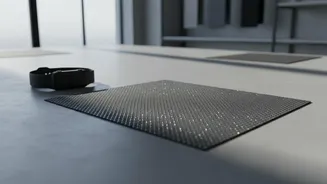
The biggest challenge has been translating the Seebeck effect from stiff, ceramic-based materials into something you would actually want to wear. Traditional inorganic thermoelectric materials are efficient but brittle and heavy. The breakthrough lies in new polymer-based materials and advanced manufacturing techniques. Scientists are developing flexible, lightweight, and even stretchable thermoelectric films and fibres that can be printed or woven directly into textiles. One recent approach from the Chinese Academy of Sciences involves a sponge-like polymer film that dramatically boosts efficiency by blocking heat transfer while enhancing electrical conductivity. Other research teams, including one in Korea, have created durable thermoelectric 'threads' that can be bent and stretched over a thousand times without losing performance, proving the potential for commercial viability. These innovations make it possible to integrate power generation seamlessly, without the user even noticing.
What Can This Technology Realistically Power?
Before you imagine a T-shirt that charges your smartphone, it is important to manage expectations. The power generated by body heat is relatively small. The temperature difference between your skin and the air is often only a few degrees, which generates a low voltage. So, while you will not be powering a laptop, this technology is perfect for the growing world of low-power electronics. Think of wearable health sensors that continuously monitor your heart rate, body temperature, or glucose levels without ever needing a battery change. Researchers have already demonstrated fabrics capable of powering small LEDs and digital timers. The goal is not to replace high-power charging but to eliminate the need for batteries in a whole class of small, 'always-on' devices where continuous operation is critical.
The Future of Smart, Self-Powered Clothing
The most compelling applications are in healthcare and performance sports. Imagine a patient recovering at home with a comfortable smart garment that provides constant medical data to their doctor, or an athlete whose clothing tracks performance metrics without a bulky battery pack. For people working in remote or extreme environments, a suit that can power essential electronics like GPS or emergency beacons could be a lifesaver. Researchers are also exploring hybrid systems that combine thermoelectric generation with other forms of energy harvesting, such as capturing kinetic energy from movement (piezoelectricity) or solar power, to create a more consistent power flow around the clock. This multi-pronged approach could make smart textiles truly independent energy systems.
The Road to Your Wardrobe
Despite rapid progress, several hurdles remain before you can buy a self-powering jacket. Cost, large-scale manufacturing, and durability are significant challenges. The materials need to be affordable to produce and withstand the rigours of daily life, including being washed and stretched repeatedly. Efficiency is also a constant focus; researchers are continually striving to increase the power output to make the technology practical for a wider range of devices. While prototypes prove the concept works, scaling it up from a lab bench to a factory floor is the next major step. The journey from a scientific breakthrough to a consumer product is long, but the progress is undeniable.