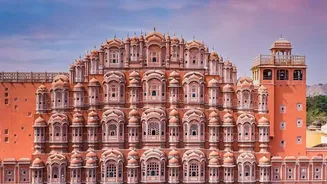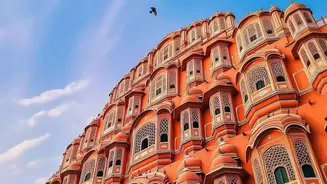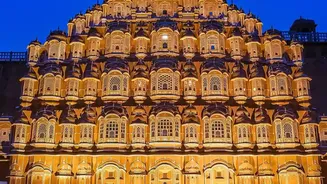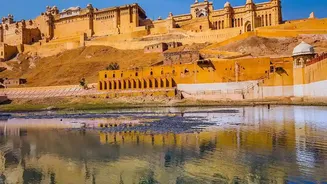



A City Designed for Artisans
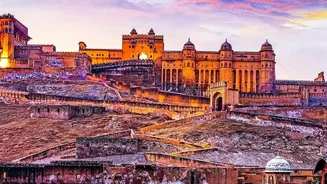
When Maharaja Sawai Jai Singh II founded Jaipur on November 18, 1727, he envisioned more than just a new capital; he planned a thriving centre of commerce and art. He invited skilled artisans and merchants from across India to settle in the city, creating
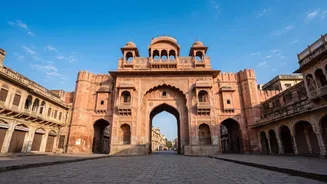
a tax-friendly haven where their talents could flourish. This foundational decision cemented Jaipur's identity as a hub for craftsmanship, a legacy that continues three centuries later. The city's famed markets were not an afterthought but an integral part of its design, laid out in organized sectors that still buzz with activity today.
The Enduring Magic of Blue Pottery
Among Jaipur’s most iconic crafts is Blue Pottery, distinctive for its brilliant cobalt blue dye and the fact that it doesn't use clay. The technique, with Turko-Persian origins, arrived in Jaipur in the 17th century. Its survival into the modern era is a story of royal patronage and dedicated revival. The process is meticulous, using a dough made from quartz powder, powdered glass, and other materials, which is then shaped, painted with intricate floral or geometric motifs, and low-fired. This makes the pottery fragile but beautiful, perfect for decorative items that carry a piece of Jaipur’s history.
Textiles That Tell a Story
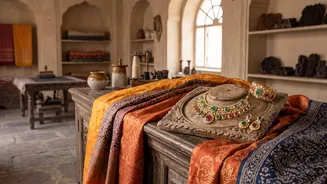
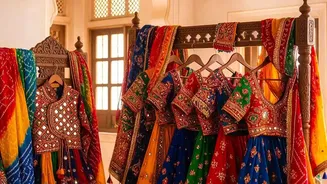
The fabrics of Jaipur are a vibrant canvas of traditional techniques. The villages of Sanganer and Bagru, near Jaipur, are world-renowned for their distinct styles of block printing. Sanganeri prints are known for their delicate floral motifs, often on a white or off-white background. Bagru printing, in contrast, features earthy tones and bold, often geometric, patterns, traditionally using a mud-resist (dabu) technique before dyeing. These crafts, passed down through generations of the 'Chippa' community, transform simple cloth into wearable art.
The Glittering Heart of Johari Bazaar
No discussion of Jaipur's crafts is complete without mentioning its mastery of jewellery. Johari Bazaar, the city's oldest and most famous jewellery market, is a dazzling spectacle of gold, silver, and precious gems. Jaipur is the epicentre of Kundan and Meenakari work. Kundan is the traditional art of setting uncut stones in highly refined gold. Meenakari is the intricate art of enamelling, or fusing vibrant colours onto metal. Often, a single piece will feature Kundan on the front and exquisite Meenakari on the reverse, a signature Jaipur style that makes the jewellery beautiful from every angle.
A Shopper's Guide to the Walled City
To truly experience Jaipur's craftsmanship, one must wander through its markets. Johari Bazaar is the undisputed destination for jewellery. For textiles, leather goods like Mojari shoes, and colourful fabrics, head to Bapu Bazaar. Tripolia Bazaar is famous for its lac bangles, where you can see artisans crafting them by hand, as well as metalwork. Nearby, Chandpole Bazaar is a hub for marble carvings and other handicrafts. Each market offers a unique sensory overload and a direct connection to the artisans themselves.
The Anniversary and the Future of Craft
As 2027 approaches, the Rajasthan government has announced plans for year-long celebrations to mark Jaipur's tricentenary. Events are expected to begin in late 2026, showcasing the city's rich history, art, and culture. This anniversary offers a crucial opportunity not just to celebrate the past but to support the future of these invaluable craft traditions. For centuries, artisans have been the city's engine, and the continued appreciation and patronage of their work ensure that Jaipur's creative soul will thrive for the next 300 years.