







A Grand Vision for an 'AI-Native' State
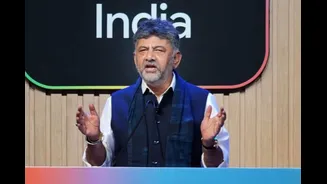
On July 14, 2026, at the Google I/O Connect event in Bengaluru, Chief Minister D.K. Shivakumar unveiled a sweeping vision to establish not just a university, but an entire ecosystem dedicated to AI. The goal is to make Karnataka an "AI-native state,"
where technology is deeply integrated into public life. This isn't just about chasing a tech trend; the stated aim is for AI to help teachers improve education, doctors diagnose diseases earlier, and farmers get better crop advice. The plan includes the university as its anchor, supported by an AI Innovation Hub for startups and researchers, and the introduction of AI education right from the school level. This holistic approach signals a serious commitment to embedding AI into the state's very fabric.
The Power of a Dedicated University
Instead of simply adding AI courses to existing engineering colleges, the government is betting on the power of a specialised, standalone institution. The proposed university, which will have a main 100-acre campus in Bengaluru and several regional centres, aims to become a world-class hub for AI talent and research. The logic is that a dedicated university can foster deeper collaboration between academia, industry, and government, creating a focused environment for innovation that a general-purpose institution might struggle to replicate. By concentrating resources and expertise, the university hopes to create a strong pipeline of highly skilled graduates and researchers who can build AI solutions tailored to India's unique challenges in healthcare, agriculture, and governance.
The Towering Hurdles of Execution
While the ambition is commendable, the path to realising it is fraught with significant obstacles that have challenged similar large-scale educational projects in India. The first major hurdle is attracting and retaining world-class faculty. There is a global shortage of top-tier AI professors and researchers, and convincing them to join a new public university, even a specialised one, will require competitive salaries, academic freedom, and state-of-the-art facilities. Another critical challenge is infrastructure. The university will need massive, sustained investment in computational power and next-generation green data centres, the plans for which were also announced. While the government has discussed using treated water and solar power for these centres, ensuring their timely and sustainable construction is a monumental task.
Bureaucracy vs. A Fast-Moving Field
Perhaps the most significant challenge will be navigating government bureaucracy in a field that evolves at lightning speed. For an AI university to be effective, its curriculum, research priorities, and partnerships must be agile and responsive to global trends. Public universities in India often face challenges with institutional autonomy, which can slow down everything from curriculum updates to hiring and procurement. Ensuring the new AI university has the flexibility to operate more like a nimble tech company than a traditional government body will be crucial for its success. Without this agility, even the most well-funded institution risks becoming obsolete before its first batch of students graduates. Balancing public accountability with the need for speed and innovation will be the government's toughest test.