




More Than a Museum Piece
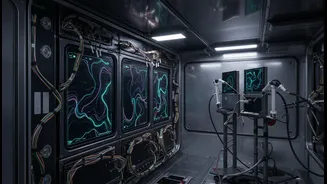
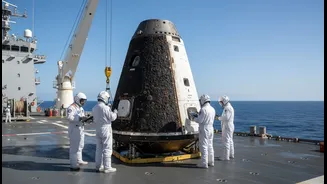
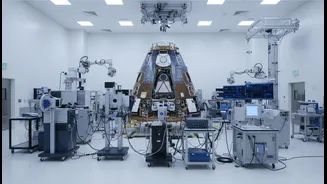
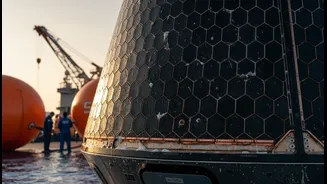
Once recovered from the Pacific Ocean, the Orion crew module isn't simply cleaned up and put on display. It’s transported to NASA's Kennedy Space Center for a meticulous, months-long teardown and analysis. This process is less about celebrating the past
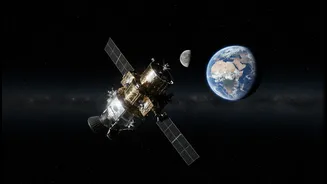
mission and more about ensuring the success and safety of future ones, like Artemis III's planned lunar landing. The capsule is a treasure trove of data, holding the secrets to how its systems performed in the harsh environment of deep space. Engineers from NASA and its partners, like Lockheed Martin and Airbus, are looking for answers to crucial questions that computer models alone cannot provide. Every component, from internal systems to the exterior, is scrutinized to compare its performance against engineering predictions.
The Heat Shield's Fiery Autopsy
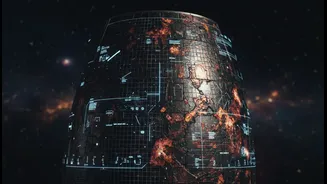
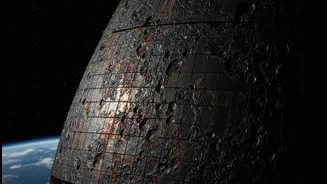
No component receives more attention than the 16.5-foot-wide heat shield. During re-entry, it endured temperatures approaching 5,000 degrees Fahrenheit while traveling at 25,000 miles per hour. After the uncrewed Artemis I mission, engineers discovered unexpected erosion and char loss, where chunks of the protective material broke away instead of ablating smoothly. An intensive investigation revealed this was due to gases building up inside the shield's Avcoat material that couldn't vent properly. For Artemis II, NASA was confident in its performance, but a detailed post-flight inspection is paramount. Technicians will take core samples and use advanced imaging to measure the char layers and degree of erosion across its 320,000 honeycomb cells. This analysis is critical to confirm that the shield can reliably protect astronauts on even more demanding return trajectories planned for future missions.
The Story of Life Support
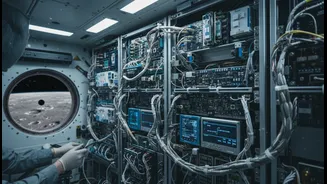
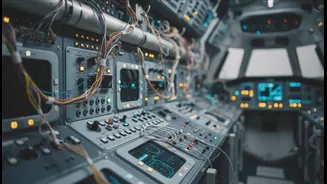
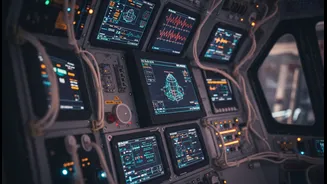
The Artemis II mission was the first real-world test of Orion’s life support and environmental control systems with a human crew in deep space. While the crew reported that systems for scrubbing carbon dioxide, controlling temperature, and managing humidity performed well, some in-flight anomalies were reported, including an issue with the waste management system's vent line. Back on Earth, engineers will carefully disassemble and test these components. They will check for wear and tear, potential contamination, and overall efficiency. Data from hundreds of sensors inside the crew module will be analyzed to see how the systems handled the crew’s metabolic loads and maintained a safe, comfortable habitat for 10 days. This information is vital for refining the systems that will need to support astronauts for much longer durations on a future lunar base or missions to Mars.
From Power and Parachutes to Data
Beyond the most visible components, every other system is thoroughly checked. This includes the parachutes that slowed the capsule for splashdown, the avionics and navigation systems that guided its journey, and the reaction control thrusters used for maneuvering. Even internal hardware like seats and video controllers are removed for analysis. Data from the flight is invaluable. During the mission, thousands of sensors tracked everything from the power generated by the solar arrays to the structural stresses on the spacecraft during launch and re-entry. This real-world data is fed back into sophisticated computer models, making future simulations more accurate. This process of validating digital twins with actual flight performance is what allows engineers to push the boundaries of exploration while managing the immense risks involved.