



Why We Need to Map the Moon
Building a permanent base on the Moon is not like construction on Earth. The lunar south pole, a likely spot for the base, is a place of extreme temperatures, harsh radiation, and unknown ground stability. Before astronauts can live and work there for long
periods, NASA needs to create a detailed 'survival guide'. This means understanding the risks, like tiny meteorite impacts and 'moonquakes', and identifying potential resources, such as water ice. Without this data, establishing a safe and sustainable presence is simply a guess. The Apollo missions were short sprints; Artemis is about learning to live there. Recent selections from NASA's PRISM program are designed to fill these critical knowledge gaps.
Investigation 1: An Environmental Watchdog
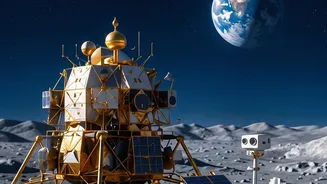
One of the new key investigations is the Lunar Environment Monitoring Station – South Pole (LEMS-SP). Think of it as a long-duration weather and hazard station for the Moon. This autonomous suite of instruments will stand guard for years, monitoring several key threats. It includes a seismometer to detect moonquakes, which will help determine how stable the ground is for building habitats. It will also track micrometeoroid impacts, essentially tiny space rocks that could damage equipment, and measure how gases and other volatile materials move across the lunar surface. This data is crucial for assessing environmental risks and designing hardware that can withstand the Moon's hostile conditions.
Investigation 2: Hunting for Natural Shelters
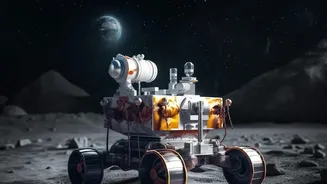
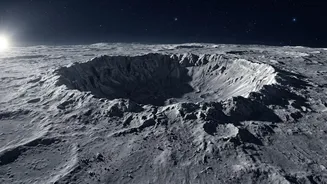
Another groundbreaking mission, fittingly named GIMLI (Geophysical Instruments for Marius Lunar pit Investigation), is going cave hunting. Scientists have long theorized that ancient volcanic activity left behind enormous underground tunnels called lava tubes. These could be game-changers for a lunar base, providing natural shelter from the wild temperature swings, radiation, and meteorite strikes on the surface. GIMLI will be sent to a feature called the Marius Hills Pit, a large hole that might be a 'skylight' into one of these tubes. Using ground-penetrating radar and other sensors, the mission will try to confirm if a large, accessible cave system exists below, potentially offering a prime location for a future protected outpost.
Investigation 3: The Search for Water Ice
Perhaps the most vital resource for a moon base is water. The Depth Imager with Spectral and Color Optics (DISCO) payload is designed to find it. Water ice is believed to be trapped in 'micro-cold traps'—small, permanently shadowed areas that are cold enough for ice to persist for billions of years. DISCO will be the first to take direct, on-the-ground measurements to find out where this ice is, how much is there, and how it is distributed. Finding accessible water would be a monumental step, as it could be used for drinking, growing plants, and even being broken down into oxygen for breathing and hydrogen for rocket fuel. DISCO will also study the soil's stability and how it's affected by rocket engine exhaust, providing key engineering data for safe landings and operations.