


Sambar’s unique flavour is a masterclass in balance. That unmistakable sour, savoury, and slightly sweet taste isn’t from one magic ingredient, but a careful symphony of elements working in perfect harmony to create South India's favourite stew.
The Sour Foundation: Tamarind
The primary
source of sambar's characteristic tang comes from tamarind. This fruit pulp provides a deep, slightly sweet sourness that forms the backbone of the dish. Unlike the sharp acidity of vinegar or lime, tamarind offers a complex sour note that is both bright and earthy. The key is balance; too much can make the stew overpowering, while too little leaves it tasting flat. The acidity from tamarind also helps to cut through the richness of the lentils and enhances the other spices, making the entire dish more vibrant. Tomatoes are also often used, adding another layer of milder acidity and fruity depth.
The Savoury Base: Toor Dal
The body and foundational savoury flavour of sambar come from toor dal (split pigeon peas). When cooked until soft and mushy, these lentils create a creamy, hearty base that carries all the other flavours. Toor dal has a mild, nutty taste that provides a subtle umami richness. This savoury depth is essential for balancing the sour tamarind and the aromatic spices. Without the substantial, grounding flavour of the dal, sambar would be a thin, tangy broth rather than the satisfying stew it is known to be.
The Heart of the Matter: Sambar Powder
Perhaps the most crucial element for flavour is the sambar powder, or 'sambar podi'. This aromatic spice blend is what truly defines the dish's complex savoury character. While recipes vary by region and household, they are typically built on a base of roasted coriander seeds and dried red chillies. To this, other ingredients like chana dal, urad dal, cumin seeds, black pepper, and fenugreek seeds are added. Roasting these spices and lentils before grinding them releases their essential oils, creating incredible depth. Fenugreek adds a hint of bitterness to balance the sourness, while the dals provide a toasted, nutty flavour. This blend contributes not just heat, but a multi-layered aromatic savouriness.
The Finishing Touch: Tempering (Tadka)
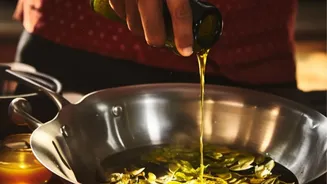
The final explosion of savoury aroma comes from the tadka, or tempering, which is added just before serving. This involves sizzling mustard seeds, dried red chillies, curry leaves, and a pinch of asafoetida (hing) in hot oil or ghee. The mustard seeds pop to release a nutty flavour, while the curry leaves impart their unique, fragrant aroma. Asafoetida is a powerful ingredient that adds a pungent, savoury note reminiscent of onions and garlic, providing a final layer of umami that awakens the entire dish. This simple step transforms the sambar, lifting its flavour and making it intensely aromatic.
The Secret to Balance: A Touch of Sweetness
A well-made sambar is all about balance, and a small amount of jaggery (unrefined cane sugar) is often the secret ingredient that ties everything together. The addition of jaggery doesn't make the sambar sweet; instead, its subtle, caramel-like sweetness masterfully rounds out the sharp tang of the tamarind and the heat from the chillies. This creates a more complex and harmonious flavour profile where no single taste dominates. Some vegetables, like pumpkin and carrots, also contribute a natural sweetness that helps achieve this perfect equilibrium.