





The Daily Dilemma of Wet Footwear
Every homeowner in a wet or snowy climate knows the struggle. Boots, umbrellas, and rain-soaked jackets create puddles on the floor, turning the entryway into a messy, hazardous zone. Traditional rubber trays and mats help, but they can overflow, become
a breeding ground for mildew, and still require constant cleanup. The water and grime that escape can cause long-term damage to expensive flooring, from warping hardwood to staining grout. More immediately, these puddles create a significant slip-and-fall risk, especially in a busy household with children or elderly family members. The constant battle to keep the entry clean and dry is a chore that a smarter design can eliminate.
An Integrated Solution: The Wet Zone Drain
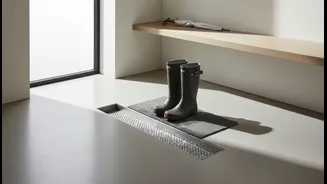
Instead of treating the symptom with temporary mats, modern mudroom design solves the problem at its source with an integrated drainage system. Often borrowing principles from commercial kitchens or 'wet room' style bathrooms, this feature creates a designated, waterproof area where water is managed automatically. This isn't just a simple drain in the middle of the floor; it's a thoughtfully designed system. Typically, it involves a recessed, tiled area that is sloped almost imperceptibly toward a hidden channel or drain. This allows water from boots, gear, or even a dog's paws to be collected and channeled away directly into your home's plumbing.
How Hidden Drainage Works
The magic of this system lies in its seamless construction. The floor in the designated mudroom 'wet zone' is built like a custom shower pan. A waterproof membrane is installed beneath a durable, non-porous surface material like porcelain tile, slate, or sealed concrete. These materials are chosen not just for their ability to withstand water, but also for their durability against the grit and grime tracked in on footwear. The floor is carefully sloped—often by just a few degrees—to guide all water toward a linear or point drain. This drain can be covered with a stylish grate that matches the room's aesthetic or be hidden entirely for a sleeker look. The entire system is designed for easy cleaning and maximum efficiency.
The Squeegee Advantage: Safety and Cleanliness
The headline's mention of 'squeegeeing' highlights a key benefit. With a properly sloped, waterproof floor, cleanup becomes incredibly simple and effective. Instead of soaking up water with towels, you can simply use a floor squeegee to direct all water, mud, and debris directly into the drain. This not only saves time and effort but also ensures the floor is left almost completely dry, drastically reducing the risk of slips. This feature transforms the mudroom from a place that constantly needs cleaning into a space that is effortlessly maintained. It contains the mess completely, protecting adjacent flooring and the rest of your home. Architects note that this feature is particularly valuable for homes near beaches or in very rainy climates, where sand and mud are constant issues.
Design and Installation Considerations
Incorporating a hidden drainage system is most easily done during a new build or a major renovation. It requires professional installation to ensure the waterproofing and sloping are done correctly to prevent any leaks or future issues. You'll need to choose durable, slip-resistant flooring materials. Matte-finish porcelain tiles are an excellent choice, as they are nearly impervious to water, easy to clean, and offer good grip even when wet. You can also integrate other useful features around the drain, such as a sturdy bench for removing boots, heavy-duty hooks, and even a low-mounted hand sprayer for rinsing off particularly muddy items or pets. While it represents an upfront investment, this type of smart fitting adds significant long-term value and functionality to a home.