



The Undeniable Cost Advantage
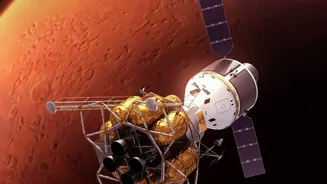
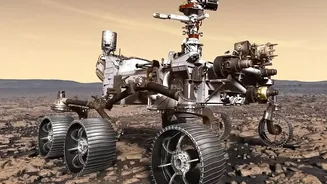
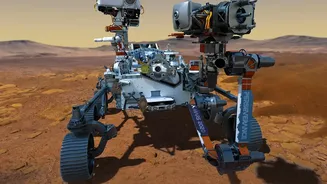
When comparing human and robotic missions, the first and most stark difference is the cost. A flagship robotic mission, like NASA's Perseverance rover, costs around $2.7 billion. In contrast, estimates for sending humans to Mars are astronomical, with
some figures exceeding $100 billion just to get astronauts into orbit around the planet, and other estimates suggesting a full mission could cost half a trillion dollars. For the price of a single human mission, dozens of sophisticated robotic explorers could be dispatched across the solar system. This economic reality is the primary driver behind the current robotic-led approach. Robots don't require life support, food, or a return ticket, which dramatically reduces the mass, complexity, and expense of a mission.
Managing Unacceptable Risk
Beyond the financial considerations lies the profound issue of human safety. Space is an incredibly hostile environment, filled with radiation and other dangers. A human mission to Mars would expose astronauts to significant health risks, and any malfunction could be fatal with no feasible rescue options. Robots, on the other hand, are expendable. While the loss of a multi-billion dollar rover is a major setback, it doesn't involve the loss of human life. This allows agencies to send robotic explorers to environments that are far too dangerous for humans, pushing the boundaries of discovery without putting people in harm's way. Rovers like Spirit and Opportunity, which vastly outlived their planned 90-day missions, demonstrate a resilience and longevity that would be impossible to demand from a human crew under such harsh conditions.
The Scientific Power of Rovers
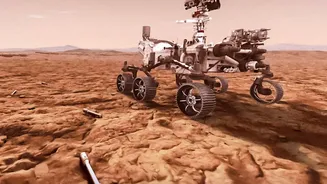
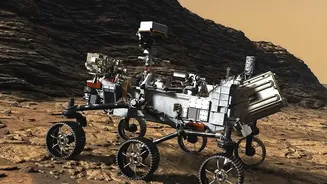
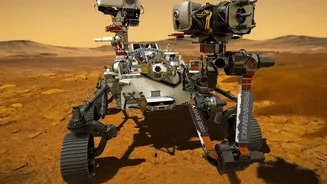
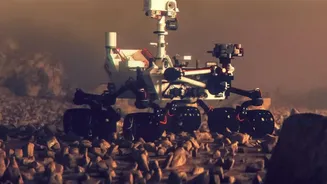
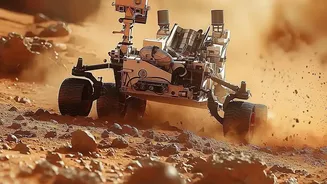
Modern Mars rovers are far more than just remote-controlled cars with cameras. They are mobile geological laboratories. Rovers like Curiosity and Perseverance carry suites of advanced scientific instruments designed to analyze rock and soil. Curiosity's mission was to determine if Mars ever had conditions suitable for microbial life, a question it answered in the affirmative within its first year. It did this by drilling into rock—a first for a rover—and analyzing the samples. Perseverance has taken this a step further by collecting and caching promising rock and soil samples for a potential future mission to return them to Earth. These robotic geologists have confirmed that Mars once had liquid water, discovered complex organic molecules, and are mapping the planet's ancient history, providing invaluable data that shapes our understanding of the planet's potential for past life.
The Irreplaceable Human Element
Despite the incredible success of rovers, they have significant limitations. They are slow; the Curiosity rover's maximum speed is a mere 0.14 km/h. Every action must be meticulously planned and transmitted from Earth, leading to slow, deliberate progress. A human geologist on Mars could accomplish in a week what a rover might take a year to do. Humans possess an unparalleled ability to adapt, improvise, and make intuitive leaps. An astronaut can see an interesting rock, walk over, and analyze it in minutes—a process that can take a rover team days of planning. Humans can also perform repairs and overcome unexpected obstacles in ways that are currently far beyond the capabilities of even the most advanced AI.
A Partnership, Not a Rivalry
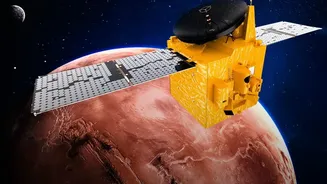
Ultimately, the 'versus' in the headline is becoming a false dichotomy. The most effective strategy for exploring Mars is not choosing between robots and humans, but using them in partnership. Robotic missions are the essential precursors to human exploration. They scout for safe landing sites, identify scientifically rich locations for future astronauts to visit, test new technologies, and characterize the environment. The data gathered by orbiters and rovers is what will make a human mission possible and productive. The future of Mars exploration is a synergy: robots will continue to be our scouts and heavy lifters, performing long-duration science and venturing into hazardous areas, while humans will follow to conduct complex, on-the-spot investigations that only they can.