





The Anniversary Portrait: Centaurus A
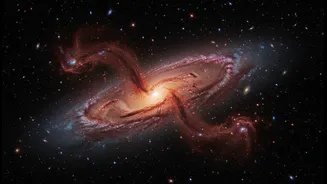
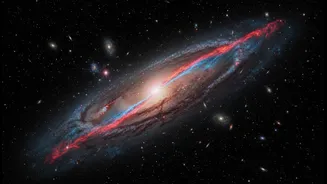
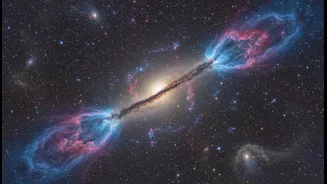
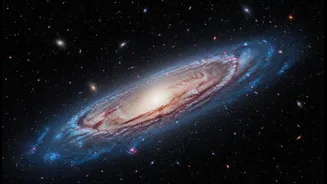
The star of this year's celebration is Centaurus A, a galaxy located a relatively close 11 million light-years from Earth. While it has been photographed by other telescopes like Hubble, those views were obscured by the galaxy's thick dust lanes. Webb,
with its powerful infrared vision, cuts through that dust to reveal the galaxy's core in stunning, unprecedented detail. The new image shows a chaotic and active galaxy, shaped by a violent collision with another galaxy two billion years ago. It’s a cosmic laboratory for studying how galaxies and the supermassive black holes at their centers grow and evolve together.
What the New Image Reveals
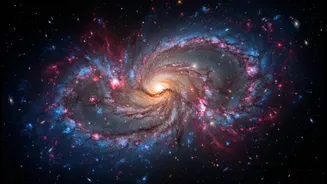
The anniversary release combines images from Webb's Mid-Infrared Instrument (MIRI) and Near-Infrared Camera (NIRCam). The MIRI view highlights the galaxy's intricate dust structures, which glow in shades of purple and white, including a mysterious S-shaped feature that astronomers are eager to understand. The glowing red dots scattered throughout are stellar nurseries, where new stars are being born from the ashes of old ones. The NIRCam view is so sharp that what looks like image noise is actually a dense field of millions of individual stars. For the first time, scientists can perform a kind of galactic archaeology, studying the galaxy star by star to piece together its dramatic history.
Four Years of Rewriting the Books
Since its first images were released in July 2022, the James Webb Space Telescope has consistently delivered groundbreaking science. In just four years, it has fundamentally altered our understanding of the universe. Its discoveries have been so profound that they have sent theorists back to the drawing board to refine their models of how the cosmos works. From its perch nearly 1.5 million kilometers from Earth, Webb has performed better than even its most optimistic designers had hoped, ushering in a new golden age of astronomy.
Greatest Hits: A Quick Tour
Webb’s portfolio is already legendary. It has peered back to cosmic dawn, discovering shockingly massive and complex galaxies that existed just 300 million years after the Big Bang, far earlier than thought possible. It has transformed the study of exoplanets, moving from simply detecting them to analyzing their atmospheres for molecules like water, methane, and carbon dioxide — key ingredients for understanding distant worlds. Webb has also given us breathtaking new views of objects closer to home, like the Pillars of Creation and the storms of Jupiter, revealing stellar nurseries and atmospheric details that were previously hidden from view.
The Technology That Makes It Possible
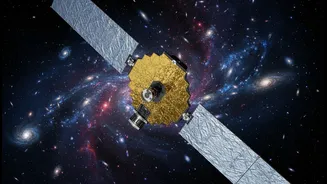
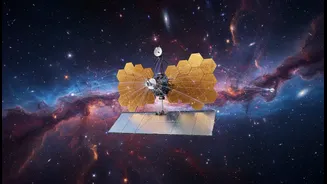
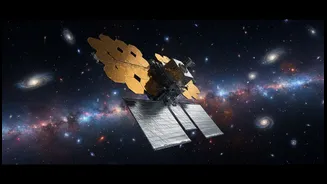
Webb’s power comes from its unique design. Its massive 6.5-meter primary mirror, composed of 18 gold-coated hexagonal segments, collects faint infrared light from the distant universe. To detect this faint heat, the telescope must stay incredibly cold, which it achieves by hiding behind a five-layer, tennis-court-sized sunshield. This ability to see in infrared is crucial; it allows Webb to look through the cosmic dust that blinds optical telescopes and to capture the redshifted light from the universe's earliest structures. It's not just taking pretty pictures; instruments called spectrographs analyze this light, breaking it down to reveal the chemical composition, temperature, and motion of celestial objects.