







The Ultimate Lifesaver: Abort Tests
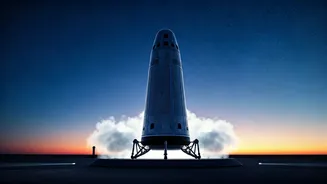
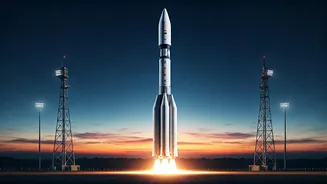
In human spaceflight, nothing is more critical than astronaut safety. ISRO's primary focus is on mastering the Crew Escape System (CES), a mechanism designed to save the crew in case of an emergency during launch or ascent. [18] This system was demonstrated
in the Pad Abort Test (PAT) and the Test Vehicle Abort Missions (TV-D1). [4, 20] These tests simulate worst-case scenarios, like a rocket malfunction on the launchpad or mid-flight. The CES uses powerful, quick-acting solid motors to pull the crew module away from the failing rocket at high speed, ensuring the astronauts can be safely jettisoned and returned to Earth. [4, 23] Mastering this is non-negotiable; it's the ultimate safety net, and its flawless performance in tests provides the confidence needed to put human lives on the line. [22]
Perfecting the Landing: Integrated Air-Drop Tests
Getting to space is only half the journey; returning safely is the other. The Integrated Air-Drop Tests (IADT) are designed to validate the parachute system, which is essential for slowing the crew module down for a safe splashdown in the sea. [3, 5] In these tests, a simulated crew module, matching the weight of the real one, is dropped from a high altitude by an Indian Air Force Chinook helicopter. [2, 6] A complex sequence of ten parachutes of four different types then deploys to gradually reduce the module's velocity from over 216 m/s to less than 11 m/s. [2, 4] Recent successful tests, like IADT-02, have validated this parachute-based deceleration system, marking a significant step towards the first uncrewed Gaganyaan mission (G1). [2]
The Full Dress Rehearsal: Uncrewed Missions
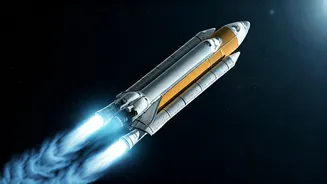
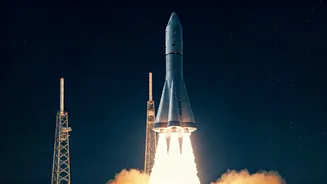
Before sending humans, ISRO will conduct two uncrewed missions to test and verify all systems in an end-to-end flight scenario. [1] These flights, designated G1 and G2, are the ultimate dress rehearsals. [13] The G1 mission, planned for the latter half of 2026, will launch an unpressurised crew module to demonstrate the performance of the human-rated LVM3 rocket, the orbital module, and the re-entry and recovery operations. [7, 18] The second uncrewed flight will carry "Vyommitra," a humanoid robot, to simulate human functions and collect critical data on how the life support and environmental control systems perform in space. [7, 18] These flights are for technology demonstration, safety, and reliability verification, ensuring every system works perfectly before the first crewed flight. [1]
Ensuring a Habitable Home: Propulsion and Life Support
The astronauts will spend up to three days in the crew module, orbiting Earth at an altitude of 400 km. [8, 15] This makes the testing of the Service Module Propulsion System (SMPS) and the Environmental Control & Life Support System (ECLSS) absolutely critical. The SMPS is responsible for orbital manoeuvres and some abort scenarios, and its thrusters and engines have been undergoing extensive hot tests. [9] The ECLSS ensures a pressurised, Earth-like environment with breathable air, temperature control, and waste management. [16] While the first uncrewed mission may fly without a fully pressurised module, the second will test the complete life support system, using Vyommitra to validate that the environment is safe for humans. [18]
Why It's More Than Just One Mission
The Gaganyaan programme is not an end in itself but the foundation for a sustained Indian human space exploration programme. [1] The rigorous test campaign is crucial because it develops and validates technologies that will be used for decades to come. Success will enable India to collaborate in global space station development, conduct advanced scientific experiments in microgravity, and eventually undertake more ambitious missions. [1, 12] Prime Minister Narendra Modi has already set future goals for an Indian space station by 2035 and sending an Indian astronaut to the Moon by 2040, all of which depend on the solid, safety-first foundation being built through the Gaganyaan tests today. [17]