







A New Space Race, A New India
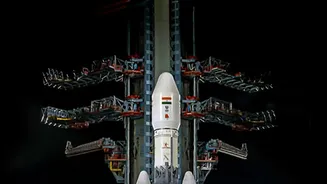
In the wake of Chandrayaan-3's historic landing, India cemented its status as a major spacefaring nation. But behind the scenes, a quieter and equally profound revolution is taking shape. The Indian government has strategically opened the doors to the final
frontier, creating a vibrant ecosystem for private companies. Since 2020, policy shifts and the establishment of IN-SPACe, a single-window agency to authorize private space activities, have unleashed a torrent of innovation. With the Indian Space Research Organisation (ISRO) now focusing on deep-space R&D and landmark missions, the stage is set for a new generation of entrepreneurs to take over the business of building and launching hardware, including the ambitious goal of placing rovers on the Moon. More than 400 space startups are now active across the country, tackling everything from satellite launches to data analytics.
The Ambitious Forerunners
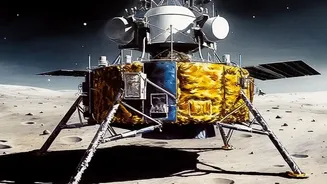
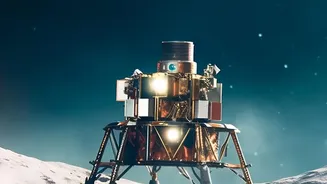
The dream of a private Indian moonshot isn't new. The story begins with TeamIndus, a Bengaluru-based startup founded in 2010 to compete for the Google Lunar XPrize. Backed by prominent Indian investors, the team of engineers and scientists designed a lander and a small rover named ECA, an acronym for "Ek Choti Si Asha" or "A Small Hope". Their goal was to prove that a small, agile team could achieve what was once the sole domain of superpowers. While TeamIndus ultimately missed the competition deadline due to funding and contractual hurdles, their journey was a watershed moment. It demonstrated that the talent and technical know-how to design a complex lunar mission existed within India's private sector, inspiring many who followed.
How to Build a 'Cheap' Rover
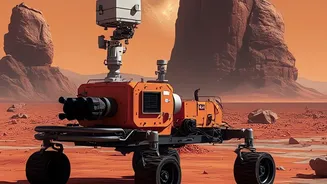
The key to this new commercial push is affordability. Indian startups are not just copying the blueprints of legacy space agencies; they are rewriting the rulebook on cost. The approach, sometimes called frugal innovation, prioritizes function over frills. This involves using reliable commercial off-the-shelf components instead of bespoke, space-grade parts that cost exponentially more. Development cycles are faster, embracing an agile methodology common in the software world. By focusing on specific, commercially viable tasks—like prospecting for minerals or inspecting landing sites—these companies can design smaller, lighter rovers that require less fuel and can be launched on more affordable rockets. This model trades the near-zero-failure tolerance of a multi-billion dollar national mission for a calculated risk that dramatically lowers the barrier to entry.
The Next Wave of Lunar Contenders
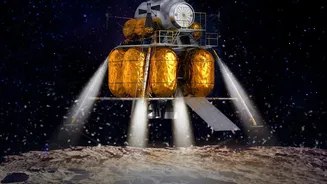
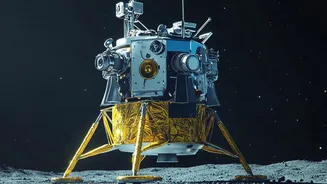
Today, new players are carrying the torch forward. ORBITBeyond, for instance, is establishing a global space systems centre in Bhubaneswar to design and manufacture lunar landers and rovers. The company is drawing directly from the expertise of engineers who worked on India’s own Chandrayaan missions, creating a direct bridge between government experience and private enterprise. Meanwhile, the diffusion of talent from ISRO is seeding new ventures everywhere. Kepler Aerospace, a Bengaluru startup that recently raised $8 million for a satellite constellation, was co-founded by an engineer who previously worked on a lunar nano-rover project. This cross-pollination of talent is crucial for building a self-sustaining industry capable of tackling complex challenges.
Challenges on the Launchpad
The path to the lunar surface remains fraught with difficulty. Space is an unforgiving environment, and the technical challenge of a soft landing is immense. Beyond the engineering, startups face the constant pressure of securing funding for long-term projects with distant payoffs. Navigating regulatory frameworks, though improving, can still be complex for a nascent industry. However, the ecosystem is rapidly maturing. The rise of private Indian launch companies like Skyroot Aerospace and Agnikul Cosmos means that in the near future, a startup could potentially design, build, and launch a rover mission almost entirely within the country. This vertical integration is key to making commercial lunar exploration a repeatable and sustainable business.