






It sounds like science fiction: hackers weaponising refrigerators. But recent events across Europe turned this theory into a costly reality, exposing a hidden vulnerability in the global food supply chain and the risks of our connected world.
An Unprecedented Attack on the Food Chain
In October
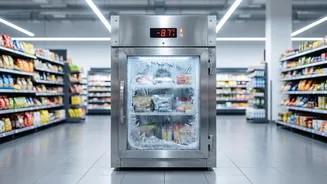
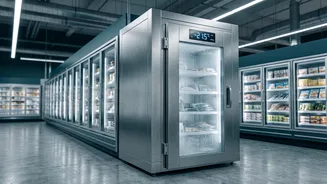
and November 2026, hundreds of supermarkets across at least a dozen European countries, including France, Belgium, Sweden, and Ireland, faced a coordinated cyberattack. Hackers didn't steal customer data or money; they targeted the industrial refrigeration systems. Remotely, they forced the units into a continuous defrost or heating cycle, sending temperatures soaring to 50°C (122°F). The attack, often happening overnight, went unnoticed until employees arrived to find spoiled food, damaged equipment, and in some cases, fire hazards. Supermarket chains like Carrefour, SuperValu, and Delhaize had to discard tons of meat, dairy, and frozen goods, leading to millions of euros in losses and a stark warning about the fragility of modern infrastructure.
The Core Vulnerability: Convenience Over Security
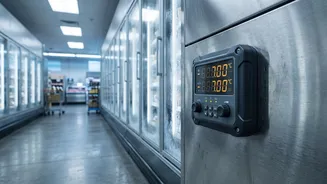
So, how did this happen? The weakness lies in the very feature designed for convenience: internet connectivity. Commercial refrigeration units are often connected online, allowing technicians to remotely monitor temperatures, diagnose faults, and manage systems without being physically present. However, this connectivity creates an entry point. The attacks exploited several basic security flaws. In many cases, the systems were accessible over the public internet and protected by weak or default credentials; one system's password was simply the current date. Many of these controllers were running on outdated software, or 'firmware', that no longer received security updates, leaving known vulnerabilities unpatched and wide open for exploitation. Because the hackers used the systems' own functions, like the defrost cycle, the commands initially looked like routine activity.
A Global 'Internet of Things' Problem
While refrigerators were the target, this story is about the broader danger of the 'Internet of Things' (IoT). Billions of devices, from security cameras and thermostats to industrial controllers, are now online. Each one is a potential backdoor into a larger network. Security experts have warned for years that many IoT devices are shipped without security as a priority, making them easy targets. Once a single weak device is compromised, attackers can sometimes move through the network to access more critical systems. These recent events are a real-world demonstration of what happens when operational technology (OT)—the hardware and software that controls physical equipment—is targeted, causing tangible, physical-world damage. The attackers didn't need sophisticated malware; they just needed to find an open door that was left unlocked.
The Alarming Ripple Effect
The impact goes far beyond spoiled groceries. These attacks represent a deliberate attempt to disrupt the food supply chain and erode consumer confidence, according to European officials. The same vulnerabilities exist in refrigeration systems used by hospitals, blood banks, and pharmaceutical companies—sectors where a temperature change could have life-threatening consequences. In fact, several French blood banks were targeted in the November attacks, though staff intervened in time to prevent the loss of blood plasma. In response to the European incidents, the U.S. government, including CISA and the FBI, issued a joint warning urging all organisations that depend on refrigeration to assume they are targets and to immediately shore up their defences.
Securing the Future of Connected Devices
Preventing future attacks requires a fundamental shift in how businesses approach IoT security. Experts and government agencies recommend several key steps. First, remove control systems from the public internet whenever possible. If remote access is necessary, it must be secured behind a firewall with strong, unique passwords and multi-factor authentication. Regularly updating software and firmware is critical to patch vulnerabilities as they are discovered. Finally, businesses should segment their networks, keeping critical operational technology like refrigeration controllers on a separate network from their corporate IT systems to ensure that a breach in one area does not spread to the other. Ultimately, security can no longer be an afterthought in the age of connected devices.