


Meet the Newest Uranian Moon
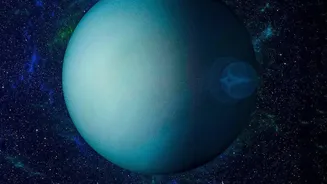
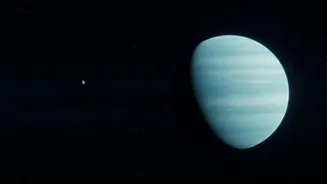
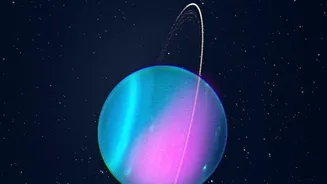
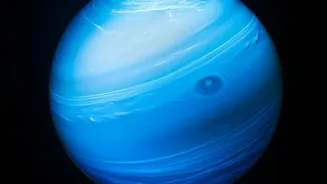
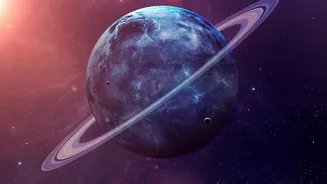
Astronomers have confirmed the discovery of a new moon orbiting Uranus, the first to be found in over two decades. Provisionally named S/2023 U1, this celestial body is incredibly small, estimated to be only about 8 kilometres in diameter, likely making
it the smallest of Uranus’s 28 known moons. It was first spotted in late 2023 by astronomer Scott Sheppard using the powerful Magellan telescopes in Chile. The discovery required special image processing techniques to even detect such a faint object, which takes a lengthy 680 Earth days to complete a single orbit around its parent planet. True to tradition for Uranian satellites, it will eventually be named after a character from a Shakespeare play.
The Challenge of Finding Faint Objects
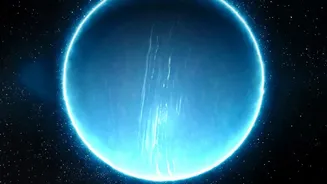
Finding a moon this small and distant is a monumental achievement. Sheppard and his team used a method that involves taking many long-exposure images and then digitally stacking them, aligning them to follow the planet's motion. This process makes faint, moving objects like a tiny moon appear as a point of light, while background stars streak into lines. The initial sighting in November 2023 was followed by more observations and a deep dive into older images from 2021, where astronomers were able to retroactively spot the moon and confirm its orbit. This meticulous work highlights how advanced technology and patient observation are pushing the boundaries of what we can see in our own cosmic backyard.
A Glimpse into a Violent Past
So, why is this tiny moon significant? A key reason is that its orbit provides clues about the early history of our solar system. Moons like S/2023 U1, with their distant, eccentric, and inclined orbits, are considered 'irregular' satellites. Scientists believe they were not formed alongside Uranus but were instead captured by the planet's immense gravity long ago. These captured objects are like fossils from a chaotic era when the giant planets were migrating, flinging smaller bodies across the solar system. By studying the orbits of these captured moons, scientists can model the gravitational disruptions of that period and better understand how our solar system settled into its current configuration.
Completing the Planetary Portrait
Every new moon adds another piece to the puzzle of a planet's system. The outer planets, including Uranus and Neptune, have complex families of moons. Some of these, known as 'shepherd moons', play a crucial role in maintaining the structure of the planet's rings, using their gravity to keep the ring particles in narrow, defined bands. While S/2023 U1 is too distant to be a ring shepherd, its discovery helps complete the census of Uranus’s satellite system. Understanding the full population of moons—big, small, close, and distant—is essential for a complete model of how the entire Uranian system of rings and moons formed and evolved.
Informing Future Exploration
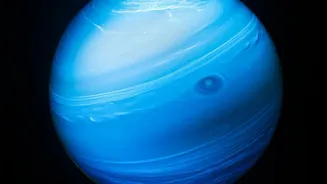
Discoveries like this also lay the groundwork for future space missions. Planetary scientists are actively pushing for a dedicated orbiter and probe to be sent to Uranus, which has only been visited once by a brief flyby from Voyager 2 in 1986. Knowing what's there is the first step in planning such a multi-billion-dollar mission. Each newly identified moon is a potential target for study and provides crucial data for navigating the complex gravitational environment around the ice giant. Mapping these small bodies helps ensure a future spacecraft can safely operate and achieve its scientific objectives, offering humanity its first detailed look at this mysterious world.
Our Solar System in a Cosmic Context
Ultimately, a deep understanding of our own solar system helps us understand others. Astronomers have now discovered thousands of planets orbiting other stars, known as exoplanets. By studying the full arrangement of planets and moons right here at home—from the largest gas giants to the tiniest captured asteroids—we build a baseline for what a 'normal' planetary system looks like. This helps us interpret the data from distant stars and assess whether the systems we see out there are like our own. The quest to find exomoons is just beginning, and understanding our own moons is a critical step in knowing what to look for.