


As winter approaches, Delhi is once again bracing for its annual battle with air pollution. This year, authorities are rolling out strict vehicle restrictions starting in November, directly impacting many car owners in and around the capital.
What Exactly Is the November Ban?
The headline
refers to a key part of Delhi's Winter Action Plan to combat hazardous air quality. From November 1, 2026, to January 31, 2027, vehicles registered outside of Delhi that do not meet the Bharat Stage VI (BS6) emission standard will be banned from entering the city. This is a pre-emptive measure aimed at curbing vehicular pollution during the months when Delhi’s air quality typically plummets to 'Severe' or 'Hazardous' levels. The ban applies to both private and commercial non-BS6 petrol and diesel vehicles. However, vehicles running on CNG or electricity are exempt from this specific entry restriction. This fixed-date entry ban is separate from, but works alongside, the emergency measures of the Graded Response Action Plan (GRAP).
Understanding GRAP and Its Vehicle Rules
The Graded Response Action Plan (GRAP) is an emergency response system that gets activated based on AQI levels. Its restrictions become stricter as the air quality worsens. While the November 1 entry ban targets out-of-state vehicles, GRAP imposes rules on all vehicles operating within Delhi-NCR, including those registered in Delhi. If the air quality deteriorates to 'Severe' (GRAP Stage III), a ban is enforced on BS3 petrol and BS4 diesel four-wheelers throughout Delhi-NCR. If conditions worsen to 'Severe+' (GRAP Stage IV), the restrictions could be expanded further. These GRAP-based bans are dynamic and are lifted once the air quality improves.
Decoding BS6: What It Means For Your Car
Bharat Stage (BS) standards are emission regulations that set a maximum limit for pollutants from a vehicle's engine. India transitioned directly from BS4 to the much stricter BS6 standard on April 1, 2020. Therefore, if your car was purchased on or after this date, it is BS6 compliant. Cars bought before April 2020 are likely BS4 or older. BS6 engines are significantly cleaner. They use advanced filters and systems that cut down harmful nitrogen oxide emissions by up to 70% in diesel engines and 25% in petrol engines compared to their BS4 counterparts. They also run on low-sulphur fuel, which further reduces pollution.
How to Check Your Vehicle's BS Standard
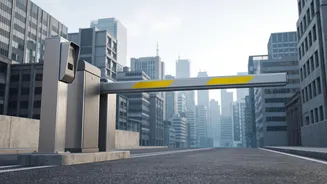
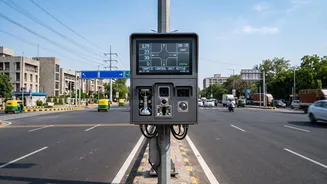
The easiest way to confirm your car's emission norm is to check its Registration Certificate (RC), either the physical card or the digital version on apps like mParivahan. The RC will have a field titled 'Emission Norms' or 'Norms Type' that explicitly states 'Bharat Stage VI', 'BS-IV', etc. Alternatively, you can use the online VAHAN portal. By entering your vehicle's registration number on the Parivahan Sewa website, you can access its details, including the emission standard. Knowing your car's status is crucial, as enforcement will be strict, with Automatic Number Plate Recognition (ANPR) cameras deployed at border points to identify non_compliant vehicles.
Who is Exempt and What Are the Penalties?
The entry ban for out_of_state non_BS6 vehicles has a few key exemptions. All electric vehicles and vehicles running on CNG are permitted to enter Delhi regardless of their registration state. Additionally, vehicles used for essential services, such as emergency response, healthcare, and law enforcement, are also exempt from these restrictions. For those who violate the ban, enforcement will be stringent. Alongside the physical deployment of enforcement teams, authorities will use a network of cameras to automatically identify and penalize non_compliant vehicles entering the city. Drivers should also be aware of the 'No PUC, No Fuel' rule, which denies fuel to any vehicle without a valid Pollution Under Control Certificate.