



A Tale of Two Planets
At a glance, Earth and Venus are cosmic siblings. They are similar in size, mass, and composition, and scientists believe they were formed from the same primordial materials. But their evolutionary paths diverged dramatically. While Earth became a haven
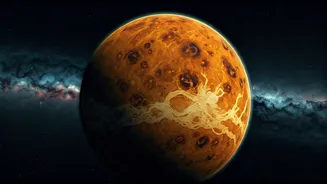
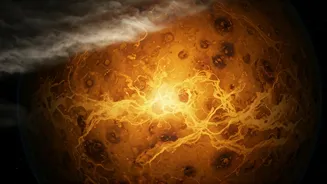
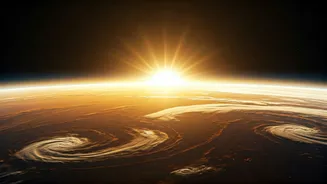
for life, Venus devolved into the most inhospitable planet in the solar system. Its atmosphere is over 90 times denser than Earth's and consists of 96% carbon dioxide, a greenhouse gas. This has created a runaway greenhouse effect, trapping heat and sending surface temperatures soaring to an average of 464°C. Yet, evidence suggests Venus may have once had a climate similar to Earth's, possibly with oceans, rain, and more stable temperatures.
A Warning From Our Neighbour
Understanding what went so catastrophically wrong on Venus is the driving force behind this renewed scientific interest. The planet serves as a natural laboratory for studying a greenhouse effect in its most extreme form. At some point in its history, Venus started trapping too much heat, triggering a disastrous feedback loop. Rising temperatures would have caused its ancient oceans to boil, releasing immense amounts of water vapor—another potent greenhouse gas—into the atmosphere. This, in turn, trapped even more heat until the oceans evaporated completely. While Earth is not in immediate danger of becoming a Venus-like inferno, studying this process provides invaluable data for refining our own climate models and understanding the tipping points that can lead to irreversible climate change.
India's Mission: Shukrayaan-1
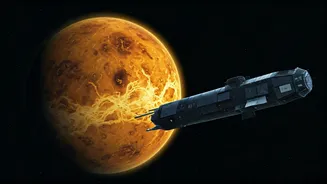
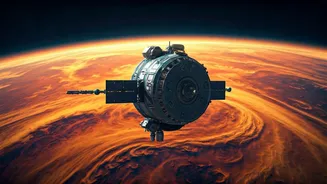
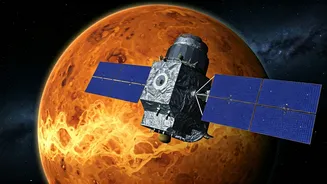
Enter Shukrayaan-1, the Indian Space Research Organisation's (ISRO) planned orbiter mission to Venus. Formally approved by the government, the mission is currently slated for a March 2028 launch. This ambitious project marks India's first foray to Venus and places it among a select group of space agencies exploring our neighbouring planet. The spacecraft, launched aboard India's most powerful rocket, the LVM3, will carry a suite of scientific instruments designed to investigate the Venusian mystery from orbit. Shukrayaan is not just a technology demonstration; it's a science-first mission aimed at peeling back the layers of Venus's thick clouds.
Unlocking Venusian Secrets
The primary objectives of Shukrayaan-1 are comprehensive. ISRO plans to study the planet's surface and subsurface, investigate its complex atmospheric dynamics, and analyze the interaction between the solar wind and the Venusian ionosphere. One of the key instruments will be a high-resolution Synthetic Aperture Radar (SAR), capable of piercing the dense cloud cover to map the surface in detail—a feat that visual cameras cannot achieve. Scientists also hope to investigate signs of active volcanism, which may have played a key role in pumping greenhouse gases into the atmosphere and triggering the planet's climate collapse. By studying these processes, India aims to contribute crucial knowledge about how Earth-like planets evolve and what makes them habitable—or not.