







The Trust Deficit with Ghost Kitchens
Cloud kitchens, or 'ghost kitchens', are delivery-only establishments without a physical storefront. This model offers lower operational costs but creates a significant challenge: a consumer trust deficit. Unlike a traditional restaurant where a customer
can see the dining area and get a feel for the establishment's cleanliness, cloud kitchens are invisible. This lack of visibility breeds suspicion. Customers worry about the conditions in which their food is prepared, a concern amplified by occasional news of poor food handling. For these businesses, whose entire interaction with a customer happens on a screen and at the doorstep, building trust is not just a marketing goal—it's a survival imperative.
Beyond the FSSAI Licence
In India, all food businesses, including cloud kitchens, are legally required to have a Food Safety and Standards Authority of India (FSSAI) license. This is the absolute minimum standard, assuring customers that a kitchen meets basic safety and quality benchmarks. Major food delivery platforms like Zomato and Swiggy mandate this registration for listing. However, in a market where every legitimate player has this license, it ceases to be a differentiator. It’s a pass-fail test, not a mark of excellence. Consumer expectations have evolved; they are increasingly concerned about how their food is handled from preparation to delivery. Simply having a license number on a profile is no longer enough to win the confidence of a discerning, health-conscious customer.
How to Market Hygiene Effectively
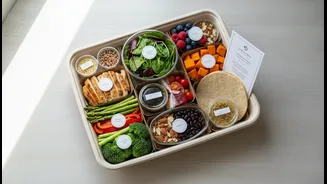
Shifting hygiene from a backroom chore to a marketing tool requires a strategy of radical transparency. Cloud kitchens can and should make their cleanliness visible. This can be achieved through several concrete actions. Brands can install and publicise a live video feed of their kitchen, allowing customers to peek behind the curtain at any time. Social media is a powerful tool for showcasing cleanliness: post videos of staff undergoing hygiene training, demonstrate daily deep-cleaning routines, and explain the science behind food safety protocols. Packaging also plays a crucial role; using high-quality, tamper-evident seals and including a small card detailing the hygiene steps taken to prepare the order can provide powerful reassurance. These actions transform an abstract promise of cleanliness into tangible proof.
The Business Case for Being Clean
Investing in hygiene as a marketing pillar is not an added expense; it's a strategic investment in brand equity and customer loyalty. In a crowded digital marketplace, trust is the most valuable currency. A brand known for its verifiable commitment to hygiene can command higher price points and foster intense loyalty. It creates a compelling reason for a customer to choose your brand over a cheaper, less transparent competitor. Furthermore, this focus differentiates a brand on a factor other than price, moving away from the margin-eroding strategy of constant discounts. It builds a reputation that is difficult for competitors to replicate quickly, creating a sustainable advantage. As one expert noted, the future of competition won't just be about speed and discounts, but about safety and trust.