




A Note on 'Air Cleaning'
The idea that houseplants can purify indoor air became popular after a 1989 NASA study. This research showed that in a sealed chamber, certain plants could remove volatile organic compounds (VOCs) like formaldehyde and benzene from the air. However, it's
important to have realistic expectations. Subsequent research has clarified that in a typical home with normal air circulation, you would need a huge number of plants—up to 1,000 per square meter—to match the air-cleaning effect of simple ventilation. While the plants on this list do have these proven abilities in a controlled setting, their primary benefit in a home is their beauty, their ability to boost your mood, and the joy of watching them grow. Think of any air cleaning as a small bonus, not a primary function.
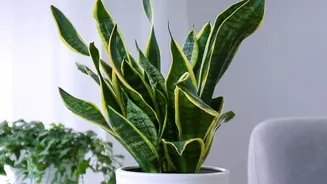
Snake Plant (Dracaena trifasciata)
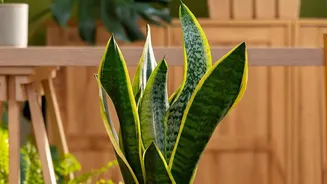
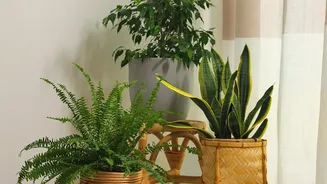
Often called 'mother-in-law's tongue', the snake plant is the definition of resilient. Its stiff, architectural leaves make a modern statement in any room. It's celebrated for its ability to tolerate extremely low light and infrequent watering, making it perfect for beginners or forgetful owners. Snake plants store water in their leaves, so they can go for weeks without a drink; in fact, overwatering is the most common way to kill them. A unique benefit is that they convert carbon dioxide to oxygen at night, making them an excellent choice for bedrooms. They have also been noted for their ability to filter toxins like formaldehyde and benzene.
ZZ Plant (Zamioculcas zamiifolia)
If you want a plant that is practically indestructible, look no further than the ZZ plant. With its wide, dark green, glossy leaves, it looks so perfect it could be mistaken for plastic. This plant thrives on neglect because it grows from large, water-storing rhizomes under the soil. This feature means it's incredibly drought-tolerant and can handle low-light conditions found in offices or darker corners of a home. To care for it, simply water it every two to four weeks, or whenever the soil has completely dried out. Its ability to survive with minimal attention makes it a foolproof choice for anyone.
Spider Plant (Chlorophytum comosum)
The spider plant is a classic for a reason. It's adaptable, easy to grow, and forgiving. These plants prefer bright, indirect light but can manage in lower light conditions. They are known for their air-purifying capabilities, with studies showing they can help remove pollutants like formaldehyde and xylene from the air. Spider plants are also fun to own because they produce 'spiderettes', or baby plants, that dangle from the mother plant. These can be easily propagated to create new plants, making them a gift that keeps on giving. They are also non-toxic to pets, which is a significant bonus for animal lovers.
Pothos (Epipremnum aureum)
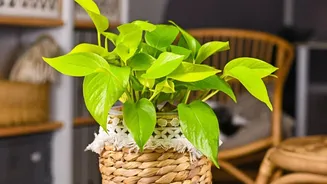
Nicknamed 'devil's ivy', pothos is a fast-growing, trailing vine that is incredibly easy to care for. It can thrive in a range of lighting conditions, from low light to bright, indirect light, and it's quite forgiving if you forget to water it. Its heart-shaped leaves come in various shades of green and yellow, adding a lush, decorative touch to shelves or hanging baskets. Pothos is also listed among the plants effective at removing indoor pollutants like formaldehyde. If the vines get too long, they can be easily pruned back, and the cuttings will readily root in water to create new plants for yourself or friends.
Cast Iron Plant (Aspidistra elatior)
As its name suggests, the cast iron plant is tough. This plant can withstand a remarkable amount of neglect, including low light, low humidity, and infrequent watering. It has elegant, deep green leaves that grow upright from the soil, creating a graceful and timeless look. It's a slow grower, so you won't need to repot it often. The cast iron plant is an excellent choice for those spots in your home where other plants have failed to survive. It's a true 'set it and forget it' option for even the most self-proclaimed 'plant killer'. Plus, it's considered non-toxic and pet-friendly.