


The Pan Size Predicament
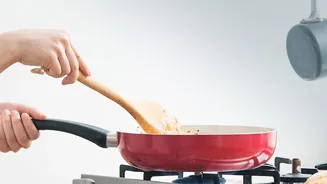
Think of a recipe as a scientific formula. If you change a variable, the outcome changes. The size of your pan is a massive variable. A recipe tested in a 12-inch skillet will behave very differently in your 10-inch one. A larger pan has more surface
area, which means liquids evaporate faster and ingredients brown more quickly. If you use a pan that's too large for the quantity of food, your sauce might reduce too much and your food could dry out. Conversely, crowding ingredients into a pan that's too small will cause them to steam instead of sear, leading to a soggy, unevenly cooked mess. This is why a recipe that promises a crispy sear might leave you with pale, steamed vegetables if your pan is overcrowded.
Why Material and Shape Matter
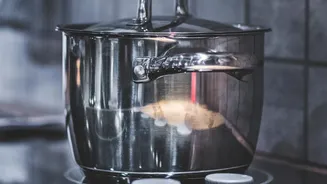
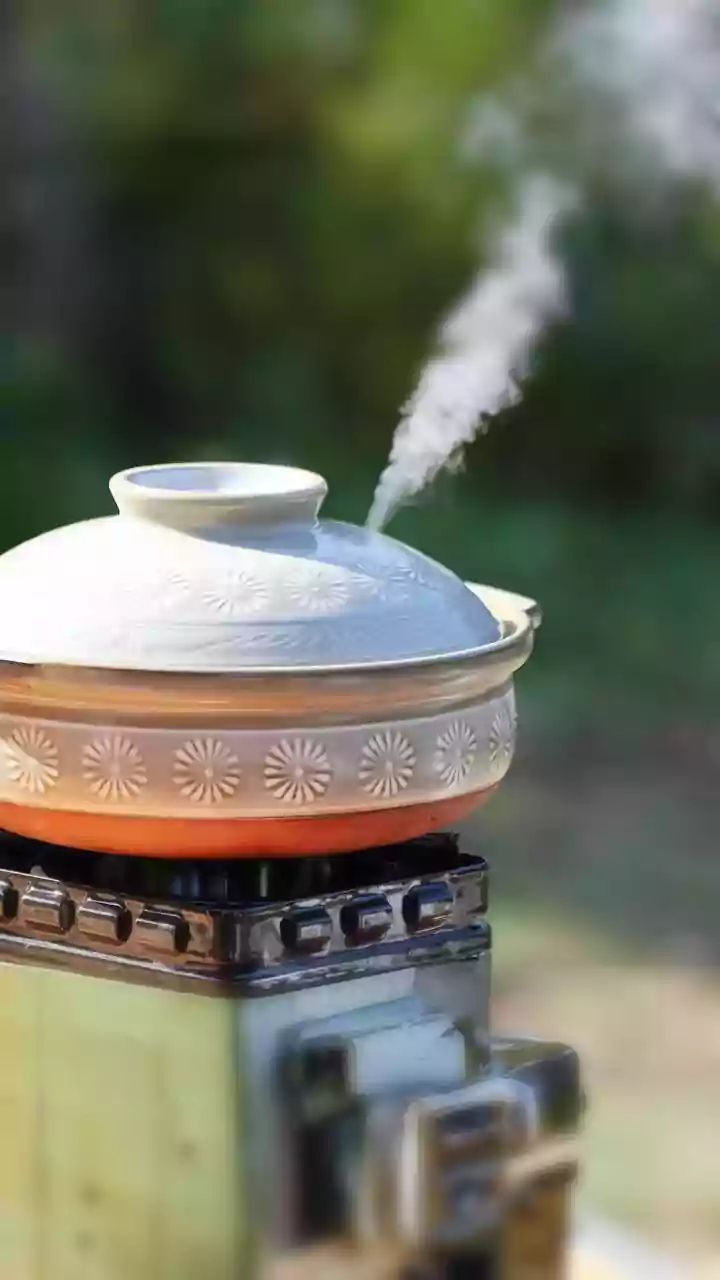
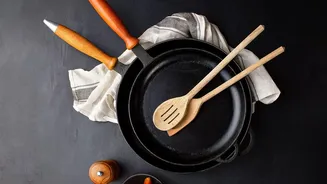
Beyond just diameter, the material and shape of your cookware are critical. A heavy-bottomed stainless steel kadhai distributes and retains heat differently than a thin non-stick frying pan. Cast iron is brilliant for holding a steady, high heat for searing, while a wok's flared sides are designed for the specific temperature zones needed for a good stir-fry. Professional test kitchens specify these details for a reason. When a recipe author calls for a specific type of pan, they have accounted for how it transfers heat. Using a different material can fundamentally alter how quickly the dish cooks and whether it burns or cooks through properly.
Taming the Unpredictable Flame
The instruction "cook over medium heat" is perhaps the most subjective phrase in the culinary world. What is "medium"? Your gas stove's medium burner might be far more powerful than the one on an electric coil cooktop where a recipe was developed. Even on the same stove, the back burner could be weaker than the front. This variable in heat input is a primary reason for inconsistent results. A gentle simmer on one stove is a rolling boil on another. The flame level dictates the speed of crucial chemical reactions like browning and caramelisation. A perfect tadka, for instance, requires precise heat control for a few seconds; too low and the spices won't bloom, too high and they turn bitter in an instant.
Becoming Your Own Recipe Tester
You don't need a professional kitchen to get professional results. You just need to be more methodical. The next time you try a new recipe, start a simple notebook. It doesn't need to be complicated. Jot down the date and the recipe name. Then, note the pan you used (e.g., "Prestige 10-inch non-stick") and the stove setting (e.g., "back-right burner, knob set to 4"). When the dish is done, add a small note: "Perfectly cooked," or "Slightly burnt, use lower flame next time," or "Sauce was too thick, use a smaller pan." This practice takes only a minute but builds a personal database for your specific kitchen. Over time, you will develop an instinct for how to adapt any recipe to your equipment, effectively turning your kitchen into a reliable personal lab.