

What Is Functional Core Stability?
Your core is much more than just the abdominal muscles on the surface. It's a complex system of deep muscles in your abdomen, back, hips, and pelvis that work together to stabilize your spine. Functional core stability is the ability of these muscles to work together to brace
your trunk and pelvis, preventing unwanted movement during daily activities. Think about carrying groceries, lifting a child, or simply getting up from a chair; a stable core makes these movements safer and more efficient. Unlike crunches, which focus on bending the spine, functional exercises teach your core to resist excess motion, which is its primary job.
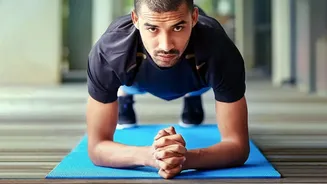
1. The Plank
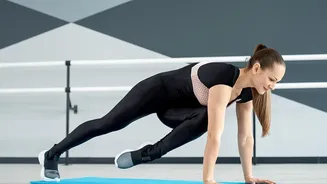
The plank is a fundamental exercise for teaching your core to create total-body tension. It strengthens the deep transverse abdominis—your body's natural corset—along with your back and shoulders. To perform it correctly, place your forearms on the floor with your elbows directly under your shoulders. Extend your legs back, coming onto your toes. Your body should form a straight line from your head to your heels. Avoid letting your hips sag or rise too high. Engage your abdominal muscles and glutes, and continue breathing steadily. Start by holding for 20–30 seconds, focusing on quality form over duration.
2. The Dead Bug
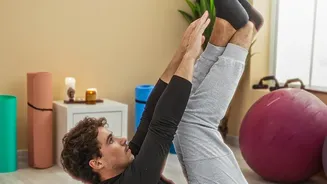
This exercise is exceptional for building core control without putting stress on your lower back. The dead bug teaches your limbs to move independently while your core remains perfectly still, a key component of functional stability. Lie on your back with your knees bent at a 90-degree angle and your feet in the air, directly over your hips. Extend your arms toward the ceiling. Slowly lower your right arm and left leg toward the floor simultaneously, exhaling as you go. Lower them only as far as you can without your lower back arching. Return to the start and repeat on the other side. The goal is to keep your torso completely stable throughout the movement.
3. The Bird-Dog
The bird-dog challenges your stability and coordination by forcing your core to resist rotation. It strengthens the entire back side of your body, including your glutes and lower back muscles. Start on all fours with your hands under your shoulders and your knees under your hips. Keeping your back flat and your core engaged, slowly extend your right arm forward and your left leg straight back. Imagine balancing a glass of water on your lower back. Hold for a moment, focusing on reaching long without letting your hips twist. Return to the starting position with control and repeat on the opposite side.
4. The Glute Bridge
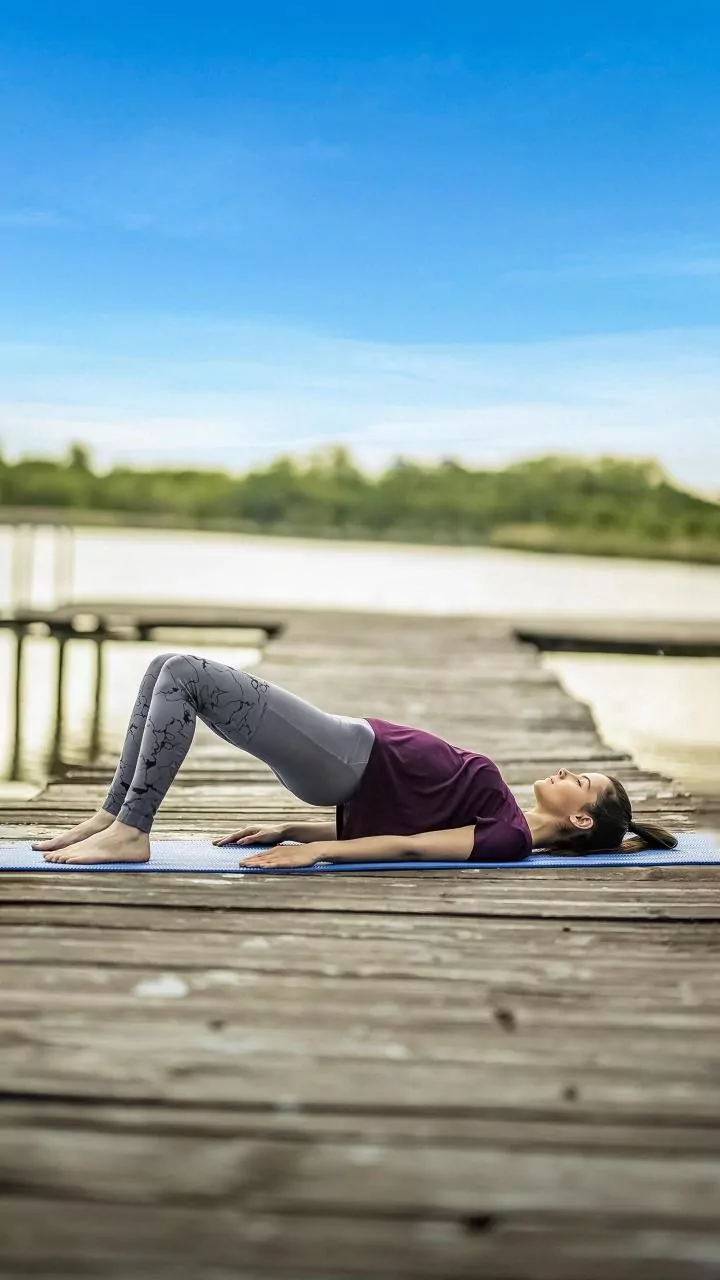
While often seen as a glute exercise, the bridge is fantastic for core stability because it teaches you to engage your glutes and core together, reinforcing pelvic stability and protecting your lower back. Lie on your back with your knees bent, feet flat on the floor hip-width apart, and your arms by your sides. Tighten your abdominal muscles and squeeze your glutes as you lift your hips off the floor until your body forms a straight line from your shoulders to your knees. Hold the position for a few seconds at the top before slowly lowering back down.
5. The Side Plank
The side plank targets your obliques (the muscles on your sides) and the deeper stabilizing muscles that are critical for resisting side-to-side bending and protecting your spine. Lie on your right side with your legs straight. Prop your body up on your right forearm, ensuring your elbow is directly beneath your shoulder. Lift your hips until your body forms a straight line from your ankles to your head. Keep your core tight and avoid letting your hips drop. For a modification, you can perform the exercise from your knees. Hold for 20-30 seconds before switching to the other side.