








From Academic Duties to Industry Skills
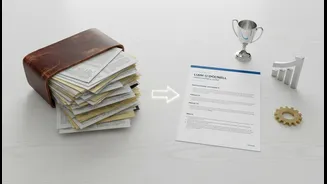
The first step is to stop thinking about your duties and start focusing on your transferable skills. Industry hiring managers aren't interested in the nuances of your dissertation topic; they want to know what you can do for their company. Your experience
in grant writing isn't just about securing funding; it's about persuasive communication, project planning, and financial management. Teaching and mentoring students demonstrate leadership, public speaking, and the ability to explain complex topics clearly. Frame your research not as a niche academic pursuit, but as a large-scale project you managed. This involves data analysis, problem-solving, and delivering actionable insights under deadlines. Create an inventory of your academic experiences and, for each one, identify the core, industry-relevant skill it represents, such as critical thinking, time management, or collaboration.
Show, Don't Just Tell: Quantify Your Impact
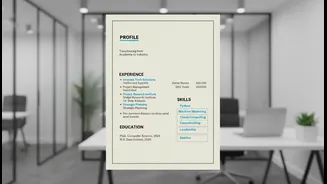
In industry, results are everything, and numbers are the language of results. An academic CV lists accomplishments, but an industry resume proves their impact with data. Instead of stating you “managed a research project,” specify that you “managed a ₹50 lakh, 18-month research project with a team of four, delivering findings three weeks ahead of schedule.” Don't just say you taught students; state that you “mentored 15 undergraduate students, resulting in three co-authored poster presentations at national conferences.” Even tasks that don't seem number-driven can be quantified. Consider the number of sources you analysed for a literature review, the size of the dataset you worked with, or the percentage of efficiency you created in a lab process. These metrics provide concrete evidence of your capabilities and help recruiters, who may spend only seconds on your resume, grasp the scale and success of your work.
The Perfect Fit: Aligning with the Role
A common mistake is sending a generic resume for multiple applications. Unlike an academic CV, which is a comprehensive record, an industry resume is a targeted marketing document. Each resume you send should be tailored to the specific job description. Carefully analyse the job posting to identify keywords and required qualifications. Mirror that language in your resume. If the company is looking for a “project manager” with “data analysis skills,” ensure those exact phrases appear in your document. Your goal is to show the hiring manager, and the Applicant Tracking System (ATS) software that likely scans your resume first, that you are the solution to their specific problem. This means prioritising experiences and skills that are directly relevant to the role and omitting those that aren't, even if they were significant in your academic career.
Avoiding Common Academic Pitfalls
Transitioning means leaving some academic conventions behind. First, drastically cut the length. While CVs can be many pages long, a resume should be concise, ideally one to two pages. Eliminate academic jargon. A recruiter without a science background won't understand the technical details of your research but will understand a description of how you solved a complex problem to achieve a cost-effective outcome. Also, reconsider listing all your publications and conference presentations. While central to academia, they are often irrelevant to an industry hiring manager unless the publication is directly applicable to the company's work. Instead, you could have a separate, brief section for “Selected Publications” if they are highly relevant, or simply leave them off to save space for more impactful, results-oriented descriptions of your work experience.