






Define Your Deeper 'Why'
Lasting motivation rarely comes from vague goals like 'getting fit'. It comes from purpose. Before you start, ask yourself why this is truly important to you. Is it to have more energy to play with your children? To manage stress and improve your mental
health? Or to build strength and confidence? Write this reason down and put it somewhere you can see it. On days when your energy is low, this core purpose will be a far more powerful motivator than a number on a scale.
Schedule It Like a Can't-Miss Appointment
If you wait to find a spare moment for your workout, you'll likely never find it. Look at your week and schedule your workouts as non-negotiable appointments. Whether it's 20 minutes before breakfast or 30 minutes after your workday ends, blocking out that time creates a powerful commitment. Treat it with the same importance as a work meeting. Let family members know your schedule to minimize interruptions and protect that time for yourself.
Create a Designated Workout Zone
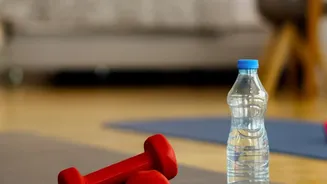
Your environment sends powerful cues to your brain. Trying to exercise in the same spot where you relax and watch TV can be a mental battle. You don't need a full home gym; even a small, dedicated space can make a huge difference. It could be a corner of your living room where you unroll your yoga mat or the space in front of a particular window. When you enter that zone, it signals to your brain that it's time to move. Having everything you need, like a water bottle or any equipment, ready in that space removes another barrier to getting started.
Find Workouts You Genuinely Enjoy
Forcing yourself to do an exercise you hate is a fast track to quitting. The beauty of free online fitness is the incredible variety. If high-intensity interval training (HIIT) isn't for you, try a dance workout, a calming yoga flow, or a low-impact strength session. YouTube channels like PS Fit and apps like Nike Training Club or FitOn offer hundreds of high-quality, free classes for every taste and fitness level. Experiment until you find a few instructors or styles that make you feel good, not just tired.
Start Small and Celebrate Progress
One of the biggest motivation killers is doing too much, too soon, and then burning out. The goal is consistency, not intensity, especially at the beginning. Commit to just ten minutes. On days you feel uninspired, tell yourself you only have to do five minutes; you'll often find that once you start, you're happy to continue. Track your consistency, not just your performance. Celebrate showing up for yourself three times a week. This focus on building the habit, rather than on immediate results, is what creates long-term success.
Use Cues and Rewards
Habits are built on a loop of cue, routine, reward. You can engineer this to work for you. A great cue is laying out your workout clothes the night before. When you see them in the morning, the decision-making process is already simplified. This technique, known as a 'habit stack', links your new workout habit to an existing one—like exercising right before your morning shower. Follow your workout with a small, immediate reward that you genuinely enjoy, like listening to your favourite podcast or enjoying a special cup of tea. This reinforces the positive feedback loop in your brain, making you more likely to repeat the behaviour.